Lusaka, the vibrant capital of Zambia, serves as a bustling gateway for travelers embarking on or returning from their safari adventures. This rapidly growing metropolis, the largest in Zambia, offers a unique blend of urban excitement and cultural richness, making it a fascinating stopover for a day or two.
As you explore Lusaka, you'll discover its lively charm and diversity. The city is a melting pot of traditional and modern lifestyles, where bustling markets and upscale shopping malls coexist. For a taste of local culture, a visit to the markets like Soweto Market is a must. Here, you can browse through a myriad of stalls selling everything from handcrafted souvenirs to fresh produce, providing a colorful insight into the everyday life of the city's residents.
Lusaka's culinary scene is a delight for food enthusiasts. The city offers a wide range of dining options, from traditional Zambian dishes to international cuisine. For those interested in arts and history, the National Museum provides a glimpse into Zambia's rich heritage and history.
The city also serves as a serene green oasis with its various parks and gardens, like the Munda Wanga Environmental Park, offering a pleasant respite from the urban hustle. These green spaces are perfect for a leisurely stroll or a picnic, allowing you to unwind and relax.
Lusaka's charm lies in its vibrant energy and friendly locals. Whether you're wandering through its lively streets, sampling local delicacies, or simply soaking up the city's ambiance, Lusaka provides an enriching and welcoming experience for every traveler passing through.
As a convenient stop before you venture into the wilds of Zambia or as a gentle re-introduction to urban life after a safari, Lusaka is a city that pleasantly surprises and offers a glimpse into the heart of modern Zambia.
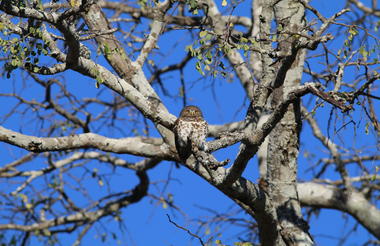


Set in Zambia, the Kafue National Park is the largest park in the country and the second-largest in Africa. The contrasting landscape of the Central Kafue features riverine bush, miombo and savannah woodlands, vast open plains and majestic granite outcrops. Visitors can enjoy the pristine natural beauty of the diverse scenery and its natural, unspoilt beauty. Drive along the Spinal Road for a chance to discover the most remote parts of the Central Kafue National Park. Don't miss the opportunity to spot a wide range of African wildlife with regular sightings of puku, impala and bushbuck and catch a glimpse of the countless bird species that call this area home.

The vast and remote Liuwa Plain National Park is one of Africa's last untouched wilderness areas situated on the upper Zambezi floodplains of western Zambia and is bounded by the Luambimba and Luanginga Rivers.
It has a long and rich history, having originally been proclaimed a protected area by the King of the Lozi people in the 1880s. The Monarch is called the Litunga, meaning 'keeper or guardian of the earth'. It is the only National Park in Zambia where people live inside the Park as well as in the surrounding areas and the Lozi people of the area were originally placed in the park by the Litunga as his official gamekeepers.
Since 2003, the Park has been managed by conservation non-profit, African Parks, in partnership with the Zambian Department of National Parks and Wildlife and the Barotse Royal Establishment.
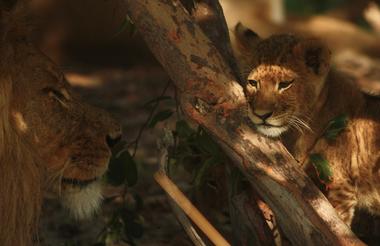
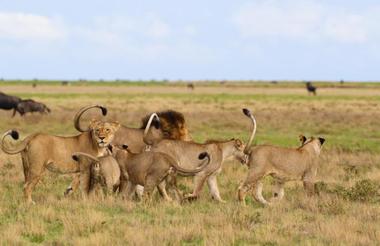
In addition to its famed lions, Liuwa is home to the second biggest wildebeest migration in Africa. Every year tens of thousands of blue wildebeest graze their way north (starting early July) and then when the rains build up in late October they head southwards again following the numerous pans and nutritious forage they offer.
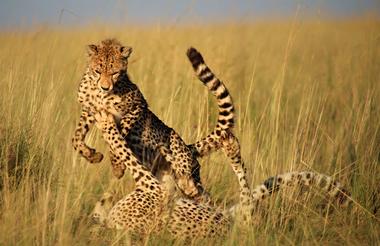
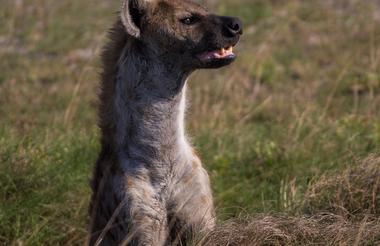
The Park hosts a burgeoning cheetah population, the apex predator, hyena, in clans of up to 50 individuals, abundant zebra, red lechwe and tessebe herds and more than 300 bird species including rare and endangered wattled cranes.
The landscape holds a special magic, with dramatic thunderstorms gathering on the horizon to build up to an awe-inspiring spectacle (Oct/Nov) and the stark contrast of green and gold grasslands against the dark and ominous blue of a rising storm.
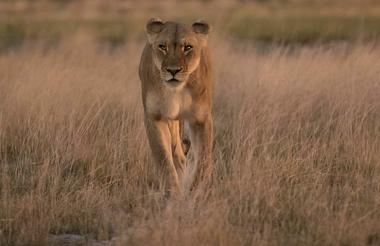
Liuwa Plain is home to the second largest wildebeest migration in Africa and seasonal floods transform the flat grasslands into a wetland paradise. Hisotrically used as a royal hunting ground, it now a protected area and the people here are the custodians of the reserve and its wildlife – including the famous Liuwa lions, hyenas and cheetahs.
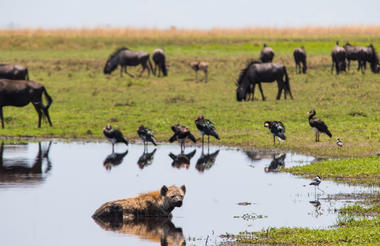
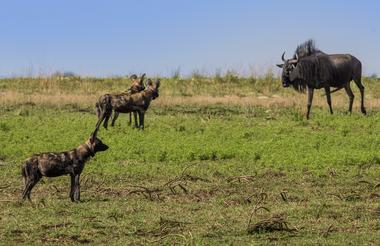
The park’s s growing wildebeest population of between 40,000 and 50,000 individuals migrate within the broader Liuwa system, moving between the numerous pans and following seasonal burns. They are joined by herds of zebra, tsessebe and lechwe, and predators such as wild dog, hyaena, cheetah and lion.
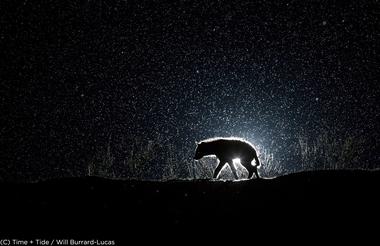
The park has a large population of hyaena, with an estimated 200 in the park and a population of between 400 and 500 in the broader landscape. In the absence of a significant lion population, the hyaena rapidly ascended to the position of apex predator in the park.
Many other species of antelope are flourishing in the park, including zebra, red lechwe and tsessebe.
As previously described
As previously described
As previously described