
Namibia, located in southwestern Africa, is a destination that offers it all: a well-developed infrastructure, some of the best tourist facilities in Africa, and an impressive list of breathtaking natural wonders. Visitors traveling to Namibia can enjoy exploring the vibrant capital city of Windhoek and the beautiful coastal town of Swakopmund, where the country’s German influence is still visible in the architecture, culture, cuisine, and the annual Oktoberfest celebrations.
To fully appreciate this extraordinary country, it is essential to leave the cities behind and explore Namibia’s remarkable natural landscapes. Some highlights include:
The impressive Fish River Canyon, one of the largest canyons in the world, offering breathtaking views and excellent hiking opportunities.
The vast Etosha National Park, home to an abundance of wildlife, including lions, desert-adapted elephants, and the rare Hartmann’s Mountain Zebra. The park is a paradise for nature lovers and provides outstanding opportunities for safaris and photography.
The enchanting Kalahari Desert, which hosts a unique ecosystem and a rich diversity of flora and fauna. It is a wonderful place to experience the serenity of the desert and learn about the culture and traditions of the indigenous San people.
And of course, the breathtaking Namib Desert, stretching more than 2,000 km along the stunning Atlantic coastline. Here you will find the iconic red sand dunes of Sossusvlei and Deadvlei, which attract photography enthusiasts from all over the world.
Namibia is an ideal destination for travelers seeking an unforgettable African experience in a unique, untouched wilderness. The country offers a perfect balance between comfortable accommodations and the opportunity to enjoy unspoiled natural beauty. Whether you are looking for adventurous activities, wildlife safaris, or simply relaxation in a stunning setting, Namibia has it all. Don’t miss the chance to explore one of the most fascinating destinations on the African continent.
The Kalahari, a name derived from the Tswana word meaning "the great thirst," is a vast semi-desert covering approximately 900,000 km² . Although often referred to as a desert, it receives significantly more rainfall than a true desert, resulting in a diverse landscape that transitions from sandy dunes to grassy steppes and savannas. The region supports a wide array of wildlife, including lions, hyenas, various antelope species, and the ever-watchful meerkats and baboons.
The oldest inhabitants of this arid wilderness are the San (Bushmen), whose ancestral knowledge and survival techniques remain an integral part of the region's identity. Due to Namibia's sparse population and minimal cloud cover, the Kalahari is also world-renowned for its stargazing. With virtually no light pollution, the night sky reveals a brilliant tapestry of stars and constellations that becomes visible the moment the sun dips below the iconic red horizon.


Sossusvlei is at its most beautiful during the early morning and late afternoon. At sunrise and sunset, the light is warm and soft, creating magnificent contrasts between the white clay pans and the towering red dunes. All the main attractions are located within the Namib-Naukluft National Park. As many visitors aim to catch the first light over the desert, a queue often forms at the entrance gate before dawn. Keep in mind that the drive from the gate to the valley itself is approximately 65 kilometres.
The final five kilometres of the track consist of very deep, soft sand. Here it is mandatory to take the 4WD shuttle service.
Dune 45
As you drive toward the vlei, you will be surrounded by monumental sand dunes. The star attraction along the way is Dune 45. Located exactly 45 kilometres from the entrance gate—hence its name—this iconic red dune is famous for its elegant shape. Unlike many other dunes in the park, visitors are permitted to climb it. While it may look straightforward from below, reaching the crest takes some effort in the shifting sand, but the panoramic views from the top are absolutely worth it.
Hiddenvlei, Sossusvlei, and Deadvlei
After the first 60 kilometres, you will reach the 2WD parking area. From here, most travellers board the 4WD shuttle. If you have your own 4x4, you may proceed, provided you have the necessary off-road driving skills. The shuttle drops you off at a central point from which you can walk to the different "vleis" (clay pans):
Hiddenvlei: The least known of the three, offering a more secluded and peaceful experience for those willing to hike a bit further.
Sossusvlei: The namesake of the area, a vast white clay pan surrounded by some of the most spectacular dunes in the world.
Deadvlei: Often considered the highlight of the trip. This clay pan is dotted with the skeletons of ancient camel thorn trees, blackened by the sun over 900 years. The contrast against the white floor, red dunes, and deep blue sky creates a truly surreal landscape.
Big Daddy
Big Daddy is the tallest dune in the immediate area. Situated between Sossusvlei and Deadvlei, it offers a challenging but rewarding climb for those with plenty of energy. From the summit, you can look directly down into the white expanse of Deadvlei. While most visitors choose to climb Dune 45, reaching the top of Big Daddy provides one of the most breathtaking perspectives of the Namib Desert.

The Gamsberg region is situated in central Namibia, centered around the majestic table-topped mountain that gives the area its name. Rising to a height of 2,347 metres above sea level, the Gamsberg is a prominent landmark in the rugged interior. For 4x4 enthusiasts, the Gamsberg Pass is one of Namibia's most iconic routes, a steep gravel pass that winds through the mountainous terrain and offers sweeping vistas of the Kuiseb River in the valley below.
The high altitude and lack of light pollution make the Gamsberg a premier location for stargazing, where the night sky displays extraordinary clarity. Within the surrounding nature reserve, a variety of wildlife can be found that has perfectly adapted to the rocky terrain, including Hartmann’s mountain zebra, kudu, and the nimble klipspringer. Hiking trails lead along the mountain’s slopes, showcasing a range of indigenous plant life thriving among the ancient rock formations.


Swakopmund is a charming coastal town situated on the Atlantic Ocean, where German colonial influences meet spectacular desert landscapes. This unique combination offers a one-of-a-kind travel experience. Below are the key highlights and features of Swakopmund:
German Colonial History Swakopmund still displays clear traces of its German colonial past, dating back to the early 20th century. The city's architecture, featuring timber-framed buildings and German street names, creates a nostalgic atmosphere. Landmarks such as the Alte Kaserne building and the Swakopmund Museum are excellent places to delve into the local history.
Adventure Activities Widely known as the adventure capital of Namibia, Swakopmund offers a vast range of thrilling activities. Travellers can enjoy sandboarding on the Namib Desert dunes, quad biking, skydiving, and deep-sea fishing. Due to strong coastal winds, the town is also a premier destination for kiteboarders and windsurfers.
Namib Desert Swakopmund serves as the perfect gateway for exploring the breathtaking Namib Desert, famous for its surreal landscapes such as the Sossusvlei dunes and Deadvlei. Visitors can admire stunning sunrises and sunsets over the orange sands or take guided walks to discover the area’s unique flora and fauna.
Kuiseb River Canyon Located just outside Swakopmund, the beautiful Kuiseb River Canyon is well worth a visit. This gorge is famous for its extraordinary geological formations and provides opportunities to spot wildlife such as oryx, springbok, and jackals.
Cafés and Restaurants The town boasts a diverse culinary scene where German and Namibian flavours blend with international cuisine. Be sure to try local specialties like schnitzel and ostrich steak, alongside an abundance of fresh seafood.
Tug Restaurant: Famous for its exceptional seafood and stunning location right on the ocean, this restaurant is housed in an actual tugboat. It offers a relaxed yet special atmosphere, perfect for a romantic dinner overlooking the Atlantic.
Jetty 1905: Situated at the end of the historic Swakopmund pier, this restaurant offers breathtaking panoramic views of the ocean. Jetty 1905 serves a sophisticated menu featuring fresh local ingredients. With its elegant and welcoming ambiance, it is the ideal spot to watch the sun sink into the sea during a special occasion.


The Spitzkoppe, often referred to as the "Matterhorn of Namibia," is a group of bald granite peaks that rise dramatically from the dusty plains of the Namib Desert. These ancient formations are over 130 million years old, with the highest peak reaching approximately 1,728 metres above sea level. The surrounding landscape is a surreal playground of weathered boulders and unique geological features, most notably the "Rock Arch," a massive natural stone bridge that frames the desert horizon perfectly.
Beyond its geological allure, the Spitzkoppe holds profound cultural significance. The area is a treasure trove of ancient San (Bushman) rock art, with sites like "Bushman Paradise" showcasing paintings that date back thousands of years. As night falls, the area transforms into one of the best stargazing spots on the planet; with no light pollution, the Milky Way stretches vividly across the sky.
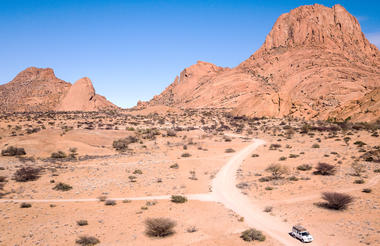


Damaraland is widely regarded as one of Namibia’s most breathtaking and untouched regions. It is a vast, untamed wilderness where open plains meet ancient valleys and spectacular rock formations. The region is home to some of the country’s most iconic attractions, including the red sandstone of Twyfelfontein, the towering Vingerklip, and the otherworldly Petrified Forest. The majestic Brandberg and the distinctive Spitzkoppe also dominate the horizon of this prehistoric landscape.
Visitors are treated to dramatic vistas and the unique opportunity to encounter rare desert-adapted elephants and rhinos. With its crystal-clear night skies, Damaraland offers some of the most spectacular stargazing on the planet. Popular activities include guided nature drives, scenic walks, and visits to local communities to learn about their rich cultural heritage. A visit to the world-famous rock engravings at Twyfelfontein, a UNESCO World Heritage site, is an absolute must.
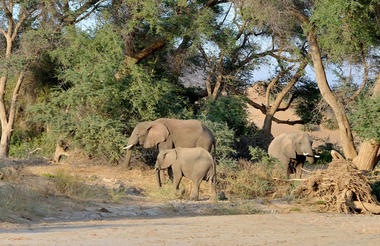
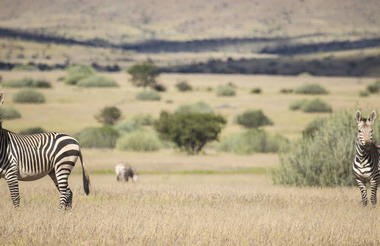
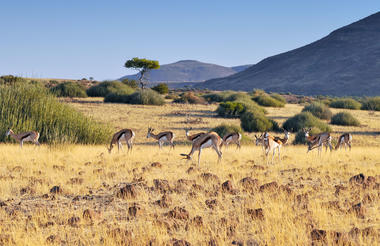
Etosha West offers a completely different experience from the rest of the park. For decades, this area was restricted to the general public, allowing it to preserve its wild and untouched character. The landscape is more mountainous and rugged, featuring a distinctive reddish-brown soil that stands in stark contrast to the white lime plains found elsewhere. Entering through the Galton Gate, travelers find themselves in a region where nature remains undisturbed and where far fewer vehicles are encountered.
Due to the unique terrain, this area is home to wildlife species that are rarely seen in other parts of Etosha. It is the premier location for game viewing of the rare Hartmann’s mountain zebra, which thrives on the rocky hillsides. On game drives through this remote territory, you will discover hidden waterholes tucked between the ridges, where large elephant herds and predators gather in total seclusion.
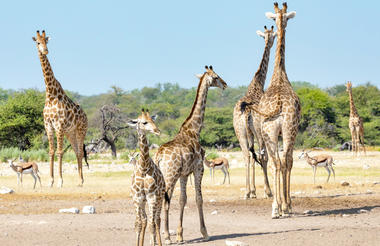
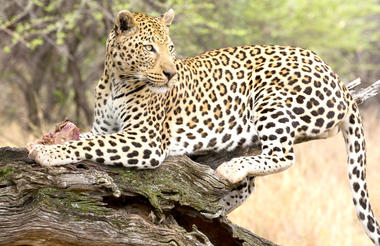
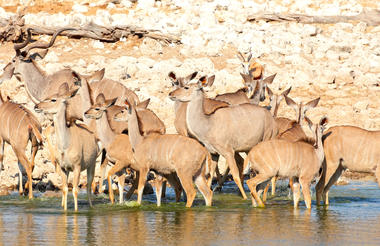
Etosha South is the park's most iconic and accessible region, reached via the central Andersson Gate. This area is famous for its vast, open landscapes and calcareous plains, offering unparalleled game viewing. Due to the sparse vegetation, wildlife can often be spotted from a great distance as it traverses the savanna toward the numerous natural and man-made waterholes.
The defining feature of Etosha South is its legendary waterholes, such as the one at Okaukuejo. During game drives, visitors can witness a constant procession of animals, ranging from vast herds of zebra and springbok to lions and the rare black rhino. A unique aspect of this region is that game viewing continues after sunset at the floodlit waterholes within the camps, where rhinos and elephants frequently arrive to drink in the stillness of the night.


Situated to the east of Etosha, bordering Fisher’s Pan, Onguma Nature Reserve is one of Namibia’s best-kept secrets. Spanning over 34,000 hectares of protected land, the reserve showcases Africa’s beauty and biodiversity through its varied landscapes. It is home to a wealth of wildlife, including the black rhino, lion, cheetah, and leopard, alongside giraffes, zebras, and numerous plains game. During the rainy season, the seasonal waters of Fisher’s Pan attract thousands of migratory birds, contributing to a bird count of over 300 species.
The reserve offers a unique extension to the Etosha experience. While the neighbouring national park is famous for its vast salt pan and abundant game, Onguma provides exclusive opportunities for guided bush walks, nocturnal game drives, and rhino research safaris. Its proximity to the Von Lindequist Gate makes it an ideal base for exploring the diverse wildlife of Etosha while enjoying the seclusion and specialised activities of a private wilderness area.


Situated in the heart of Namibia’s Otjozondjupa Region, the Otjiwa Game Reserve encompasses 12,000 hectares of open bushveld, rolling plains, and acacia-studded savanna. The reserve exudes a serene and secluded atmosphere, where wildlife roams freely and the horizon stretches uninterrupted beneath vast African skies. At dawn, the air is filled with the scent of dry grass and earth, while the calls of birds and distant wildlife punctuate a silence that makes the wild beauty of this region truly immersive.
Otjiwa offers exceptional opportunities for wildlife encounters. Guests can join guided game drives to spot giraffes, zebras, various antelope species, and rhinos, or enjoy walking safaris that reveal the subtle rhythms of the bush. Whether exploring the expansive landscapes by vehicle or on foot, the reserve provides a tranquil yet thrilling escape.


