Windhoek, Namibia’s capital, lies in the heart of the country amid the rolling Khomas Highlands, where wide skies and dry savannah frame a compact, orderly city. It blends German colonial heritage with contemporary African identity, creating a calm, understated atmosphere rather than a bustling metropolis. Landmarks such as Christuskirche and the Tintenpalast sit alongside modern civic buildings, while lively markets and cafés reveal everyday Namibian life. Visitors can explore museums, stroll shaded streets, or use the city as a gateway to the surrounding wilderness and safari regions. The air is often dry and clear, carrying the scent of dust and jacaranda blossoms, while distant hills glow at sunset. Windhoek offers a gentle introduction to Namibia’s landscapes and culture, with space, light and quiet defining its appeal.


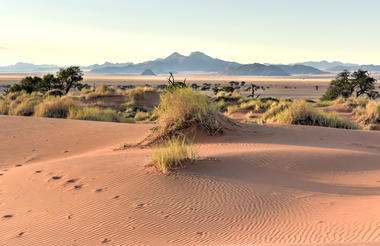
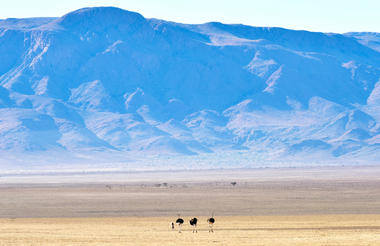
Spanning more than 172,000 hectares and encompassing several distinct desert ecosystems, the NamibRand Nature Reserve in southern Namibia is one of the largest private nature reserves in Southern Africa. Founded to conserve the unique ecosystem and biodiversity of the Namib Desert, the reserve's mix of dunes, mountains, rocky outcrops, sandy flats, and gravel plains provides habitats for a diversity of mammals, including hyenas, jackals, foxes, antelopes, and various wild cats. The reserve is also home to numerous bird species, reptiles, insects, and amphibians, alongside an array of plant species. Discover the mysterious fairy circles, enigmatic bare patches in the desert landscape whose origins remain the subject of scientific debate, or enjoy a night of sublime stargazing; as Africa's first International Dark Sky Reserve, it is one of the least light-polluted areas in the world.
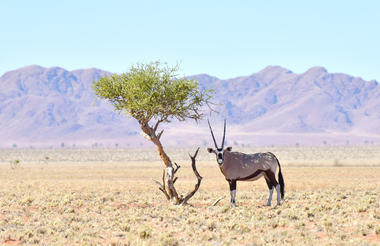
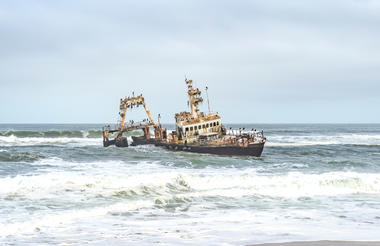
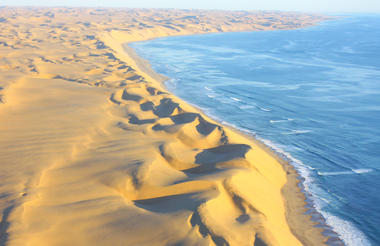
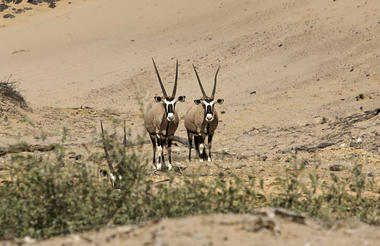
Stretching from the Swakop River to southern Angola, Namibia’s Skeleton Coast is known as the 'Land God Made in Anger'. Thousands of miles of sandy desert dotted with shipwrecks meet with the cold waters of the Atlantic, where ocean fog creeps over the shoreline. Somehow, an amazing array of wildlife and flora manages to survive in this harsh but beautiful environment. Animals living here include seabird colonies, Cape fur seals, zebras, gemsbok, desert-adapted elephants, lions, and many more. Surfing enthusiasts are drawn to the powerful crashing waves, and photographers flock from around the globe to snapshot the eerie shipwreck graveyards and breathtaking coastline.
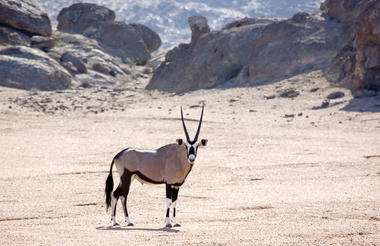
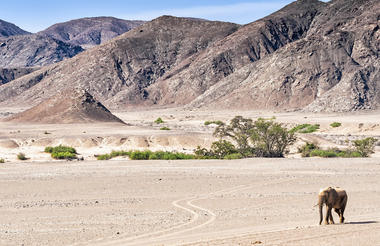
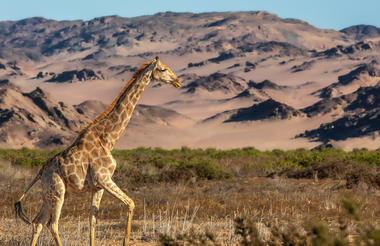
Stretching for approximately 270 kilometres through western Namibia, the Hoanib River flows between Kaokoland and the Skeleton Coast, creating one of the country's most remarkable desert wilderness areas. As one of Namibia’s last major desert watercourses, it provides a vital lifeline for an extraordinary variety of wildlife. The region is renowned for its desert-adapted elephants, lions, and rhinos, as well as populations of giraffe, zebra, kudu, and numerous other species uniquely adapted to this harsh environment. Visitors can explore the dramatic landscapes on scenic four-wheel-drive excursions, guided nature walks, and hiking trails, while towering sand dunes and striking rock formations offer endless opportunities for adventure and photography in this remote and captivating destination.
Ongava Game Reserve shares its southern boundary with Etosha National Park and is widely regarded as one of Namibia’s premier private wildlife reserves. Spanning approximately 30,000 hectares, it is internationally recognised for its conservation efforts, ecological research and immersive safari experiences. The landscape is defined by open savannah plains, scattered salt pans and a rich diversity of wildlife. Its location allows easy access into Etosha through Andersson’s Gate, making it an ideal base for combined safari experiences. Ongava is also known for its luxury lodges, thoughtfully designed using natural materials to blend into the surrounding environment. A highlight of the reserve is its healthy population of black and white rhino, offering guests exceptional viewing opportunities. Activities include guided game drives, night safaris, birdwatching and walking safaris, creating an intimate and rewarding encounter with Namibia’s wilderness.