
Situated in the southern reaches of Africa, Botswana is renowned for its pristine wilderness areas characterised by deep lagoons, wetlands, lush palms, rugged hills and desert plains. The country’s primary tourist drawcard is undoubtedly the vast red expanse of the Kalahari Desert and its remarkably beautiful Okavango Delta, the largest inland delta in the world. These natural wonders provide a tranquil haven for an abundance of African wildlife to thrive. Other highlights include the impressive Makgadikgadi Salt Pans, where visitors are privy to massive zebra migrations during the flood season; the Savuti plains, which host a significant pride of lions; and the Tsodilo Hills, where 4500 rock paintings form a unique record of human settlement over many millennia.

Set on the banks of the beautiful Thamalakane River in northern Botswana, Maun is the third-largest town in this spectacularly scenic southern African country. Maun is the starting point for most expeditions into the Okavango Delta and as a result, has developed into a bustling metropolis that is considered Botswana’s tourism capital. Area attractions include a renowned riverboat that offers cruises up and down the Thamalakane River; the forest groves of the Maun Game Reserve; and Moremi Game Reserve, home to hippos, lions and rhinos. Maun also serves as the jumping-off point for many safaris and air charters as well as offering private 4x4 rentals. Don’t miss the opportunity to visit the Nhabe Museum exhibiting the local history, art and culture of the Ngamiland region.
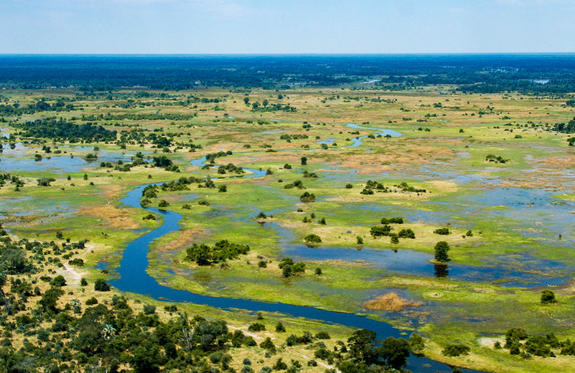
The Okavango Delta is exceedingly beautiful. A jewel in the middle of the Kalahari Desert, the Okavango is Africa's largest and most beautiful oasis - an isolated, lush green paradise with some of the richest wildlife in the world. The maze of waterways, lagoons, vast grassy plains and palm-fringed islands is home to crocodile, hippo, elephant, lion, leopard, hyena, giraffe, wild dog, rare antelope and around 400 bird species.
But wildlife is just one of many elements that combine to make the Delta a treasure house. It is the brooding quietness of the waterways, the plaintiff cry of the African fish eagle, the Malachite kingfisher reflected in the translucent waters, the scent of the water lilies and the Okavango's glorious sunsets, which will stay with you forever. Highlights include the elusive Sitatunga antelope which has found refuge in this pristine wetland ecosystem, while birds such as the African fish eagle, Pel's fishing owl and many others provide a spectacular display.
With the influx of the annual flood, the delta's water levels rise steadily from May onwards, reaching further and further into the Kalahari sands, with its peak levels reached in August. Camps in the seasonal waters tend to offer water-based activities, such as mokoro trips and boating safaris, from June to October when the water levels are highest. Exactly when varies by lodge and by season. They will also offer 4x4 game drives in open vehicles and game walks. Camps in the permanent waters focus exclusively on boating and walking safaris. Whilst multi-activity camps are able to offer a range of water and land-based safaris throughout the year.
Most of the delta is divided up into private "concession areas", each with only one or two safari camps, thus ensuring exclusivity and tranquillity. There are no fences so the game is free to move around naturally.
Note on Charter Flights: Exact charter flight times are finalized the night before, depending on logistics. Therefore, you will only be given your exact departure time from camp on the previous evening. Usually this will be sometime in the mid to late morning but occasionally it is just after lunch.

The amazing foresight of Chief Moremi created one of the world's most famous reserves, conserving part of the Okavango Delta and the plains to its east. The Moremi is often described as one of the most beautiful wildlife reserves in Africa. It combines mopane woodland and acacia forests, floodplains and lagoons. This great diversity of plant life attracts the abundance of animal life ranging from large herds of buffalo, wildebeest and zebra, to the rare sitatunga and lechwe antelope, with lion, cheetah and packs of wild dog in the open grasslands. The birdlife is prolific and includes most of the 550 bird species recorded on the Botswana national bird list
The largest island in the delta, Chief's Island, is located within the Moremi, but with its own private concession.
Camps in the Moremi, or close neigbours, largely offer a land-based wildlife experience using open 4x4 vehicles. Please note that night drives and game walks are not permitted here (given that it’s a National Park) but the superb quality of the game-viewing more than makes up for this.
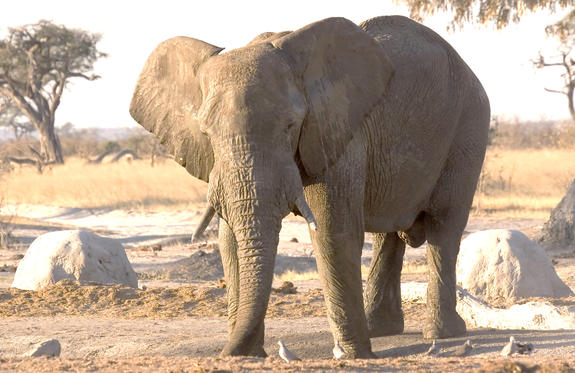
The Savuti Channel is a rugged semi-arid wilderness region in the south-west part of Chobe National Park. This dynamic wilderness is famous for its excellent year-round game viewing. Several rocky outcrops guard a relic marsh and the dry channel that was once its lifeline. Here mysterious wet and dry cycles mould the landscape and its wildlife. What was once a hippo-filled swamp is now nutritious open grassland sustaining a marvellous array of animal and bird life.
The Savuti lodges are right in the heart of the action. Dry season game viewing (May to October) concentrates the Savuti resident bull elephants, plains game and its world-famous lion prides around the permanent waterholes. The Savuti lions have learnt the skills, over many decades, to bring down young elephants.
The summer rains in Botswana (November to March) bring a feast for the predators, as thousands of migrating zebra and wildebeest congregate on the Savuti marsh and on the plains to the south, with its nutritious grasses, searching for life's basic needs - water and food. The best times to view this mass movement of stripy animals is typically around November and again in March. However the Savuti retains plenty of territorial animals year-round with good concentrations of giraffe, jackal, bat-eared fox, tsessebe, kudu and impala. It is not uncommon to see leopard on the granite koppies, spotted hyena, lion, cheetah and African wild dog.
The landscape is strikingly different from the lush Chobe river to the north. It has almost a desert-feel as animals huddle in the shade of the occasional tree. The Gubatsa Hills shelter leopard and klipspringer and rock paintings of early man’s wildlife sightings.
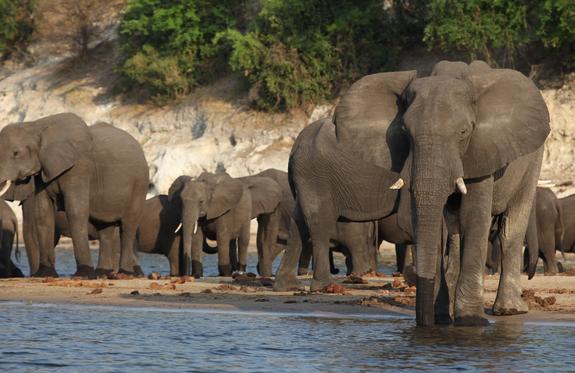
The Chobe river is alive with crocodile and hippo and marvellous birdlife, including kingfishers and bee-eaters. Languorous sunset cruises are a speciality of the Chobe river area, as well as morning game drives in the park. Staying on the Chobe riverfront is therefore popular, given its abundant wildlife and ease of access to Victoria Falls (1½ hours by road) and also to the Okavango Delta. So game drives in the northern park are not an exclusive experience.
A nation of spectacular natural beauty, friendly people and rich culture, Zimbabwe’s status as one of Africa’s leading safari destinations was dampened for years by its political instability. But now that the country is transcending its strife and returning to a state of equilibrium, it is once again emerging as a vacation highlight of the continent. Victoria Falls – known to locals as ‘The Smoke That Thunders’ – is one of the seven natural wonders of the world and the sheer power of this massive body of water plunging into the Zambezi Gorge is awe-inspiring and unforgettable. Lake Kariba, with its game-rich shores and islands, is an idyllic safari spot featuring mind-blowing sunsets; Hwange National Park is known for its huge herds of elephants; and a kayak trip down the Zambezi through the Mana Pools National Park will appeal to the intrepid traveller, providing close encounters with crocodiles, hippos and a host of other wildlife.

The Victoria Falls, one of the Seven Wonders of the World, is a sight not to be missed. Especially when the Zambezi river is in full flow (April to June/July) when over a mile of unbroken surging water plunges into the Zambezi gorge below. The pleasant town is compact enough to walk around and the Falls are within easy walking distance.
The Victoria Falls is bordered by Zimbabwe and Zambia and each country offers a different viewing perspective. Towards the end of the dry season, from late September to January, the spectacle is best seen from the Zimbabwe side of the Victoria Falls.
A host of activities are on offer centred around the Falls themselves, the magnificent Zambezi River and the Zambezi National Park. Enjoy guided tours of the Falls and then a languorous sunset boat cruises. To gain an overall impression of the Falls, the helicopter 'Flight of Angels' is essential. A microlight ride and bungee jumping are available for the more daring. The wide gentle river above the Falls is the perfect place for canoeing and fishing, whilst below the Falls, the serious white-water rafting or jet-boating is on offer. Game drives and horse riding are offered in the Zambezi National Park to view elephant and buffalo, or you can take a day safari to nearby Chobe National Park. You can also sample elephant back safaris and interactions.


