
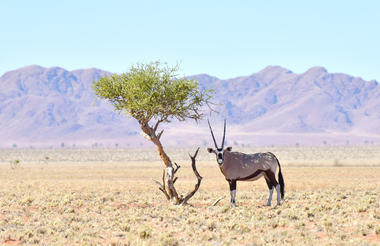
Spreading across Botswana, South Africa and Namibia, the Kalahari, meaning 'the great thirst', is an exceptionally beautiful living desert. The landscape is characterised by a large semi-arid sandy savannah, draped over a gently rolling inland sea of sand that covers most of Botswana and large parts of Namibia and South Africa. It is inhabited by the indigenous San people, with the modern world having enveloped all the other areas they once roamed. The Namibian portion is made up of red sands covered in thin, wispy, mostly golden grass and dotted with acacia trees and wide-ranging wildlife, including gemsbok, impala, jackals and cheetah.
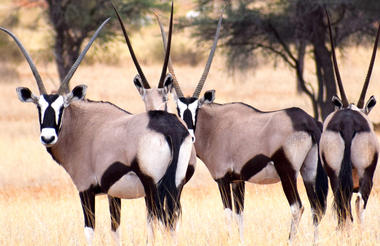
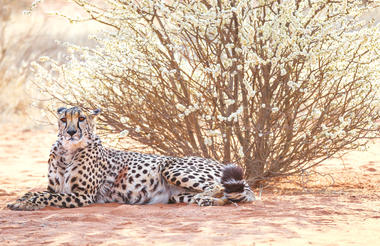
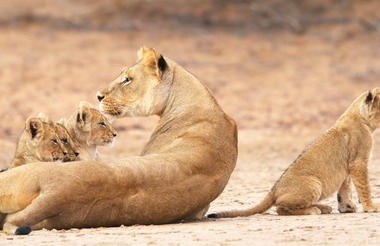


Spanning more than 172,000 hectares and encompassing several distinct desert ecosystems, the NamibRand Nature Reserve in southern Namibia is one of the largest private nature reserves in Southern Africa. Founded to conserve the unique ecosystem and biodiversity of the Namib Desert, the reserve's mix of dunes, mountains, rocky outcrops, sandy flats, and gravel plains provides habitats for a diversity of mammals, including hyenas, jackals, foxes, antelopes, and various wild cats. The reserve is also home to numerous bird species, reptiles, insects, and amphibians, alongside an array of plant species. Discover the mysterious fairy circles, enigmatic bare patches in the desert landscape whose origins remain the subject of scientific debate, or enjoy a night of sublime stargazing; as Africa's first International Dark Sky Reserve, it is one of the least light-polluted areas in the world.
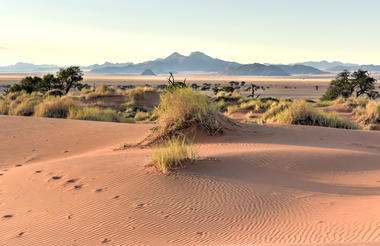
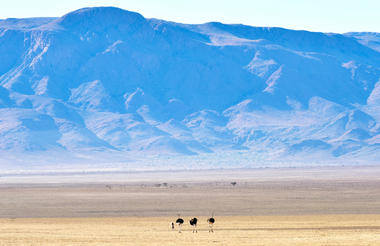


Deep within Namibia’s Namib Desert, Sossusvlei is a striking landscape of towering red sand dunes, among the highest in the world, pale salt pans and immense open skies. Part of the Namib-Naukluft National Park, it has a remote, almost otherworldly atmosphere shaped by silence, shifting light and extreme desert conditions. Visitors can climb famous dunes such as Big Daddy or Dune 45 at sunrise, when the sand glows orange and shadows stretch dramatically across the valley floor. Nearby Deadvlei, with its blackened camel thorn trees standing against white clay and rust-coloured dunes, offers one of southern Africa’s most distinctive desert scenes. The dry heat, the soft crunch of sand underfoot and the vast sense of space create a powerful atmosphere, though early starts and challenging temperatures are part of exploring this remarkable region.


Set between the rolling dunes of the Namib Desert and the icy Atlantic coastline, Swakopmund is a relaxed seaside town in western Namibia known for its German colonial architecture, cool coastal climate, and adventurous spirit. Palm-lined streets, historic buildings, and ocean fog create an atmosphere unlike anywhere else in the country. Travellers visit for desert activities such as quad biking, sandboarding, and scenic flights over vast dunes and shipwreck-strewn shores. Cafés, bakeries, and small museums add to the town's laid-back charm, though the Atlantic waters are brisk rather than tropical. With its striking desert-meets-ocean setting and mix of adventure and history, Swakopmund is one of Namibia's most distinctive destinations.


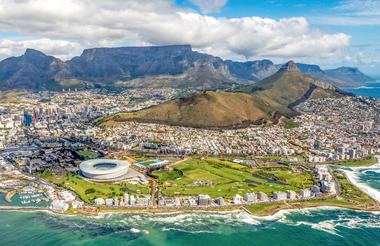
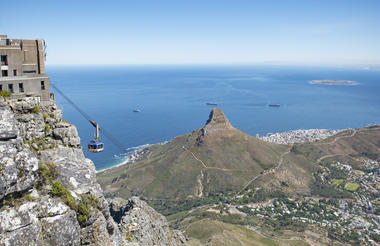
Set at the confluence of the Indian and Atlantic oceans and backed by the iconic Table Mountain, the bustling city of Cape Town presents an alluring combination of drawcards. Incredible powdery white beaches, highly acclaimed wine routes, and astonishingly beautiful mountain trails surround a cosmopolitan hub. This diverse metropolis is filled with superb shops and restaurants, extraordinary heritage monuments, a multitude of entertainment venues, and a spectacular, chic waterfront harbour. Highlights include the Zeitz Museum of Contemporary African Art; Table Mountain's jaw-dropping views; Boulders Beach, where penguins might swim right up to you in the warm Indian ocean waters; the Kirstenbosch Botanical Gardens, where you can walk along a treetop canopy among incredible native flora or watch an open-air concert at the base of the mountain; Robben Island, where visitors can see the cell where Nelson Mandela was imprisoned for 18 years; and many more.
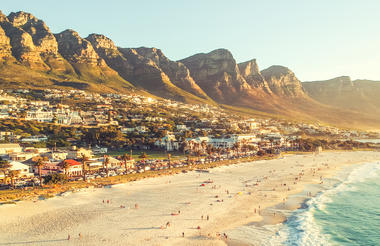


Paternoster is a picturesque fishing village on South Africa's Western Cape coast, approximately 150 kilometres north of Cape Town. Known for its whitewashed cottages, sandy beaches and rugged Atlantic shoreline, it offers a relaxed alternative to the region's busier coastal destinations. The village is renowned for its fresh seafood, with local restaurants serving West Coast specialities, while nearby Cape Columbine Nature Reserve offers hiking trails and dramatic coastal scenery. Birdwatching, kayaking and seasonal whale watching further enhance its outdoor appeal. Paternoster also serves as an excellent base for exploring the wider West Coast, including the spectacular spring wildflower displays that brighten the surrounding countryside.


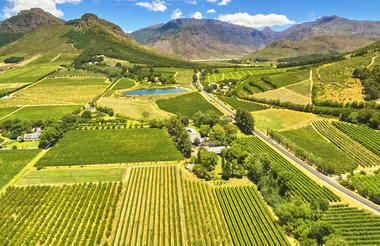
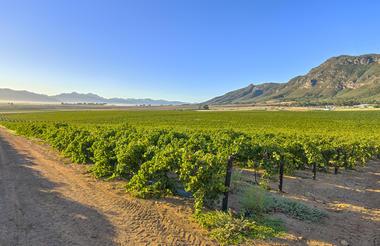
Located in the Western Cape, the Cape Winelands is a scenic wine-growing region set against the dramatic backdrop of the Boland Mountains. Characterised by rolling vineyards, historic Cape Dutch estates and charming countryside towns, it combines natural beauty with a rich culinary and cultural heritage. Visitors can explore renowned wine farms, sample the region's celebrated wines, enjoy exceptional farm-to-table cuisine and discover its history through galleries, markets and historic architecture. Beyond wine tasting, hiking, cycling and scenic drives reveal a landscape of oak-lined avenues, fertile valleys and sweeping mountain views. Combining wine tourism, outdoor activities, historic towns and mountain scenery, the Cape Winelands is one of South Africa's premier countryside destinations.


De Kelders is a small town in Walker Bay, about two hours drive from Cape Town. Protected coves and inlets provide the ideal conditions for Southern Right Whales to mate and give birth, and, every year between July and November, these giant creatures can be spotted in the waters. A collection of caves offer much to explore; at Klipgat, some of the oldest human remains and stone artefacts have been found; while Drupkelders presents a freshwater pool cave perfect for swimming and decorated by striking stalagmites and stalactites. The tranquil cove at Standford’s Bay is another perfect place to swim, surrounded by 150-year-old fig trees. Visitors can also enjoy hiking, angling, quad biking, and horse riding in the area, and the exquisite natural beauty of the Walker Bay Nature Reserve. Make sure to visit one of the local restaurants, too, which serve up wonderful fresh seafood.


