PRELIMINARY ITINERARY
DEPARTURE FROM THE USA
Depart from North America on overnight flights to Seoul, South Korea.
OPTIONAL PRE-TOUR NIGHTS
Choice of One, Two, or Three Extra Nights in Seoul Before the Tour
One Night Nov 2: Double: $138 per person / Single Rate: $251
Two Nights Nov 1, 2: Double: $282 per person / Single Rate: $538
Three Nights Oct 31, Nov 1, 2: Double $324 per person / Single Rate: $622
Additional nights include: Private Arrival Transfer, Accommodation, breakfast
Ninetree by Parnas Seoul Insadong
Address: 49 Insadong-gil, Jongno-gu, Seoul,
Phone: +82-2-6917-3100
SEOUL, KOREA
Late afternoon arrivals at Incheon International Airport (ICN). Please schedule your flight to arrive by 5:00 p.m.
You'll be met upon arrival and transferred to the hotel by private car.
7:00 p.m. Meet in the hotel lobby to walk to a nearby restaurant for our Welcome Dinner at Kkot Bape Pida, an Insadong institution that has held the Michelin Bib Gourmand and Green Star designations for five consecutive years, recognized for both its food and its commitment to sustainable sourcing. The kitchen works with organic Korean rice, traditionally fermented condiments, and producers whose standards reflect the restaurant's own.


Dinner
SEOUL: GATEWAY TO THE LAND OF MORNING CALM
We transfer to a private meeting room at a local business center, where our Trip Leader provides an orientation covering the days ahead.
A university professor specializing in Korean studies joins us for a lecture on the forces that have shaped Korean society. The discussion examines philosophical traditions, social structures, and cultural values, from Confucian principles to the rapid development of recent decades, that continue to influence contemporary life on the peninsula.
We walk through Insadong’s Antique Street, where restored Joseon-era architecture houses teahouses, galleries, and shops specializing in traditional crafts. The neighborhood offers a window into Seoul’s cultural heritage, preserved amid the modern city that surrounds it.
Enjoy a casual lunch of Korean ramen and gimbap at a local restaurant (includes bottled water plus choice of Coke, Sprite, or Korean beer).
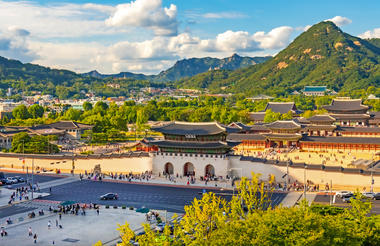
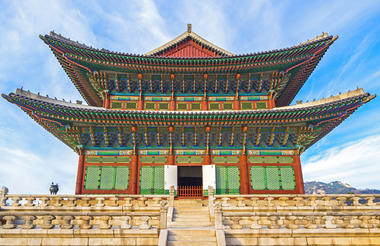
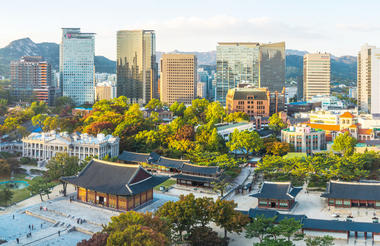
Our afternoon takes us to Changdeok Palace, one of five grand palaces built during the Joseon Dynasty and a UNESCO World Heritage Site. The palace served as the preferred royal residence for much of the dynasty’s 500-year reign. We visit the Secret Garden, a secluded retreat designed for the royal family. The garden’s pavilions, ponds, and carefully cultivated landscapes, framed by autumn foliage, reflect the Joseon aesthetic of harmony between architecture and nature.
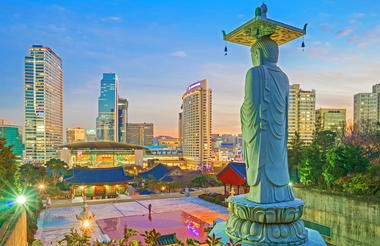
Dinner this evening is at Balwoo Gongyang, one of Seoul’s most distinguished Buddhist temple restaurants, where the menu follows the monastic culinary tradition: no meat, no garlic or onion, and no artifice. Dishes are composed from seasonal vegetables and fermented ingredients, presented with the same care and intention that defines temple life. (Includes water)
Breakfast, Lunch, Dinner
SEOUL: CONTEMPORARY HISTORY AND THE DIVIDED PENINSULA
We begin the morning with a guided visit at the National Museum of Contemporary History, where exhibits trace Korea’s transformation from the mid-20th century through its emergence as a technologically advanced nation. The visit provides context for understanding the arc of modern Korean society, from the Korean War and its aftermath through the economic and democratic developments that shaped the country its citizens inhabit today.
We then head to lunch at a North Korean restaurant whose kitchen is led by the former chef of a celebrated restaurant in Pyongyang. The menu centers on Gullim Manduguk, a hearty dumpling soup, offering a culinary window across the border. (Includes bottled water plus choice of Coke, Sprite, or Korean beer).
A resident of the Paju DMZ area joins us for lunch and accompanies us through the afternoon, offering a personal perspective on a conflict that has shaped daily life here for more than seventy years.
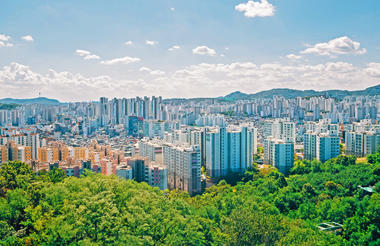
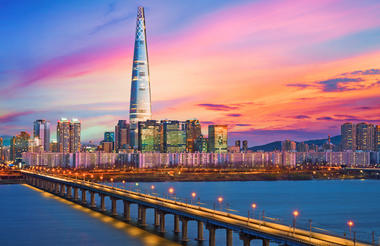
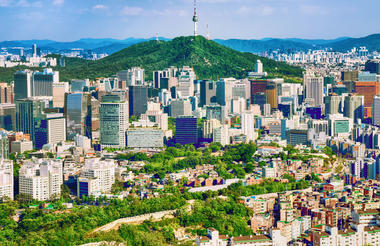
We continue to the Demilitarized Zone, the fortified border that has separated North and South Korea since the 1953 armistice. At Dora Observatory, high-powered telescopes reveal the stark contrast between the two nations: the North's Propaganda Village stands empty across the border while farmland and development stretch south. We visit Imjingak Park, a gathering point at the southern edge of the DMZ, and the Bridge of Freedom, where thousands of prisoners of war crossed back to the South after the armistice.
We return to Seoul in the evening. Dinner is on your own.
Remember to bring your passport with you today as it is required for the visit in the DMZ.
Please note: Daily visitor limits at the DMZ may require an early morning departure. In the event access is restricted on the day of our visit, the exact order and location of visits in the DMZ may be adjusted.
Breakfast, Lunch
Dinner
GYEONGJU: CAPITAL OF THE SILLA KINGDOM
This morning we check out of our Seoul hotel and transfer to Seoul Station, where we board the KTX high-speed train to Gyeongju, the ancient capital of the Silla Kingdom, which ruled much of the Korean peninsula for nearly a millennium.
After lunch, we drive to Yangdong Village, a UNESCO World Heritage Site where yangban aristocratic families have lived for more than 500 years. Stone walls, tiled-roof houses, and thatched structures occupy the hillside according to pungsu, Korean geomancy, creating a settlement that preserves both the physical layout and social hierarchy of a Joseon-era clan village. We walk through narrow lanes between family compounds, where the size and position of each house reflect the rank and lineage of its residents.
Returning to Gyeongju, we check in at the hotel.
Dinner this evening is on your own; the hotel and surrounding area offer a range of dining options.


Our large suitcases travel separately by truck and will be delivered to our hotel in Gyeongju. We'll keep our hand baggage with us throughout the journey today.
Breakfast, Lunch
Dinner
GYEONGJU: LEGACY OF THE SILLA KINGDOM
We begin the morning at Bulguksa Temple, a UNESCO World Heritage Site and one of Korea's most significant Buddhist temples. Founded in 751 during the height of Silla power, Bulguksa retains original stone pagodas and bridges that have survived more than twelve centuries. The temple's architecture reflects Buddhist cosmology, with its terraced layout symbolizing the journey from the earthly realm to enlightenment.
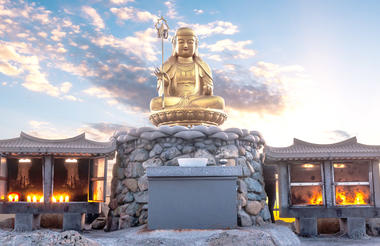
Nearby, we visit Seokguram Grotto, an artificial stone cave temple overlooking the East Sea. The grotto houses a monumental seated Buddha, carved from granite and regarded as a masterpiece of Buddhist art. The precision of its construction, designed to prevent moisture damage, demonstrates the advanced engineering of eighth-century Silla.
After lunch, we visit the Gyeongju National Museum, which houses artifacts from the Silla Kingdom, one of the Three Kingdoms of Korea that ruled much of the peninsula from 57 BC to 935 AD. Gold crowns, Buddhist sculpture, and ceremonial objects reveal the sophistication of a civilization that endured for nearly a millennium, with cultural exchanges reaching as far as the Silk Road.
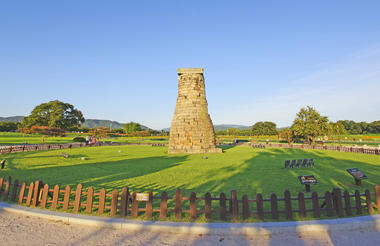
We explore Daereungwon Royal Tomb Park, where grassy burial mounds rise across the landscape as the final resting places of Silla royalty. We step inside Cheonmachong (the “Flying Horse Tomb”), excavated in the 1970s, to view its interior structure and replicas of the treasures discovered within, including the painted saddle flap that gives the tomb its name.
This evening, dine at Yosukgung 1779, Gyeongju’s most celebrated restaurant, housed in a historic building that has served diners for nearly two and a half centuries. The menu features Korean Royal Court Cuisine, a refined culinary tradition developed for the Joseon dynasty’s royal household. Dishes are presented on elegant copper tableware, reflecting the aesthetic and ritual of palace dining.
After dinner, we take an evening stroll around Wolji Pond, constructed in 674 as part of the Silla palace complex. The reconstructed pavilions glow against the night sky, their reflections caught perfectly in the still water below.

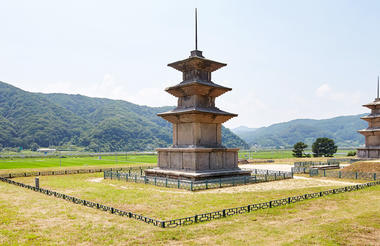
Tip: Today's temple visits involve walking on uneven terrain and numerous stone steps, some of which may be steep. We recommend wearing comfortable, sturdy walking shoes with good traction.
The ascent to Seokguram Grotto has the most steps, and is optional.
Breakfast, Lunch, Dinner
GYEONGJU TO BUSAN: BUDDHISM AND HANDS ON BULGOGI CLASS
Check out of the hotel.
We begin this morning with a lecture on Korean Buddhism by a university professor. The discussion examines Buddhism's arrival on the peninsula, its adoption as the state religion during the Silla Kingdom, and its lasting influence on Korean philosophy, art, and social structure.
Following the lecture, we participate in a hands-on cooking class focusing on beef bulgogi, one of Korea's most recognized dishes. Our instructors guide us through ingredient selection, marination techniques, and cooking methods that define Korean home cuisine. We then sit down to enjoy the meal we've prepared.
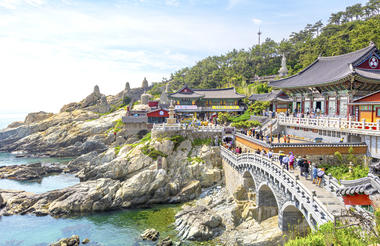
After lunch, we depart Gyeongju and drive south toward Busan, Korea's second-largest city and busiest port. En route, we stop at Haedong Yonggungsa Temple, situated on cliffs overlooking the East Sea - the only major Korean Buddhist temple built directly on the coast. Founded in 1376, the temple offers a striking contrast to the mountain temples we've visited, with waves breaking against the rocks below and seabirds circling the pagodas.
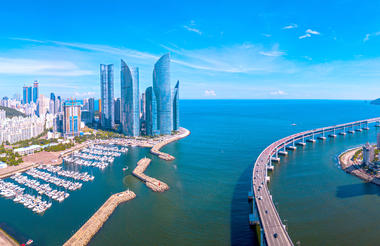
Continuing to Busan, we check in at our hotel in Haeundae, a lively coastal district known for its skyline, cafés, and waterfront promenade. The evening is at leisure to explore the neighborhood
There are non-meat alternatives included in the Bulgogi preparation.
Breakfast, Lunch
Dinner
BUSAN: PORT CITY OF CONTRASTS
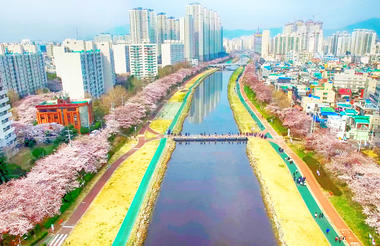
Today we explore Busan, a city where Korea's maritime heritage and rapid modernization converge along the southeastern coast.
We begin at the UN Memorial Cemetery, the only United Nations burial ground in the world. Established after the Korean War, the cemetery honors soldiers from 16 countries who died defending South Korea during the 1950-1953 conflict. The meticulously maintained grounds and memorial walls provide a place for reflection on the international dimensions of the war that shaped modern Korea.
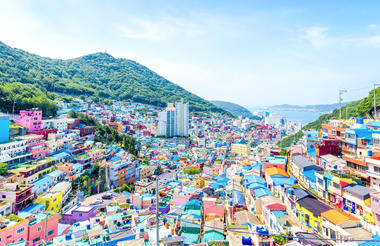
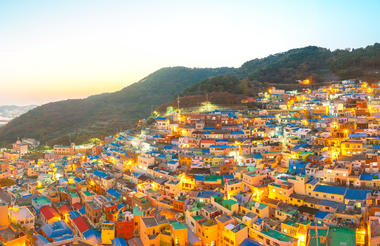
Continue to Gamcheon Culture Village, a hillside neighborhood that has transformed from a modest postwar settlement into an open-air gallery. Pastel-painted houses cascade down steep lanes, decorated with murals, sculptures, and installations created by local and visiting artists. The village offers both visual interest and insight into Busan's working-class communities and their creative reinvention.
Visit Jagalchi Fish Market, Korea's largest seafood market and the commercial heart of Busan's fishing industry. Vendors — women known as jagalchi ajumma — sell the morning's catch from stalls piled with fresh fish, shellfish, and sea creatures of remarkable variety. The market's energy and abundance reflect Busan's role as a major fishing port.
From the market, we walk through nearby traditional market streets before ascending Yongdusan Park to Busan Tower. From the observation deck, take in panoramic views of the city, harbor, and surrounding mountains to gain a perspective of Busan's geography as both a natural port and a sprawling urban center.
The evening is yours for independent dining and exploration. There are many restaurants around the hotel, with every style of cuisine.
Breakfast, Lunch
Dinner
FLY TO JEJU ISLAND
This morning we fly to Jeju Island, Korea's largest island and a UNESCO World Natural Heritage Site. Formed by volcanic activity millions of years ago, Jeju has developed a distinct culture and identity, shaped by its geography, climate, and historical isolation from the mainland.
After lunch at a local restaurant we begin our exploration of the island.
Begin at the Jeju Folklore and Natural History Museum, which provides context for understanding the island's unique environment and way of life. Exhibits cover Jeju's volcanic formation, endemic flora and fauna, and the traditional practices that evolved in response to the island's conditions: from stone-walled fields to the haenyeo (women divers) who have harvested the sea for generations without breathing equipment.
Continue to Dongmun Traditional Market, one of Jeju's oldest and most active markets. The stalls offer local produce, seafood, citrus fruits, and regional specialties that reflect the island's agricultural and maritime economy. The market remains a gathering place for residents and provides a window into daily life on Jeju.
Dinner and evening at leisure to enjoy the peaceful scenery around the resort.


Breakfast, Lunch
Dinner
JEJU ISLAND
We begin at the Jeju April 3rd Peace Park, a memorial dedicated to the victims of the 1948 Jeju uprising and subsequent military campaign, in which tens of thousands of islanders were killed. A docent-led guided visit traces the events and their place in Korean memory. The park’s architecture and landscape are designed for reflection, and the exhibits offer a clear-eyed account of a chapter in Korean history that went largely unacknowledged for decades.
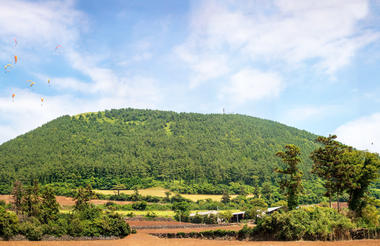
We continue to Sangumburi Crater, a dormant volcanic cone that has remained remarkably intact, one of many oreum (parasitic cones) produced by volcanic activity across the island. Unlike most craters on Jeju, Sangumburi has no peak; its bowl-shaped depression is home to a rare forest ecosystem. We take a 1.5-mile walk around the crater rim for panoramic views of Hallasan and the surrounding landscape.
At Seongeup Folk Village, stroll through a preserved traditional settlement that has been continuously inhabited for more than 500 years. Stone walls, thatched-roof houses, and narrow lanes reflect pre-modern Jeju life. We visit a traditional house and learn about the agricultural practices and social structures that developed in response to the island's isolation and challenging environment.
For lunch, we enjoy local Jeju cuisine.
Our final stop is Seongsan Ilchulbong (Sunrise Peak), a dramatic tuff cone rising from the sea on Jeju's eastern coast. Formed by an underwater volcanic eruption approximately 5,000 years ago, it was originally an island before sedimentary deposits connected it to the mainland. Those who wish may climb 550 steps to the crater's crown for commanding coastal views.

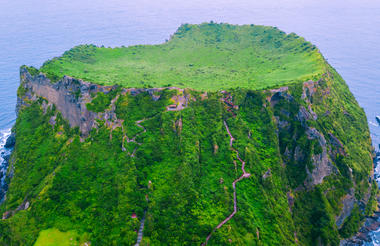
NOTES: Today involves considerable walking at multiple sites, including the 1.5-mile walk around Sangumburi Crater's rim and steep stairs at Seongsan Peak (550 steps up, 150 steps down to the shoreline).
Comfortable walking shoes with good support are essential. Those who prefer a less strenuous experience can enjoy views from the base of the peak without making the climb.
Breakfast, Lunch
Dinner
JEJU ISLAND: WATERFALLS, HAENYEO, AND THE SPIRITED GARDEN
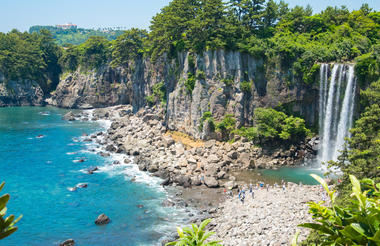
We begin at Cheonjiyeon Waterfall, where water drops 72 feet into a pond enclosed by subtropical forest. The name translates to "sky connected with land," and the ravine supports several plant species found nowhere else on the island. A forest path leads down to the falls.
We walk through Beophwan Village, home to one of Jeju's active Haenyeo communities, where we meet the women divers and sit down with them for a conversation about their lives and work. Lunch follows at the village restaurant, where the day's catch is the centerpiece of the meal.
Jeongbang Waterfall is one of the few in Asia that falls directly into the ocean, its 75-foot cascade breaking over coastal cliffs where freshwater meets the sea. Local legend holds that the waterfall's name comes from an inscription left in the rock face by an envoy of a Chinese emperor.
We close the day at Spirited Garden, a botanical garden developed over decades on reclaimed land. The design draws on traditional Korean garden principles, with native Jeju plants and introduced species arranged around ponds and stone features.
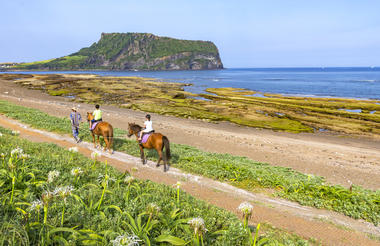
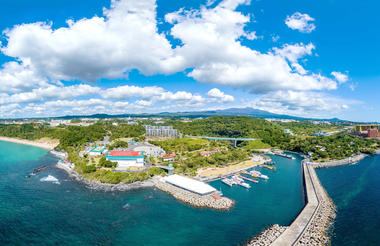
NOTES: Today's visits involve moderate walking on paved paths and uneven coastal terrain.
The walk to Cheonjiyeon Waterfall includes steps through the forested ravine, and viewing Jusangjeolli Cliff requires navigating rocky coastal paths.
Comfortable walking shoes with good traction are recommended, particularly if conditions are damp near the waterfalls.
Breakfast, Lunch
Dinner
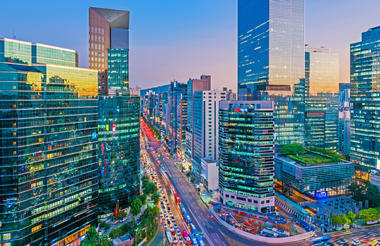
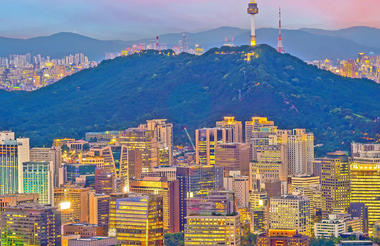
JEJU ISLAND TO SEOUL: RETURN TO THE CAPITAL
Check out of our hotel and transfer to Jeju Airport for our flight back to Seoul's domestic airport.
Upon arrival in Seoul, we pause for lunch before checking in at our hotel.
The afternoon is at leisure for independent exploration.
This evening, our farewell dinner is a traditional Korean meal. We raise a glass of soju and celebrate what has been an extraordinary immersion in one of Asia's most compelling cultures.

Breakfast, Lunch, Dinner
PROGRAM END - DEPARTURES
Breakfast at leisure. Check out of the hotel by 12:00 p.m.
You may schedule your departure at any time today.
Transfer to the airport for your departure flight; your Conservancy Travel Trip Leader will advise your transfer time locally in Seoul.
Breakfast