


Known for its rugged mountain range, diverse plant and wildlife population, along with the famous Spitzkoppe, Erongo is a place that houses so much of Africa's natural magnificence. Surrounded by volcanic ruins and breath-taking rock formations, the Erongo Mountain range holds dramatic scenic landscapes and indescribable natural beauty. The peaks are best known for their caves and rock art, particularly the 50m-deep Phillips Cave, and home a vast array of reptiles and mammals. The rich biodiversity - with black rhinos and the rare black-nosed impala native to the area - leaves people wanting more.
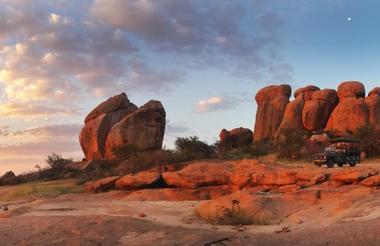
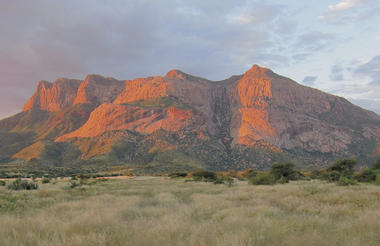
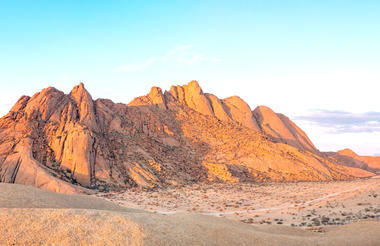
Twyfelfontein is a site of ancient rock engravings in the semi-arid region of north-western Namibia. This world heritage site is situated 100 kilometres from the ocean, where the scenery shifts from dry red sands to lush grassland. Drawn by the San People, the engravings show depictions of both human and animal tracks. Many of the impressions also depict animals that are no longer found in the area - including lion, zebra, kudu and even seals! Visiting these paintings, with their rich historical and cultural backgrounds, allows you to learn about the Namibian heritage and the San people's customs and beliefs.
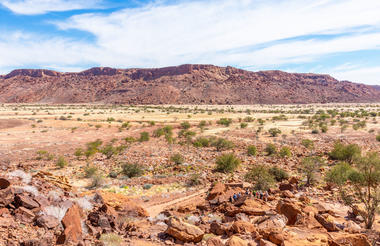
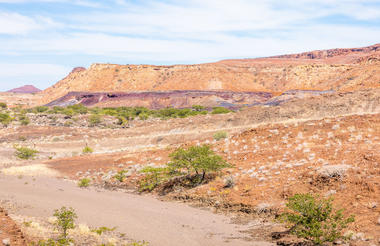
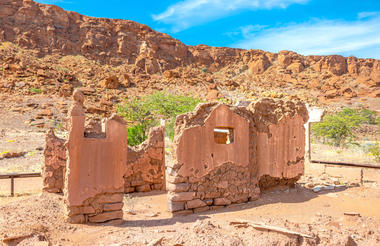
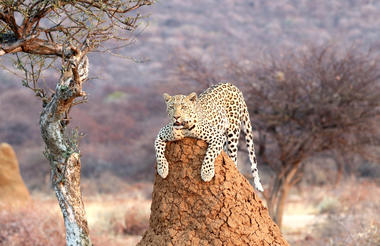
In northern Damaraland, where the flat-topped mountains of rich red rock greet the Uniab River, lies the small region of Palmwag. The area is set amid an endless basalt landscape created by magma eruptions millions of years ago. It is a refuge area for rare animal species such as the black hooked-lipped rhinos and the fascinating desert-dwelling elephants. Large predators, such as leopards, cheetahs, and spotted hyenas, are attracted to healthy antelope populations, and a group of "desert lions" occupy the arid climate. Palmwag is a place that will leave you feeling content in the generous arms of a wild Namibia.
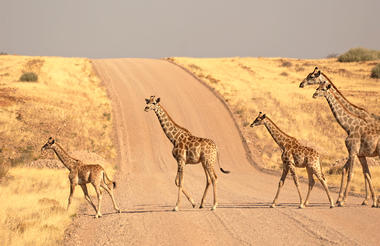

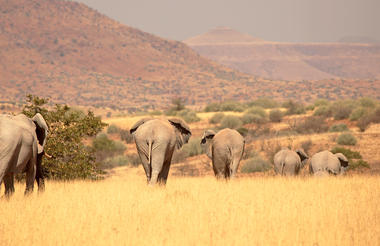
Running along the Kunene River, meandering through palm forests and barren lands, lies the spectacular Epupa Falls, made up of several waterfalls. This picturesque region in northern Namibia is a haven for many animal species, and the tranquil environment homes grand baobab and wild fig trees. The native Himba tribe still live in these lands, maintaining their own traditions and lifestyle. They can be visited when walking within the area. With scenic hikes and cool dips in the shallow rock pools, Epupa falls are always a popular place to visit, and Rose quartz crystals can even be found along the riverbed.

In the far reaches of northern Namibia lies a beautiful stretch of earth called Ovamboland. Dotted with tiny villages, the region is covered with large pans that are flooded with water during the rainy season - bringing wildlife from the surrounding areas with it. Wavering Makalani palms tower above the greenery in which native people herd their cattle. Namibian artists practise their craft at numerous roadside stalls, selling intricately woven baskets, jewellery and wood carvings. Although wildlife is not as abundant due to the presence of people, the area still retains the air of an authentic African wilderness.

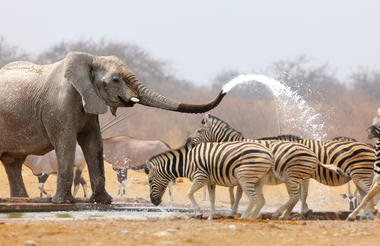
Surrounded by grassland and mopane shrublands, eastern Etosha is best-known for its remarkable variety of wildlife. Springbok are found abundantly within this region, while the many waterholes attract black rhinoceros and various antelope. During the rainy season, animals tend to migrate near the eastern Von Lindequist Gate. Makalani palms sway around waterholes on this side of the park, and the nearby pans are hotspots for blushing pink flamingos. Pure bliss is finding a quiet spot to wait for action, be it zebra jostling for a drink or sudden drama as elephant arrive in rumbling groups to quench their thirst.
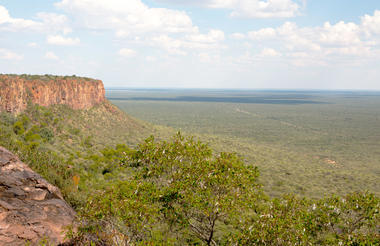
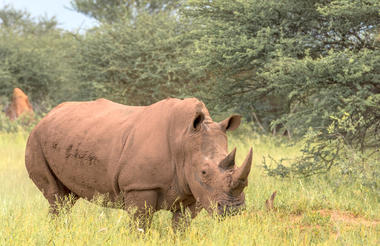
With its striking copper and red sandstone cliffs, Waterberg Plateau is one of Namibia's most magnificent natural wonders. Surrounded by freshwater springs, the brick-red peaks rise up out of the surrounding Namibian savannah, overlooking the Kalahari Desert. Dinosaur footprints, mysterious rock engravings and a thriving number of Black and White Rhino scatter the plains. Natural canyons of the plateau feature open grasslands and lush woodlands. With vivid landscapes and an indescribable atmosphere, Waterberg is a must-do when visiting the country. The sheer beauty of the plateau is an unforgettable experience.
The capital Windhoek (translated as “windy corner”) is the political, cultural, industrial and economic center of Namibia with 400,000 inhabitants. Windhoek was founded on October 18, 1890, when the foundation stone for what is now known as the “Alte Feste” fortress was laid. Other popular sites include the Tintenpalast, the Christuskirche, the Kaisergymnasium and the Heinitz und Sanderburg. The quiet and well-organized city with a colonial German touch, offers German restaurants and shops, a widespread use of the German language, the celebration of German customs (such as Carnival or Oktoberfest) - the German tradition is reflected everywhere. Even the beer is still brewed according to the German "Reinheitsgebot" (special purity law). Mixed with African traditions and roots, Windhoek offers a unique atmosphere and a relaxed lifestyle that makes the city so endearing.


Greater Windhoek can be described as a tourists paradise. The things to be seen and done in and around the capital city of Namibia are endless. The hot springs of Gross Barmen are found just north of Windhoek. The springs have a natural temperature of 65 °C but are cooled down in order for people to enjoy them. Another attraction in close vicinity to Windhoek is the Daan Viljoen game park. Being a conservation area for many game species, it boasts large numbers of wildlife. With its diverse range of natural and cultural attractions, visiting the region in and around the city is an incredible experience.


