


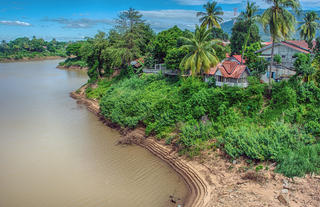
Wedged between a number of larger neighbouring countries, Laos is often overlooked in favour of tourism giants such as Thailand and Vietnam. But these travellers are missing out on an extraordinarily scenic and culturally rich destination. Laos boasts a reputation as the least visited, least Westernised, and most untouched of all Indochinese nations. Only time will tell how long this will last, but while it does, visitors who choose to explore this nation’s remote areas will be richly rewarded. Laos’ primary drawcard is undoubtedly the mighty Mekong River which traverses the length of the country and is considered the second most biodiverse river in the world. In the north, the landscape is characterised by little-explored jungle-clad mountainous areas where visitors can witness the intriguing cultures of the various hill tribes that populate this region. Travellers on the hunt for cultural interest should head for the bustling capital of Vientiane, with its innumerable temples and Buddhist monuments. It is this variety of exotic wildlife, remote wilderness and remarkable cultural treasures that make Laos a truly unique and unforgettable holiday destination.
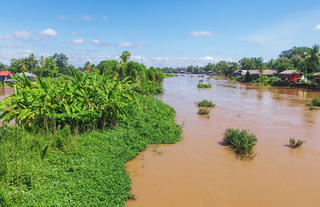
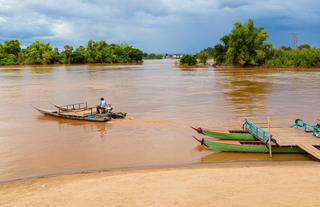
Once a commanding power in the Mekong River basin, Champasak has evolved into a tranquil province best known for its serene landscapes, ancient heritage and the beguiling Si Phan Don (4,000 Islands) archipelago. Its namesake town, Champasak, is a peaceful riverside settlement graced with French colonial buildings, shimmering Buddhist temples and a slow, timeless rhythm. The province’s crown jewel is Wat Phu, an evocative pre-Angkorian Khmer temple complex and UNESCO World Heritage Site dating back to at least the 5th century. A fragrant frangipani-lined stone stairway leads to its upper sanctuary, rewarding visitors with sweeping views over the surrounding plains and the remnants of this ancient spiritual centre. Beyond its archaeology, Champasak is a paradise for adventure seekers and nature lovers alike, with 178 named mountains, vast protected areas and riverine landscapes offering endless opportunities for exploration.


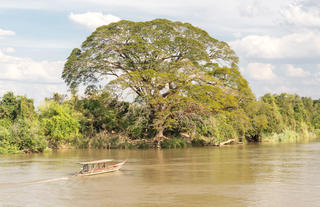
A bustling yet quaint community set at an elevation of 1300m on the beautiful Bolaven Plateau, Paksong nestles amid magnificent natural scenery, authentic villages, and traditional coffee farms. As the heart of Laos' 'Coffee Capital', Paksong offers visitors a tour through the coffee plantations and a guided stroll through rows of Arabica plants for a walk-through of the production process. It also has some of Southeast Asia's most spectacular waterfalls, including Tad Fane, Tad Tayicseua, and Tad Champee (between Pakse and Paksong). Trek through the edge of the Bolaven Plateau on three to five-day guided tours, or get an exhilarating rush as you soar over deep ravines, tumbling waterfalls and the lush green jungle of southern Laos.


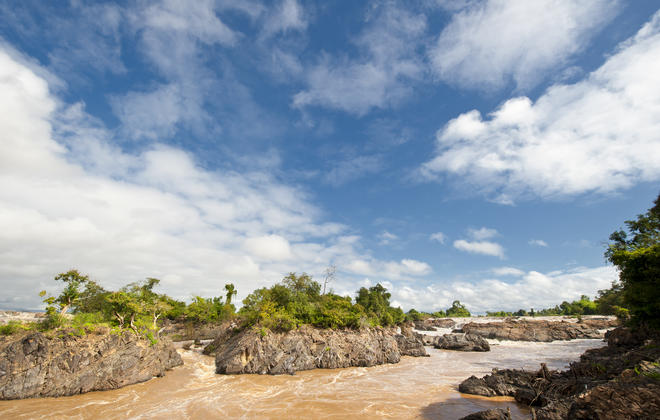
Far larger than neighbouring Don Det, Don Khon is a tranquil river island threaded with scenic walking and cycling trails. Scattered French-era buildings hint at its colonial past and lend the island a nostalgic, old-world charm. Travellers can take a longtail boat in search of the rare Irrawaddy dolphins, or wander to the impressive Li Phi Waterfalls, where the Mekong thunders through a series of dramatic rapids. As day turns to dusk, the historic French bridge linking Don Khon and Don Det becomes one of the area’s most enchanting viewpoints—perfect for watching the sky shift through hues of gold, rose and deep amber over the shimmering river.

As previously described


