The capital Windhoek (translated as “windy corner”) is the political, cultural, industrial and economic center of Namibia with 400,000 inhabitants. Windhoek was founded on October 18, 1890, when the foundation stone for what is now known as the “Alte Feste” fortress was laid. Other popular sites include the Tintenpalast, the Christuskirche, the Kaisergymnasium and the Heinitz und Sanderburg. The quiet and well-organized city with a colonial German touch, offers German restaurants and shops, a widespread use of the German language, the celebration of German customs (such as Carnival or Oktoberfest) - the German tradition is reflected everywhere. Even the beer is still brewed according to the German "Reinheitsgebot" (special purity law). Mixed with African traditions and roots, Windhoek offers a unique atmosphere and a relaxed lifestyle that makes the city so endearing.


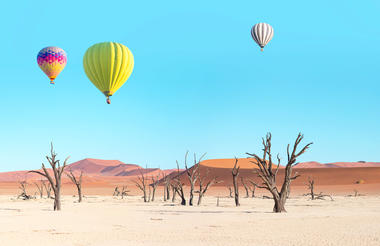
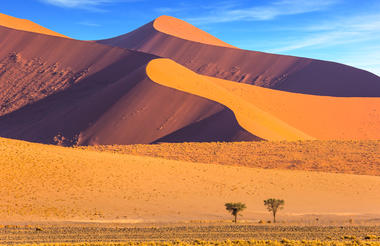
Known as "The Living Desert", the Namib Desert stretches inland from the Atlantic Ocean, covering large parts of Namibia. As one of the oldest and largest deserts, this arid hotspot supports many plants and animal species, some of which are found nowhere else in the world. Desert Elephants and Black Rhino roam great distances along the dry river beds, searching for edible plants and water sources. Predators like Lion also survive in this dry, harsh terrain. The gigantic desert is one of Africa's most unique destinations - containing many of Namibia's most magnificent attractions within its borders. It is hard to miss!
Swakopmund, known simply as ‘Swakop’ to Namibians, is the capital of the Erongo Region. It was founded in 1892 and was regarded at the time as Germany’s main port in South-West Africa. The townscape of this small town is characterised by numerous historic buildings from the German colonial era: wide streets, German street names, German pubs, cafés and bakeries. During the colonial era, ‘Swakop’ was described as ‘Germany’s southernmost coastal town’. Even today, German is still spoken everywhere. Swakop offers many tourist attractions, such as charming pubs, a beautiful seafront promenade, an aquarium and much more. You can go on lovely day trips to the surrounding area, such as south to Walvis Bay or north to Cape Cross to visit the largest seal colony on the African mainland. In and around Swakop, there are plenty of activities on offer, such as boat trips to see seals, exciting desert tours, quad bike safaris, kayaking trips and helicopter flights. You’ll be spoilt for choice.


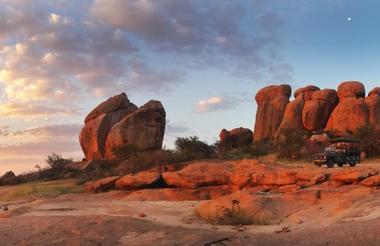
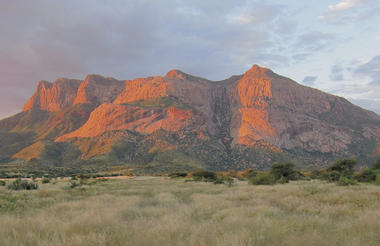
Known for its rugged mountain range, diverse plant and wildlife population, along with the famous Spitzkoppe, Erongo is a place that houses so much of Africa's natural magnificence. Surrounded by volcanic ruins and breath-taking rock formations, the Erongo Mountain range holds dramatic scenic landscapes and indescribable natural beauty. The peaks are best known for their caves and rock art, particularly the 50m-deep Phillips Cave, and home a vast array of reptiles and mammals. The rich biodiversity - with black rhinos and the rare black-nosed impala native to the area - leaves people wanting more.
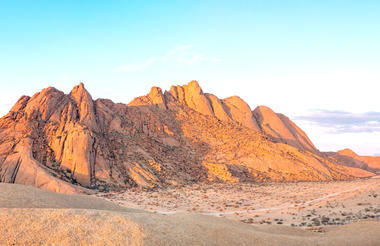
Featuring breath-taking panoramas, unforgettable sunsets, and abundant wildlife, Etosha National Park is Namibia's premier wilderness conservation area. The Etosha Pan - a shallow salt pan covering an area of 5.000 Square kilometres lies in the heart of the park. Natural springs are found in this dry terrain, making for excellent game viewing. Throughout the Park, the landscape is generally flat, with various habitats ranging from mopane woodland to wide, open, virtually treeless plains. Etosha is home to one of the world's most stable black rhino populations, along with lion, elephant, leopard, cheetah, and hyena.
Etosha's southernmost section is known for its rich population of both white and black rhino. Etosha South is home to the Okaukuejo Rest Camp, which is famous for its floodlit waterhole. The many viewpoints overlook picturesque bush-scapes and abundant wildlife. Getting into the South is accessible by Andersson's Gate. Here, visitors can expect to see many animals, including lion and the rare, black-faced impala. However, the most notable of animals found here are elephants. Enjoy guided nature walks, game drives, or simply watching the sunset from this breath-taking location.


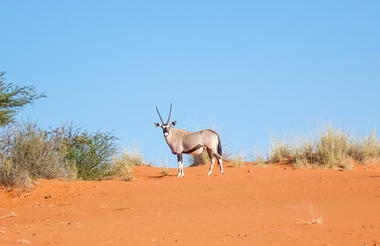
Situated on the eastern side of Etosha, bordering Fisher's Pan, Onguma Game Reserve is one of In the eastern parts of the Etosha National Park, bordering Fishers Pan lies the Onguma Private Game Reserve. Protecting more than 34,000 acres of land, this private reserve is home to over thirty species of animals, from kudu, giraffe and oryx, to predators such as lion, cheetah and leopard. The Onguma water hole is also a great place to spot game. Game drives, guided walks, and rhino research drives can be enjoyed within the reserved area, and safaris into Etosha National Park are available to see the abundance of animals. Here you will have the opportunity of experiencing Africa in all her beauty and diversity.


Located on the northeastern tip of Namibia - the rapidly growing town of Rundu is a central administrative and economic hub in the region. Renowned for its goat, millet and cattle farming, the boom of tourism in Rundu results from the town's easy accessibility. In many ways, woodcarving artefacts have become a symbol of the town. Visitors can purchase any number of wooden items, from cutlery and bowls to ornaments and animals. The small town of Rundu, with its flat plains and sandy roads, is a fun-filled stop-over for those travelling between Etosha, Windhoek and the Okavango Delta.
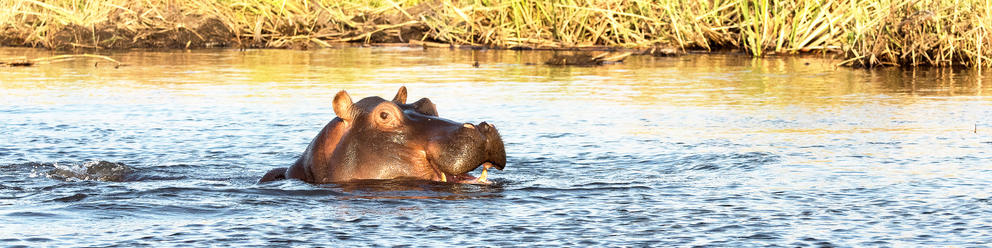
Flowing from the highlands of Angola and tracing the border with Namibia, the Okavango River is southern Africa’s fourth-longest river system and a lifeline of remarkable biodiversity. Before entering Botswana to form the famed Okavango Delta, it passes the scenic Popa Falls rapids, where visitors can take in the sound of rushing water against lush riverbanks. The surrounding landscapes are rich with wildlife, supporting over 70 fish species and more than 400 bird species, making the region a favourite for anglers and birders alike. Travellers can enjoy tranquil boat cruises, explore riverside reserves, or visit Rundu, the relaxed capital of Kavango East, where daily life unfolds along the water’s edge.
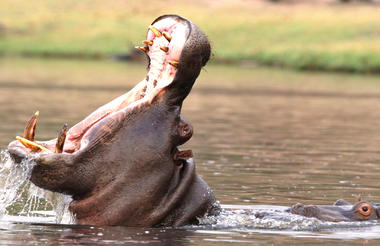
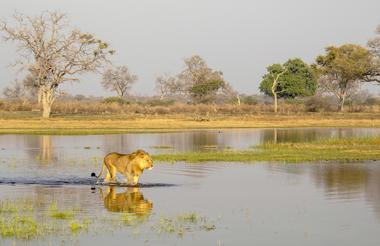

Rising in the central Angolan highlands and east of the Kunene River is the Kwando River, forming the boundary between Namibia, Angola and Zambia. This river is the lifeblood of this region, and its fresh grasses support large herds of animals, most notably the Burchell's Zebra. Activities in the area include boat cruises, guided bushwalks and game drives. The surrounding land is pristine, largely uninhabited, and its beauty remains relatively undiscovered. Soak up the charm of the river nestled beneath a canopy of shady jackalberry trees, or listen to the sounds of the hippo's grunt as your boat sails past.

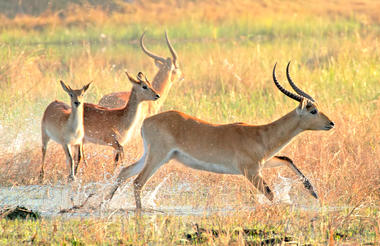
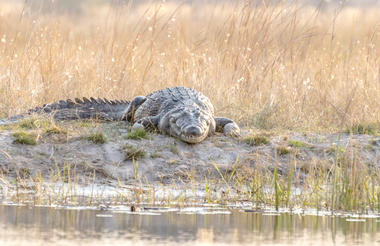
The Chobe River Front in Botswana runs along the northernmost part of Chobe National Park. In addition to being the country's second-largest park, it offers spectacular game viewing all year round, as it is home to some of the largest wildlife populations in Africa. Lions, Leopards, Spotted Hyenas, and Cheetahs live here in high numbers. The park also hosts antelope species such as Sable, Puku, Tsessebe, Eland and the rare Chobe Bushbuck. A notable characteristic of the region is the massive concentration of elephants. In this park, there are the most significant surviving populations of elephants in the world.


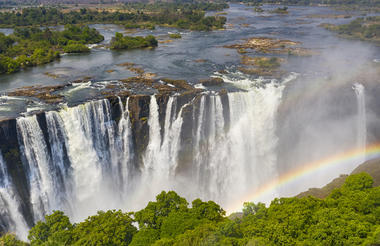
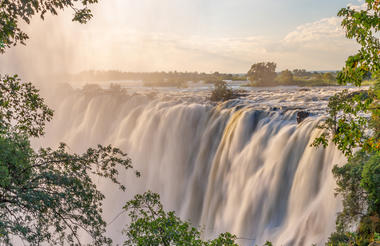
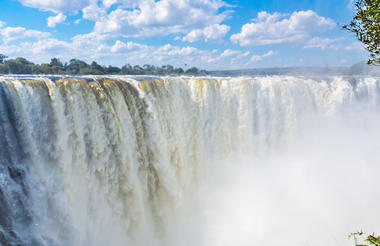
Victoria Falls is an awe-inspiring sight of beauty located on the Zambezi River, serving as the border between Zambia and Zimbabwe. The massive basalt cliffs over which the falls thunder transform the Zambezi from a calm river into rapids that carve their way through dramatic gorges. The falls have been designated as a National Park and World Heritage Site, and they are also one of the Seven Natural Wonders of the World. Visitors can enjoy activities such as swimming, bungee jumping, and zip-lining at the falls. Additionally, there are more relaxed activities available, including sunset cruises, walking tours, and interactions with elephants.