

Tanzania is a country full of diversity in landscape, culture, nature and its people. With 38% of its territory protected as conservation areas, it consequently shows the aim of the government to prevail the country in its incredible beauty. Tanzania has 16 national parks and a vast amount of game reserves. Neighboring countries are Uganda, Rwanda, Burundi, Kenya, Malawi, Mozambique, Democratic Republic of Congo and Zambia. One of the famous landscape icon is surely Mount Kilimanjaro, the highest summit of Africa. The territory of Tanzania with a coastline of around 800 km in the Indian Ocean includes also some islands.
At the foot of Mount Meru, whose volcanic cone dominates the northern skyline, Arusha is the administrative capital of the Arusha Region and the principal gateway to northern Tanzania's renowned safari circuit. Alongside its thriving tourism industry, the bustling city is a leading centre for business, diplomacy and international conferences in East Africa, hosting regional institutions and major political, commercial and conservation events throughout the year. German colonial buildings, modern offices and lively markets reflect Arusha's evolution from a colonial outpost into northern Tanzania's commercial hub, while cafés, hotels, craft centres and galleries contribute to its cosmopolitan atmosphere. Less than an hour from the city, Arusha National Park offers game drives and canoeing on the Momella Lakes beneath Mount Meru, while nearby coffee estates and cultural experiences introduce visitors to the region beyond the safari circuit.


The acacia-dotted plains of the Eastern Serengeti are home to abundant wildlife and offer some of the finest safari experiences in Tanzania. Renowned for its role in the Great Wildebeest Migration, this region attracts visitors from around the world eager to witness one of nature’s most spectacular events. Excellent game viewing can be enjoyed around Lobo on the eastern edge of Serengeti National Park, while activities include guided walks through the scenic wilderness, hot air balloon safaris, bush picnics, and opportunities to learn about Maasai culture and traditions. A visit to the famous Gol Kopjes is a highlight, as these granite outcrops are widely regarded as one of the best places in Africa to observe cheetahs in their natural habitat.


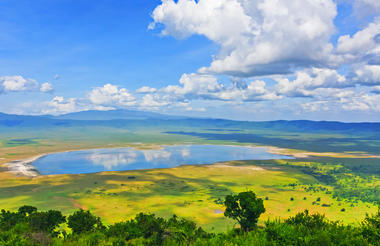
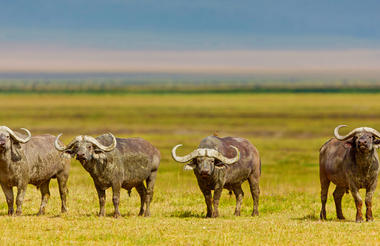
Located within northern Tanzania's Ngorongoro Conservation Area, Ngorongoro Crater is the world's largest intact volcanic caldera and one of Africa's most remarkable wildlife destinations. Encircled by steep crater walls, its fertile grasslands, forests and soda lakes support an extraordinary concentration of animals, including lions, elephants, buffalo and hippos. Game drives across the crater floor offer exceptional wildlife viewing within a relatively compact area, while Maasai communities in the surrounding highlands provide insight into local traditions and culture. From mist drifting over the crater rim at dawn to vast plains dotted with grazing herds below, the landscape is both dramatic and serene. Although popular and often busy, Ngorongoro delivers an unforgettable safari experience shaped by stunning scenery and abundant wildlife.
Located in Tanzania’s scenic northern highlands, Karatu is a small, colourful town surrounded by rolling green hills and fertile farmland. Travellers heading for the Serengeti National Park and Ngorongoro Crater often pass through Karatu, which lies beneath the towering Ol Deani Volcano. The town serves as a popular overnight stop for visitors exploring the region’s many game parks. Karatu offers a variety of activities, including browsing bustling local markets, sampling beer at a local brewery, visiting traditional homesteads, or taking guided walks through the Ngorongoro Forest in search of waterfalls and caves. Whether seeking cultural experiences, hiking and biking opportunities, or simply a relaxing break between safari drives, visitors will find plenty to enjoy in this welcoming town.


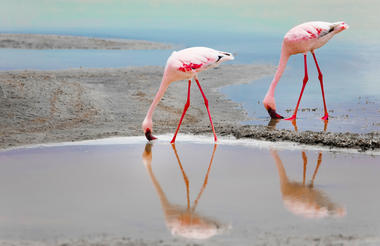
Tucked between the Kidero Mountains in the south and the Eyasi Escarpment in the north, Lake Eyasi is situated in a remote, dry, arid landscape just south of Tanzania’s renowned Serengeti National Park. This seasonal lake features dry salt beds and is home to a variety of birdlife such as flamingos and pelicans. Beautiful surroundings of woodlands, forests, and ancient baobabs beckon to be explored, with numerous excellent walking trails. Visitors can learn about local cultures by visiting the pastoralist Datoga people as well as the nomadic hunter-gatherer Hadzabe group. Other popular activities include bird watching, hiking, walking safaris, and soaking up the spectacular views. Don’t miss the opportunity to visit the nearby enthralling Oldeani Mountain, the atmospheric swampy valley area of Yaeda, and the spectacular Serengeti.


Situated in northern Tanzania, Tarangire National Park is a breathtaking safari destination famed for its dramatic landscapes and exceptional wildlife. Dominated by ancient baobab trees and the life-giving Tarangire River, the park provides sanctuary for vast herds of elephants, zebra, and wildebeest, alongside smaller groups of giraffe and impala, especially during the dry season when animals gather in extraordinary numbers. Travellers can look forward to thrilling game drives that reveal lion, leopard, and even cheetah, together with more than 500 bird species that make the skies shimmer with colour and sound. Unlike busier safari parks, Tarangire offers a more tranquil, intimate atmosphere, allowing visitors to truly connect with nature. Its sweeping vistas, rich biodiversity, and sense of untamed wilderness make it an unmissable highlight of any Tanzanian adventure.


