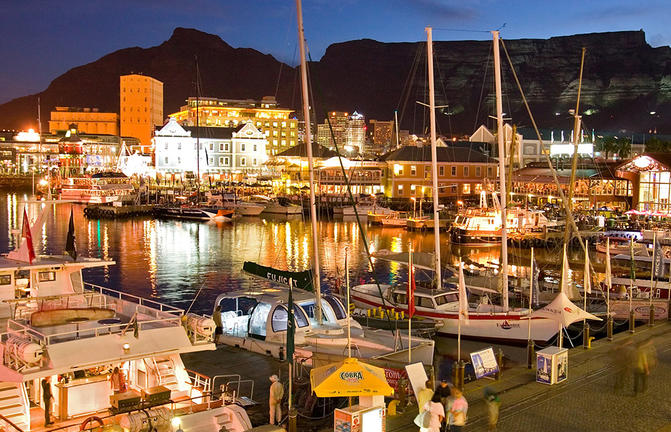
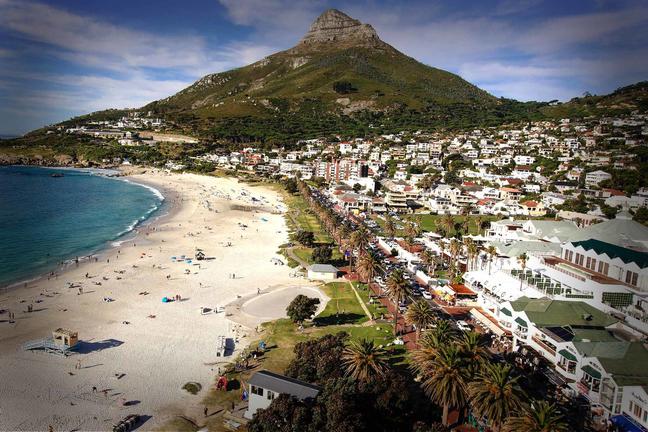
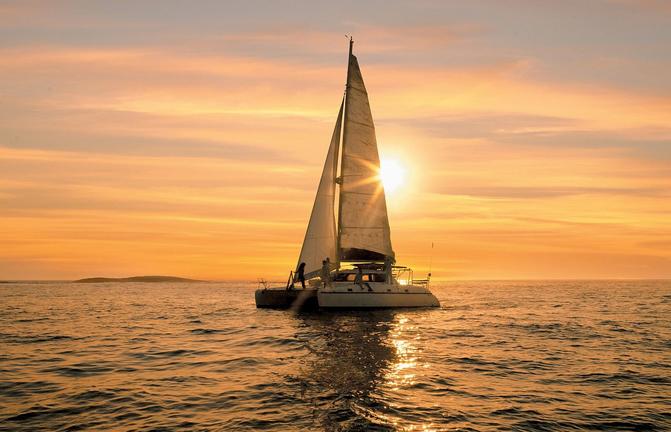
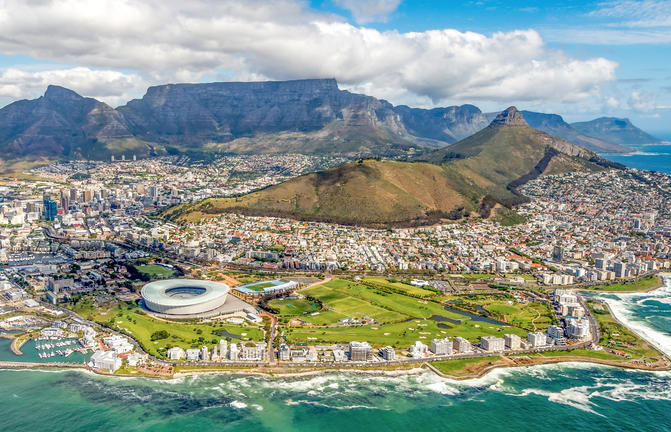
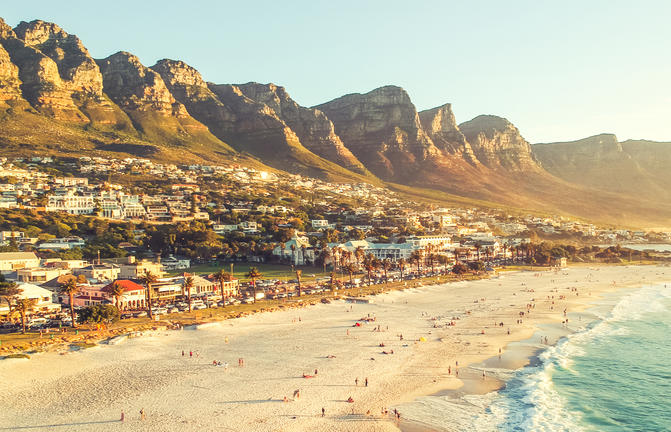
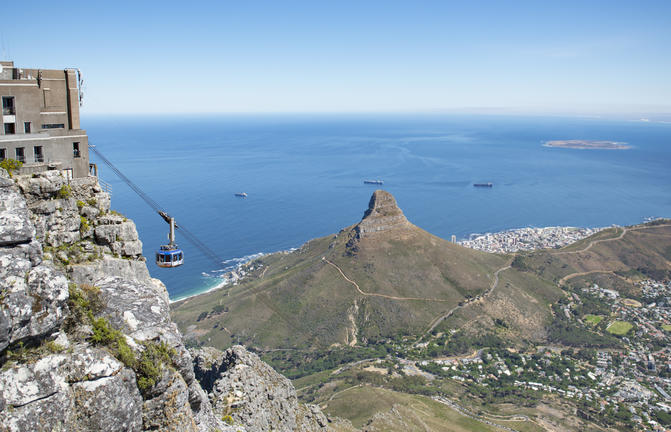
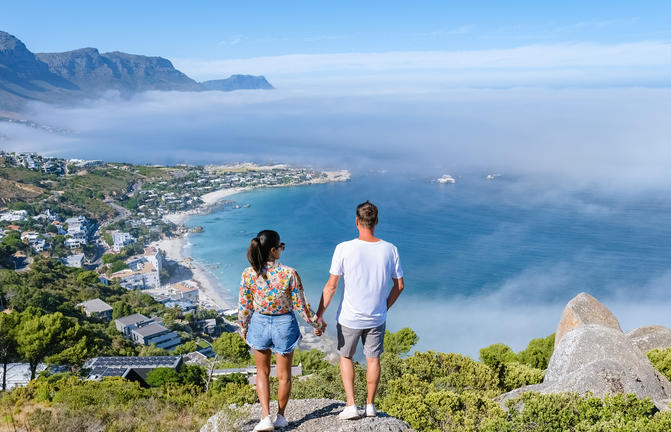
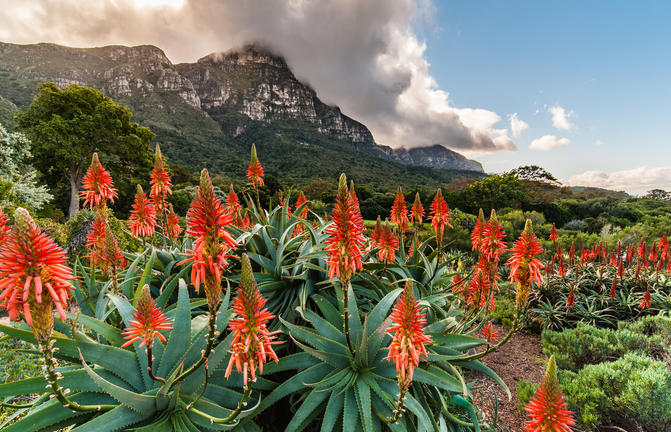
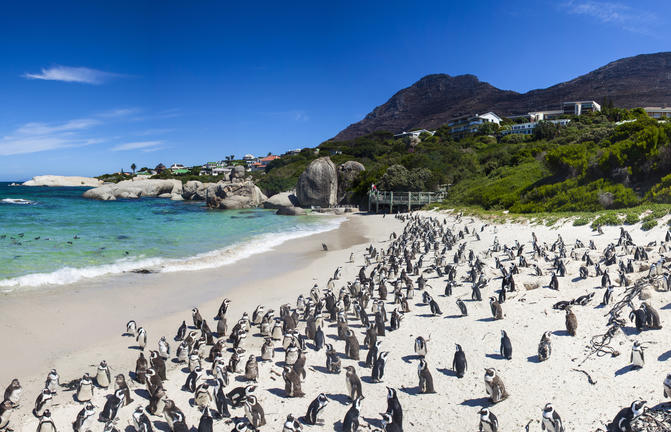
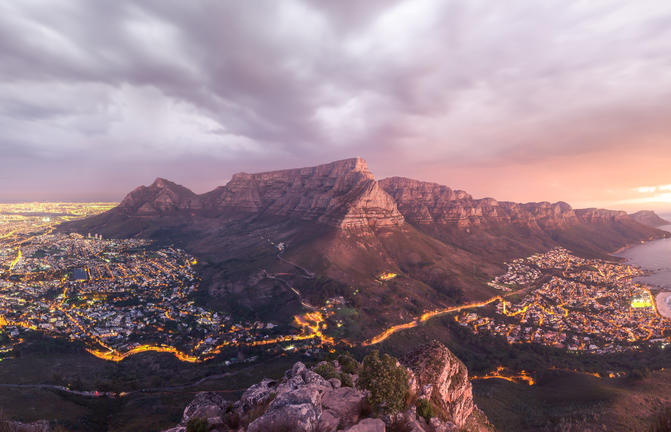
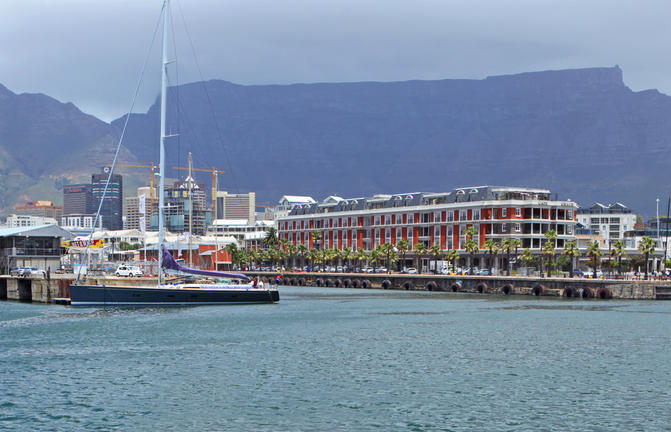

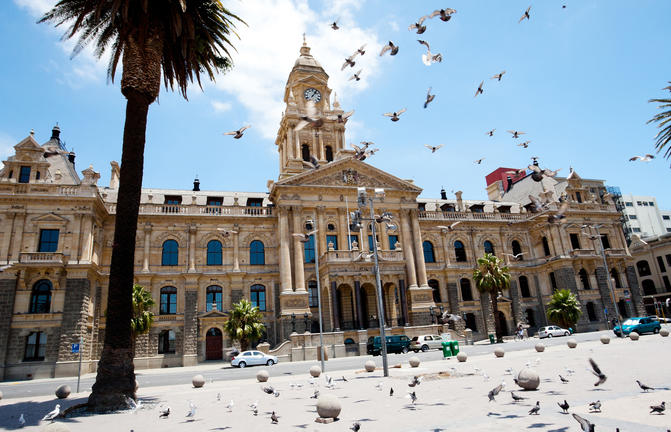
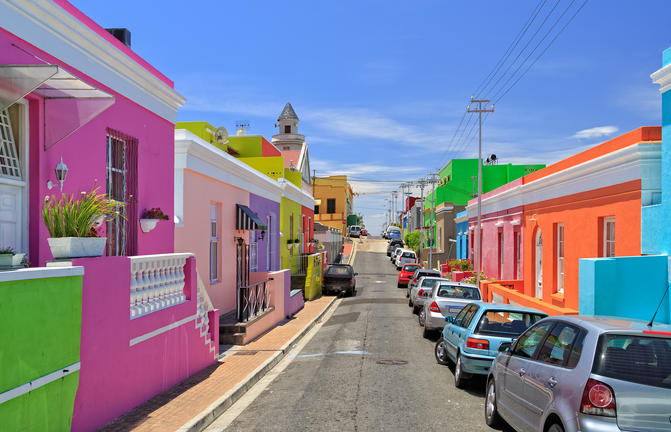
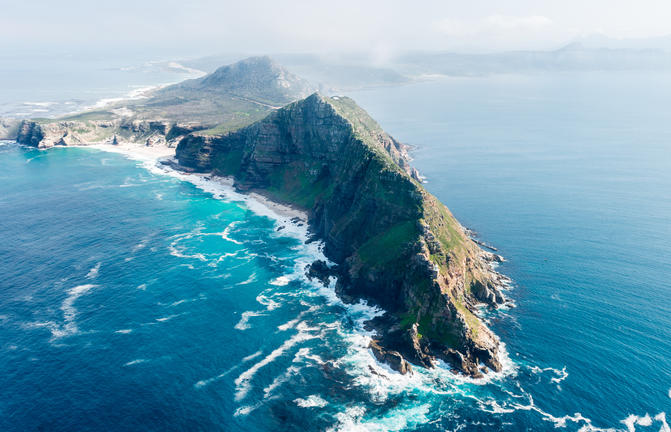
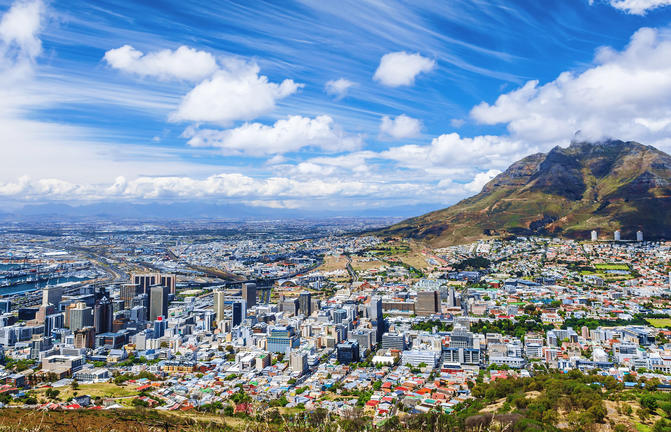
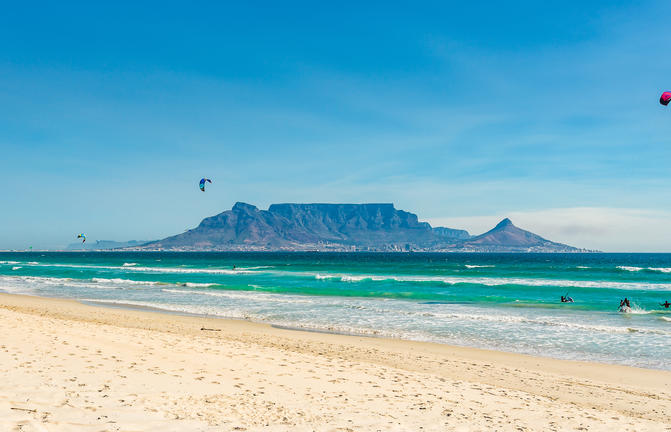
Cape Town is Southern Africa’s most beautiful, most romantic and most visited city. Its physical setting is extraordinary, something its pre-colonial Khoikhoi inhabitants acknowledged when they referred to Table Mountain, the city’s most famous landmark, as Hoerikwaggo – the mountains in the sea. Even more extraordinary is that so close to the national park that extends over much of the peninsula, there’s a pumping metropolis with a nightlife that matches the city’s wildlife. You can hang out with baboons and zebras at Cape Point in the morning, dine at an Atlantic seaboard bistro for lunch, tipple at a Constantia wine estate in the afternoon and party the night away in a Long Street club. All in a Cape Town day.
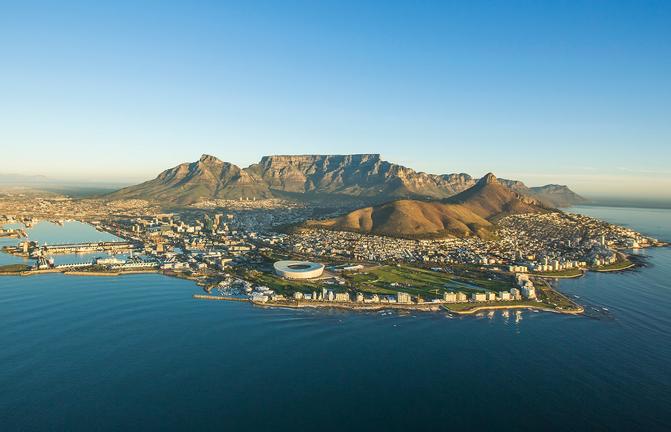
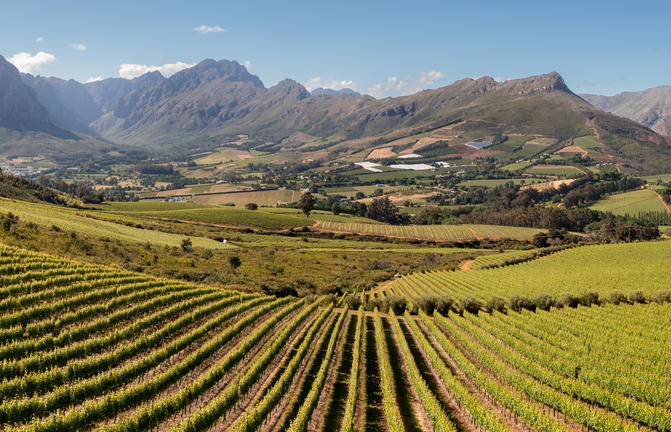
More than a scenic backdrop, Table Mountain is the solid core of Cape Town, dividing the city into distinct zones with public gardens, wilderness, forests, hiking routes, vineyards and desirable residential areas trailing down its lower slopes. Standing on the tabletop, you can look north for a giddy view of the city centre, its docks lined with matchbox ships. To the west, beyond the mountainous Twelve Apostles, the drop is sheer and your eye sweeps across Africa’s priciest real estate, clinging to the slopes along the chilly but spectacularly beautiful Atlantic seaboard. To the south, the mountainsides are forested and several historic vineyards and the marvellous Botanical Gardens creep up the lower slopes. Beyond the oak-lined suburbs of Newlands and Constantia lies the warmer False Bay seaboard, which curves around towards Cape Point. Finally, relegated to the grim industrial east, are the coloured townships and black ghettos, spluttering in winter under the smoky pall of coal fires – your stark introduction to Cape Town when driving in from the airport on the eastern outskirts of the city.
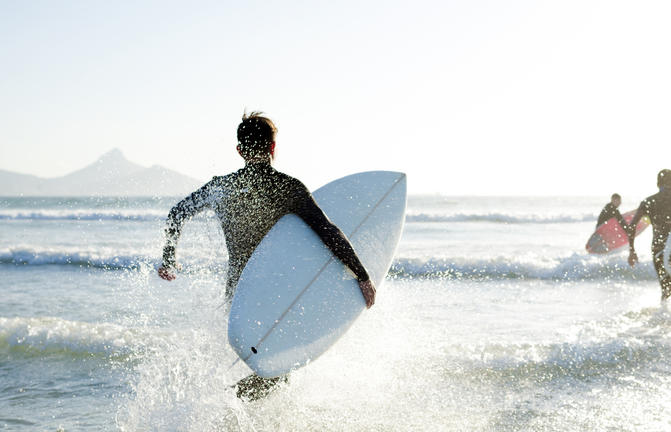
To appreciate Cape Town you need to spend time outdoors, as Capetonians do: they hike, picnic or sunbathe, often choose mountain bikes in preference to cars, and turn adventure activities into an obsession. Sailboarders from around the world head for Table Bay for some of the world’s best windsurfing, and the brave (or unhinged) jump off Lion’s Head and paraglide down close to the Clifton beachfront. But the city offers sedate pleasures as well, along its hundreds of paths and 150km of beaches.
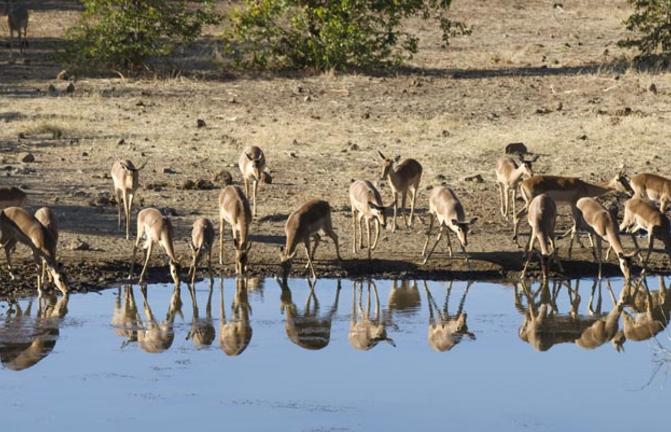
A hidden gem situated in Botswana, Mashatu is an award-winning game reserve spanning 42,000 hectares (103,000 acres) of privately owned, unfenced land in the conserved wilderness area known as the Northern Tuli Game Reserve.
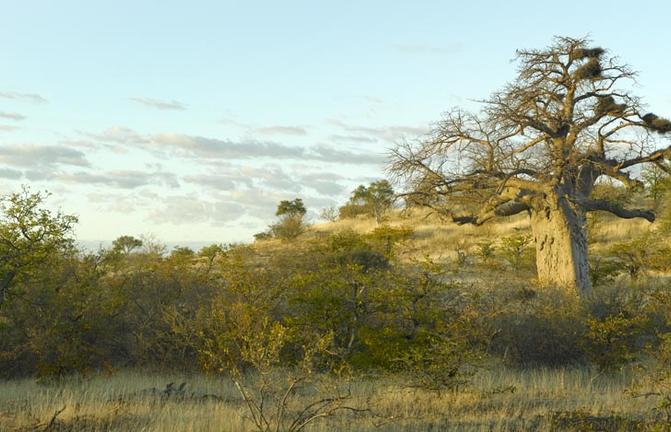
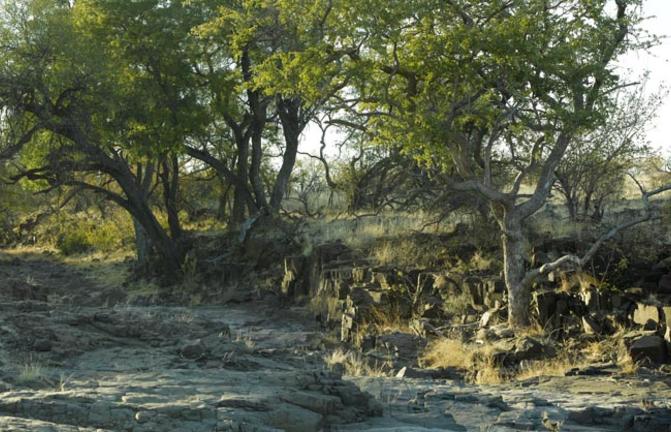
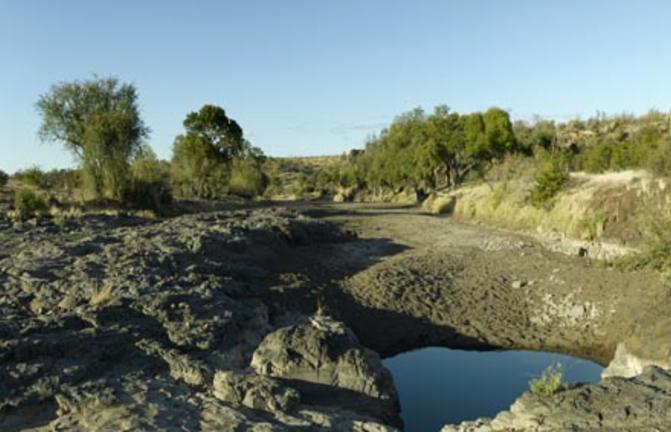
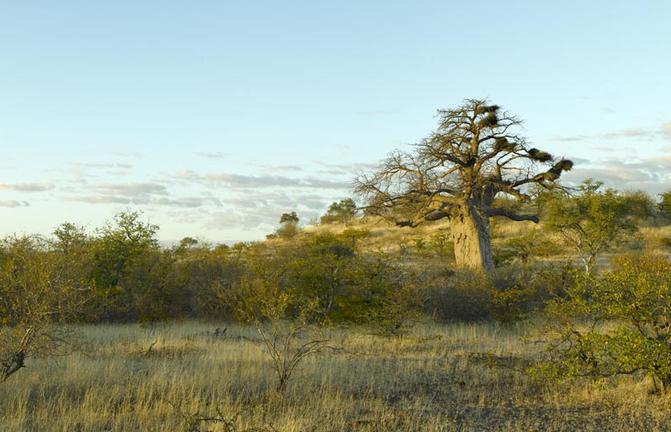
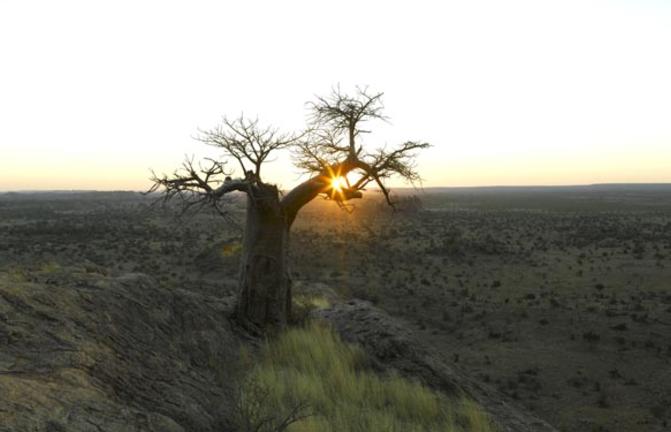
Nestled in the remote eastern corner of Botswana, where the borders of Botswana, South Africa and Zimbabwe meet - Mashatu boasts a diverse landscape of wide plains, lush riverbeds, mopane woodland, sandstone ridges and ancient trees (especially baobabs).
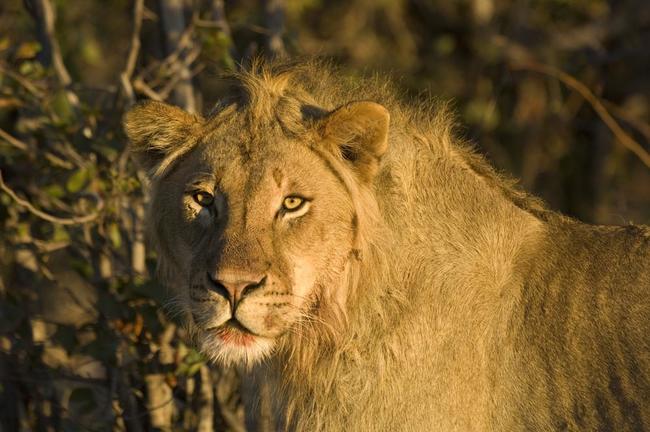
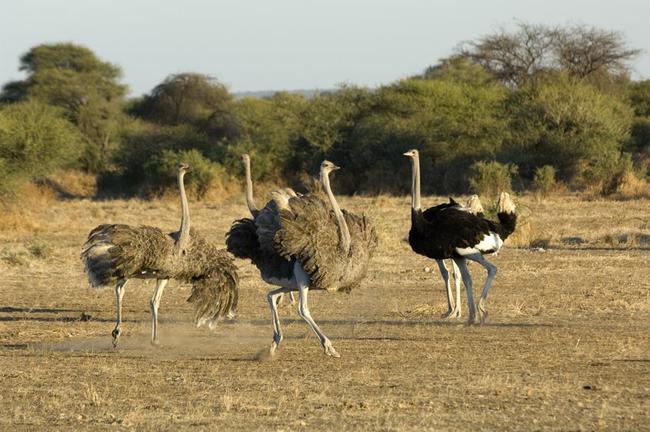
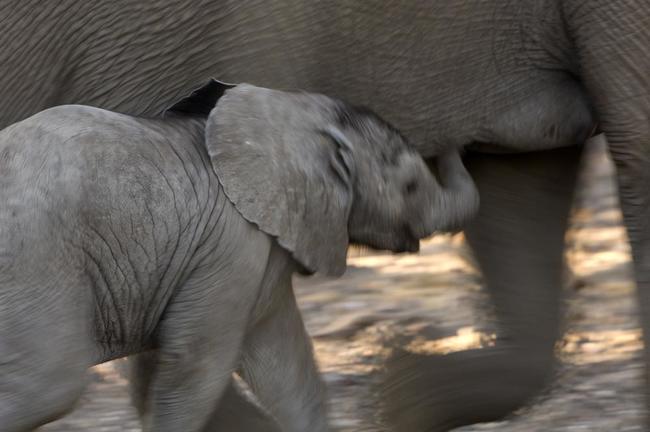
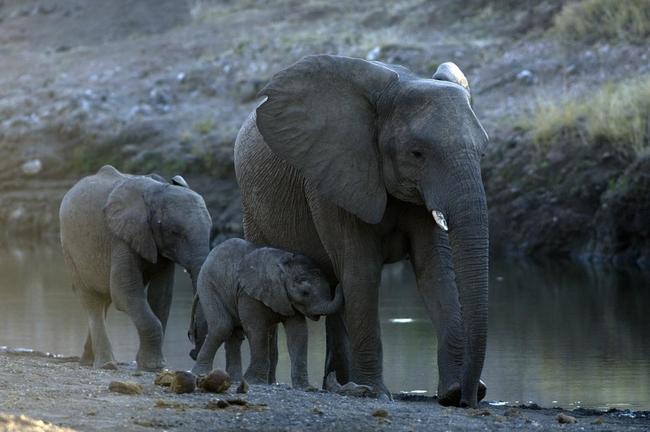
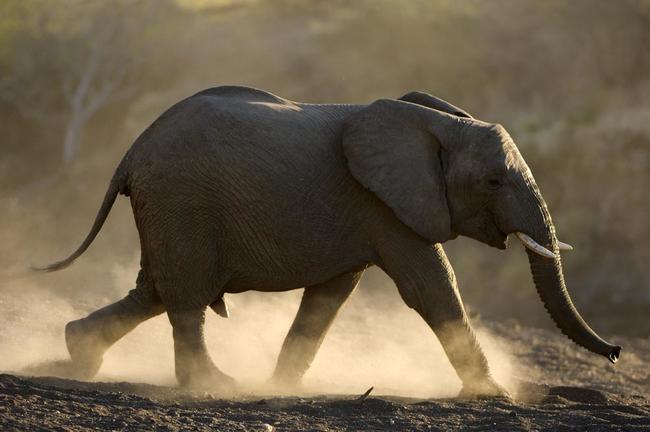
Known as the “Land of the Giants” - largest population of elephant herds on a private game reserve in Southern Africa, and home to seven of Africa's giants (African elephant, lion, giraffe, baobab tree, eland, ostrich, and kori bustard).
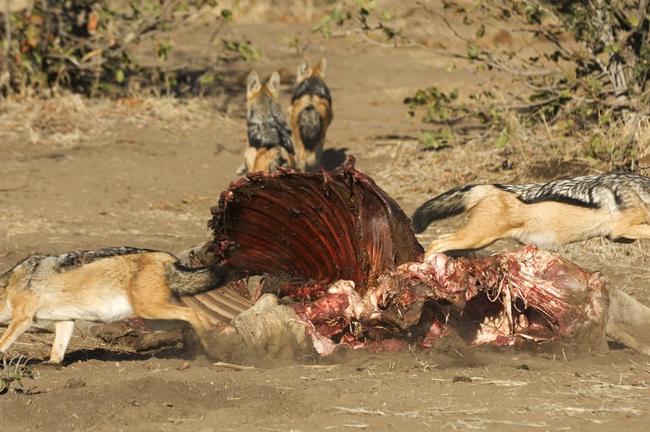
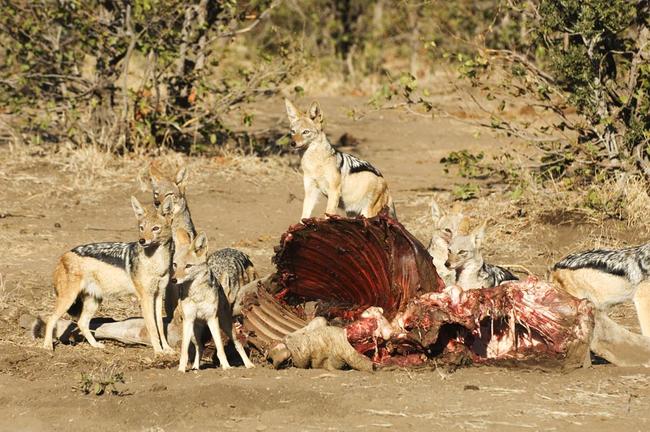
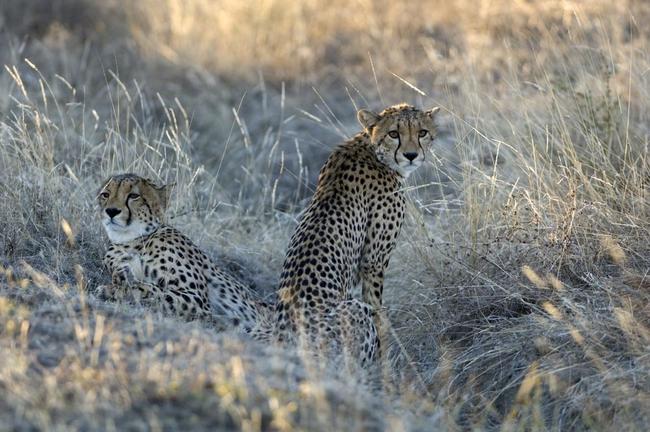
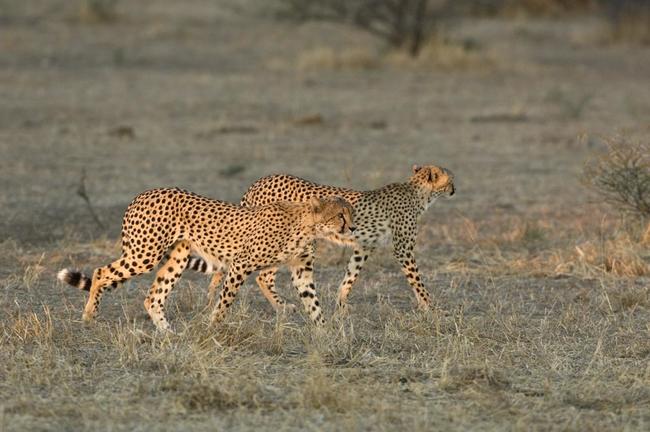
Increasingly known as the "Land of the Leopards" for unrivalled big cat and predator sightings.
Our camps include Euphorbia Mashatu, Kolokolo Safari Home, Mashatu Lodge, Tuli Safari Lodge Mashatu, Mashatu Tent Camp and Shalimpo Safari Camp; offer immersive, eco-friendly stays with the warmest Botswana hospitality.
All lodges offer all-inclusive stays with two daily daily game drives and the option to substitute one game drive for a guided safari walk. A pristine destination shaped by the Lansdown family’s enduring commitment to conservation, authenticity and sustainable travel.