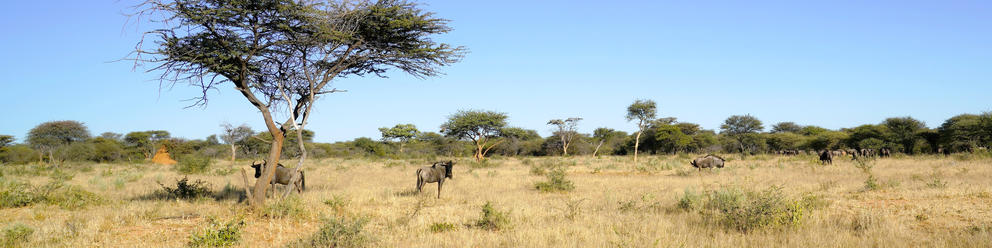
There is something mesmerizingly thrilling about exploring Namibia. Wind-swept desert dunes, polished white plains and abundant wildlife create an alluring atmosphere throughout the land. Namibia boasts remarkable natural attractions such as the Namib Desert, the Skeleton Coast and the Fish River Canyon. The wildlife offerings are second to none, and the country holds an average of 300 sunny days per year, making it an ideal destination all year round. Its diverse landscapes offer reliable game viewings regardless of the season and is undoubtedly one of the most exciting and rewarding experiences. The country inhabits more than 20 species of antelope, along with the famous Big 5 and many other magnificent creatures - some found nowhere else in the world. The country is often referred to as "one big desert" and described as a place where nature governs the land. With Namibia being one of the least populated nation on earth, it really is one of the best spots to spend a social distancing holiday.
Greater Windhoek can be described as a tourists paradise. The things to be seen and done in and around the capital city of Namibia are endless. The hot springs of Gross Barmen are found just north of Windhoek. The springs have a natural temperature of 65 °C but are cooled down in order for people to enjoy them. Another attraction in close vicinity to Windhoek is the Daan Viljoen game park. Being a conservation area for many game species, it boasts large numbers of wildlife. With its diverse range of natural and cultural attractions, visiting the region in and around the city is an incredible experience.


The Naukluft Mountains are perched in the centre of Namibia, making a striking silhouette against the vast, open skies. Several private farms occupy the range's northern reaches, while the spectacular Namib-Naukluft National Park lies south. The rugged landscape of Central Namibia rises steeply from the plains and has a fascinating history, interesting geology and a variety of deep gorges. An array of wildlife can be found in the area, including over 50 species of mammals, such as leopards and zebras, and more than 200 species of birds. Here, the air is crystal clear, and sunsets over the mountains are breathtaking.
Swakopmund, known simply as ‘Swakop’ to Namibians, is the capital of the Erongo Region. It was founded in 1892 and was regarded at the time as Germany’s main port in South-West Africa. The townscape of this small town is characterised by numerous historic buildings from the German colonial era: wide streets, German street names, German pubs, cafés and bakeries. During the colonial era, ‘Swakop’ was described as ‘Germany’s southernmost coastal town’. Even today, German is still spoken everywhere. Swakop offers many tourist attractions, such as charming pubs, a beautiful seafront promenade, an aquarium and much more. You can go on lovely day trips to the surrounding area, such as south to Walvis Bay or north to Cape Cross to visit the largest seal colony on the African mainland. In and around Swakop, there are plenty of activities on offer, such as boat trips to see seals, exciting desert tours, quad bike safaris, kayaking trips and helicopter flights. You’ll be spoilt for choice.


Twyfelfontein is a site of ancient rock engravings in the semi-arid region of north-western Namibia. This world heritage site is situated 100 kilometres from the ocean, where the scenery shifts from dry red sands to lush grassland. Drawn by the San People, the engravings show depictions of both human and animal tracks. Many of the impressions also depict animals that are no longer found in the area - including lion, zebra, kudu and even seals! Visiting these paintings, with their rich historical and cultural backgrounds, allows you to learn about the Namibian heritage and the San people's customs and beliefs.
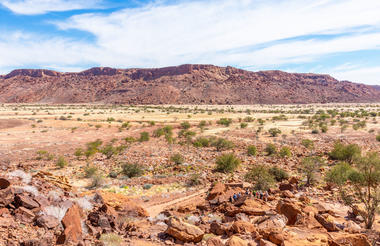
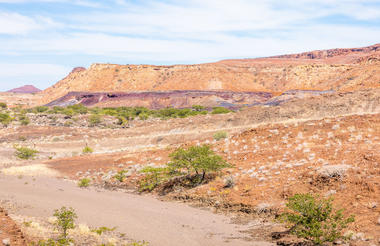
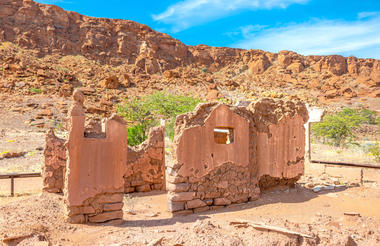
Damaraland's breath-taking mountains are home to ample desert-adapted wildlife who live among the harsh, barren conditions. Its rugged and rocky landscapes are known for their rough, captivating beauty. One of the region's finest attractions is the Twyfelfontein rock engravings, containing many ancient etchings that are considered some of the best-preserved illustrations on the continent. Thousands of years old, the regions Petrified Forest is a haunting landscape of giant fossilized trees. This small area of preserved land houses so much historical information of the Namibian country, drawing people in.
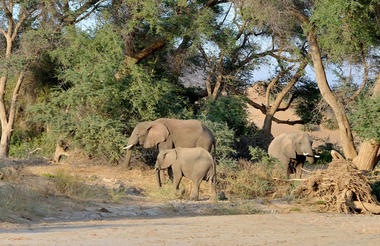
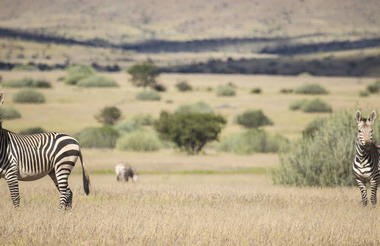
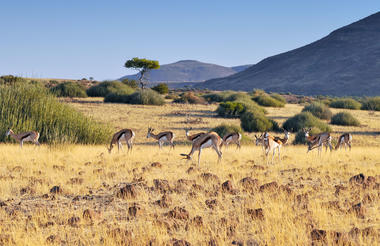
Featuring breath-taking panoramas, unforgettable sunsets, and abundant wildlife, Etosha National Park is Namibia's premier wilderness conservation area. The Etosha Pan - a shallow salt pan covering an area of 5.000 Square kilometres lies in the heart of the park. Natural springs are found in this dry terrain, making for excellent game viewing. Throughout the Park, the landscape is generally flat, with various habitats ranging from mopane woodland to wide, open, virtually treeless plains. Etosha is home to one of the world's most stable black rhino populations, along with lion, elephant, leopard, cheetah, and hyena.
Etosha's southernmost section is known for its rich population of both white and black rhino. Etosha South is home to the Okaukuejo Rest Camp, which is famous for its floodlit waterhole. The many viewpoints overlook picturesque bush-scapes and abundant wildlife. Getting into the South is accessible by Andersson's Gate. Here, visitors can expect to see many animals, including lion and the rare, black-faced impala. However, the most notable of animals found here are elephants. Enjoy guided nature walks, game drives, or simply watching the sunset from this breath-taking location.


Situated on the eastern side of Etosha, bordering Fisher's Pan, Onguma Game Reserve is one of In the eastern parts of the Etosha National Park, bordering Fishers Pan lies the Onguma Private Game Reserve. Protecting more than 34,000 acres of land, this private reserve is home to over thirty species of animals, from kudu, giraffe and oryx, to predators such as lion, cheetah and leopard. The Onguma water hole is also a great place to spot game. Game drives, guided walks, and rhino research drives can be enjoyed within the reserved area, and safaris into Etosha National Park are available to see the abundance of animals. Here you will have the opportunity of experiencing Africa in all her beauty and diversity.


With a backdrop of rolling hills and grassy plains – Okonjima Nature Reserve is best known for its diverse animal species - such as cheetahs, lions, hyenas and leopards. Boasting mixed woodland and thornveld plains, the land is home to Africa's most extensive wild cat population. Established in 1991, the AfriCat Foundation is a non-profit organisation committed to the long-term conservation and education of Namibia's large carnivores - and even allows you to track the cheetah on foot! Okonjima, with its rugged bushveld and mountainous outcrops, is a truly unique Southern Africa experience.