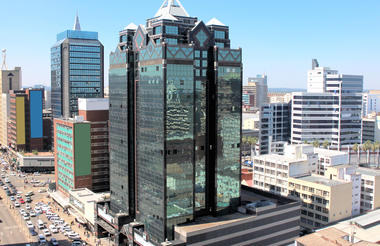
The capital city of Harare is well-designed city with open wide spaces, many treelined avenues and lots of parks.
It is teeming with businesses and bustling with people going about their daily work. It has one of the most amazing weather conditions globally with crisp and clear air and overall a pleasant temperature throughout the year. You can see lots of greenery around and the most attractive sight is the jacaranda trees in full purple blooms during summer months of September and October.

The rolling hills of the 47 000 hectare Park Nyanga National Park, on Zimbabwe's Eastern Highlands, are home to a multitude of scenic rivers, refreshing streams and breathtaking waterfalls.
The park boasts both Zimbabwe’s highest mountain peak and its highest waterfall and the elevated altitude provides a cool and pleasant climate and fresh mountain air, perfect for rest, relaxation and plenty of outdoor adventures.
The mountainous terrain and its sparkling fresh water sources offer excellent opportunities for fly fishing, sailing, canoeing, swimming, and hiking. Visitors are likely to encounter a variety of fascinating wildlife including, among others: kudu, zebra, impala and eland.


Save (pronounced Sah-vey) Valley Conservancy is a part of the Greater Limpopo Transfrontier Park along with protected areas in Mozambique, South Africa and other areas in Zimbabwe's Lowveld. It is an important eco-region with great biodiversity as a result of a wide variety of habitats in an area covering around 3400 sq. km. It is located 150 km south of Mutare with the main Masvingo-Mutare road to the north, Save River to the east, Mkwasine River to the south and high-density communal land to the west.
The Conservancy is a non-profit organisation and a wildlife conservation leader in Zimbabwe. The aim of the organisation is to protect the ecology of the region for future generations, especially rare wildlife, endangered wildlife and their habitats. It hopes to sustain their local conservation and educational projects for the benefit of all stakeholders. The model has been considered for the proposed Transfrontier Peace Park that will link Zimbabwe, Mozambique and South Africa's protected areas.
In the beginning, this area came under the Devuli cattle ranch built in 1920s.
The containment fences, rerouting of water resources, wild animals locked out of their traditional waterholes, scarce food for indigenous grazing animals, shooting of predators of cattle and destruction of native animals that carried diseases to the cattle led to the deterioration of the environment. The cattle industry was brought to a standstill over a period of time due to combination of events.
Due to growing awareness of wildlife and an increasing interest in ecotourism, the Save Valley Conservancy was formed, especially because of the new black rhino conservation strategy of the Department of National Parks and Wildlife Management of Zimbabwe. In 1995, with the cooperation of landowners, help of the Department and the World Wide Fund for Nature a protective enclosure was built around the 3400 sq. km of area.
Save Valley is home to a great diversity of wildlife. Along with special emphasis on Black and White Rhino and Wild dogs, there are elephants from Gonarezhou National Park, lions, buffalo, rhino and leopard (makes the big five), cheetah, serial, brown hyena, sable antelope, giraffe, eland, bushbuck, jackal, kudu, wildebeest, impala, warthog, bush pig, crocodile, nyala, duiker, honey badger, hippo, spotted hyena, vervet monkey, Sharpe’s grysbok, red and Lichtenstein’s hartebeest, waterbuck, klipspringer, zebra and baboon. There are also reptiles, fish, bats and frogs. It is also an Important Bird Area and has about 670 recorded species.
There is a wide range of activities that you can do in the Conservancy. Expert guides can suggest good safari itineraries and make it an unforgettable experience for visitors. There is also horseback riding, walking safaris, photography safaris, wildlife viewing in open vehicles, cultural village tours and visits to indigenous painting sites. There are also options for mountain biking, abseiling and archery. Enthusiastic visitors can also do the wild dog gen viewing (May-September), night spotlighting, falconry and rhino tracking on foot. There are different safari lodges like the Chishakwe Camp, Senuko, Sango, Mokore and Mkwasine Safari camps in the Conservancy with different experiences that host visitors for the above activities.
The Conservancy carries on various projects related to wildlife and the local community and depends on donations for their work and research. They do a lot of conservation work for rhinos like dehorning and educating the local communities about the hazards of poaching.


The Ancient City of Great Zimbabwe is one of the well-preserved stone cities in sub-Saharan Africa and situated 28 km southeast of Masvingo town. Zimbabwe means 'large houses of stones' in a Shona dialect and is the name of the ruins spread over a 722-ha area. The construction was done by the Bantu civilization of the Shona between the 11th and the 15th centuries. It is one of the oldest and largest structures in southern Africa and was renowned from the Middle Ages onwards. It was recognised as a UNESCO World Heritage Site in 1986 because of the spectacular effort it took to assembling the stones in almost geometrical pattern with simple tools and technology.
The ruins are divided into three groups: the Hill Ruins, the Great Enclosure and the Valley Ruins. They were used as a temple complex, by the king and by the citizens respectively. The Great Enclosure has 11m high walls extending for 250m and is built out of granite using dry-stone masonry. The Valley ruins are a series of living ensembles scattered throughout the valley and they are mostly constructed with bricks. You can observe chevron and chequered wall decorations in a display of high standard of craftsmanship.
The Hill ruins, some believe, were a royal city as opposed to the Great Enclosure. It has views of the whole complex and of Lake Mutirikwe. The west side might have been the residence of the chiefs and the east side might have served a ritual purpose. They make up a large granite mass atop a spur. According to research carried out, the city was a center of trade. It is believed that the Shona traded with traders from East Africa in cloth, beads and ceramics from Arabia and China exchanging via barter for gold, ivory and copper. It was also one of the main cities of the state extending over a gold-rich area. The population is estimated to be around 25000 at its peak. But around 1500 the city lost its power and the migration slowly proceeded towards the Ancient City of Khami, which became the next seat of power.
The origin of the ruins was debated for a long length of time, with the Europeans , especially the colonists declaring that the it was not possible for the Africans to have built the grand structures. Many British archeologists who were sent to investigate came back with the assertion that the site was non-African in origin, even with the discovery of artefacts like bronze ans copper spearheads, axes and tools that indicated tgehe presence of the Shona. The ones who tried to support the theory of African origin were disbelieved and Cecil Rhodes banned the independent study of the area for about 25 years!
To the anti-colonists Zimbabweans, the site was a monument of pride and a symbol of great achievement. Hence, when the country became independent, it was named after the Ancient City.
The museum displays a few unearthed items like metal tools, fragments of Chinese and Persin crockery and most importantly the soapstone birds. The birds, eight in total, carved out of soapstone were found at the ruins. The mix of human and avian characteristics suggest that the birds are mythical figures. Six came from the Hill Complex. Cecil Rhodes took 5 of them to South Africa but they were returned to Zimbabwe in 1981, an act that symbolised independence for the Zimbabwean people.
Archeologically, a very important site , not only in Zimbabwe but in Southern Africa, The Ancient City of Zimbabwe is a must-see to gain a historical perspective.


34 km south of Bulawayo is the extraordinary Matobo Hills National Park that is situated in the 80 km long Matobo Hills. Formerly known as the Rhodes Matopos National Park, this 424 sq km national park is one of the more accessible and interesting areas in Zimbabwe.
The dramatic landscape of this park is made of huge piles of granite boulders with reddish hues balancing on top of each other at improbable angles. The 200-milliom years old Matobo Hills has range of domes, spires and balancing rocks resultant of years of erosion of a solid granite plateau.
The park was founded in 1953 but got the UNESCO World Heritage status in 2003 for having one of the largest concentrations of rock art in Southern Africa. These 3000 fine rock paintings are the legacy of the San (Bushmen) hunter-gatherers who lived here about 2000 years ago.
There are beautiful paintings of giraffe, eland, kudu and rhinos in the caves. The identification of a rhinoceros outline at the White Rhino Shelter gave the impetus to reintroducing the species to the park in the 1960s. There is a large population of white and black rhino in the park along with zebra, wildebeest, kudu, giraffe, sable, klipspringer, hyena, cheetah, hippo, leopard, common duiker, crocodiles, waterbuck, baboons and vervet monkeys.
Matobo was named by the Ndebele King Mzilikazi after the 'bald' rocks (amaTobom means 'bald heads' in Ndebele). He was buried in the hills just a short distance to from the park. The local people consider the site sacred and still use them for their traditional ceremonies. The summit of Malindizimu in the hills is also the place of burial of the imperialist Cecil John Rhodes who referred to it as 'World's View'. Also buried here are his right hand man and leader of the Jameson Raid Leander Starr Jameson and first Prime Minister of Rhodesia Charles Coghlan.
There is no public transport to the park but it is easy to drive to the park and around. From Bulawayo, the drive out of the city is via the Robert Mugabe Avenue.
There are private camps just outside the border of the park for accommodation and National Park chalets. The National Park is divided into different areas including the Lake Matopos, Recreational Park Area, Sandy Spruit and the Whovi Wilderness Area where the rhinos are. These areas of wilderness are truly spectacular with high biodiversity; there are over 200 species of trees, fairly rich bird-life especially black eagles, multi-coloured lizards, snakes and game. The caves housing the rock paintings are easily accessible and each has a unique setting in the granite wilderness.
Matobo Hills National Park is a safe walking terrain. With beautiful scenery around, it offers excellent hiking opportunities. Short walks include the Lakeside walk, Maleme Dam from Fish Eagle lodge, Mount Pomongwe from Maleme Camp, Maleme camp to Pomongwe cave while longer walks can be climbing mount Shumbashawa near Gordon Park, climbing Nyahwe mountain and hiking from Toghwana Dam to Inanke Cave. Most of the trails pass along the caves with rock paintings. A guide can accompany you from the Maleme Camp if required.
Other than hikes, visitors can also try their luck at tracking rhinos on a guided walking tour with an armed scout. With an ever-increasing population of black and white rhinos , you can more often than not spot them easily. Also a 4 WD can be taken to spot more wildlife at a leisurely pace.


Located in western Zimbabwe, Hwange National Park (formerly Wankie Game Reserve) is the largest natural reserve in the country and is famous for its rich diversity of wildlife. Home to one of the biggest elephant populations in the world, as well as around 100 mammal species, the park is a wonderland for animal lovers. Several protected animals inhabit the awe-inspiring open landscapes, including the endangered wild dog, critically endangered black rhino, and rare roan and sable - along with lion, cheetah, and around 500 bird species. Adventurers can look forward to guided bush hikes, game drives, and horse riding safaris, all of which offer excellent photographic opportunities. Hwange boasts several unique natural features, most notably the natural seeps such as Nehimba and Shakwanki animals dig for water.
Understandably one of the wonders of the world, Victoria Falls is the principal tourist attraction in Zimbabwe.
The force of the mighty Zambezi River spilling into a gorge is one of the most enthralling sights in the world.
The local Makololo name for the falls is 'Mosi-ao-Tunya' which means the Smoke that Thunders. UNESCO recognised the significance of the falls and the surrounding area and gave it the World Heritage Site credential in 1989.
Victoria Falls town is where the tourist adventure starts. It lies on the south bank of the river close to the falls. It is served by a recently-upgraded international airport that has opened up the possibilities of direct linkages with the world. There are also rail and road connections from the town to the rest of the country.
During different eras the river has fallen into different chasms, which now look like a series of sharp zigzag gorges downstream from the falls. There are 7 recognised gorges, the First, Second, Third, Fourth, Fifth, Songwe and the Batoka gorge across which the gorge swing activity takes place.
There is an array of activities that can be done below and above the falls and on the Zambezi. Whitewater rafting, river boarding, bungee jumping, abseiling and .... are the adrenaline-pumping activities that can be done here. For more relaxing activities, sunset cruises and canoeing can be done on the Upper Zambezi for the rich wildlife in the area or elephant rides, walking safaris and horseback trails can be booked in the surrounding national parks and smaller wilderness areas.
A part of the Upper Zambezi forms the Zambezi National Park, which together with the Victoria Falls National Park, the spray-drenched rainforest, covers an area of 56,000 ha.
The Zambezi National Park is stunningly wild and the tourist will surely quench his thirst for the most extravagant of visits to see large mammals, smaller mammals, almost 400 species of birds, beautiful forests of mahogany, figs and date palm trees and extraordinary views of the roaring falls from the Victoria Falls National Park.
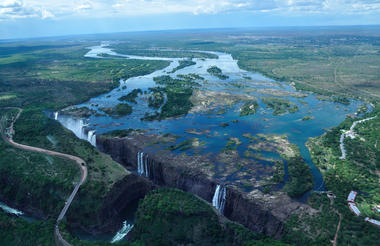
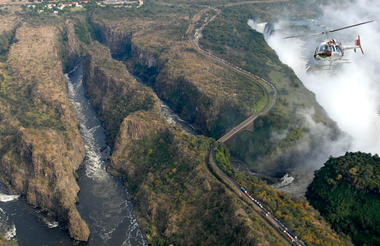
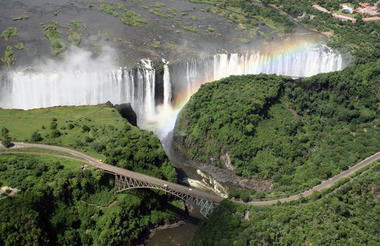
Zambezi National Park together with Victoria Falls National Park cover an area an enormous area and are home to a wide variety of mammals including The Big Five and sable antelope. The Zambezi River is a major attraction to the animals and tourists alike and the Victoria Falls are quite simply mind blowing.
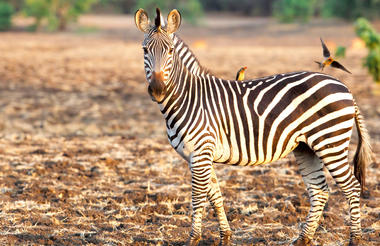


Situated on the banks of the Khwai River near the famous Okavango swamp, the village of Khwai is set in the North-West District of Botswana. The village fringes the magnificent Moremi Game Reserve which is known for its incredible array of wildlife. It serves as a gateway to the reserve as it is set just outside the North Gate. of Moremi. Khwai provides an excellent base from which to explore the spectacularly scenic surrounding area. It is to be home to some of Botswana's most beautiful landscapes which feature vast grass plains, a patchwork of lagoons, shallow pans and lush woodland forests. Visitor can look forward to spotting a fantastic variety of wildlife, learning about the San community and enjoying a wide selection of ecotourism activities. Commonly spotted wildlife species include: lion, leopard, elephant, cheetah, hippo, wild dog and buffalo.


The Okavango Delta is an area of staggering pristine beauty offering beautiful ecosystems and the chance for the best wildlife safaris in Africa. It is one of the world's largest inland delta systems. The floodwater of the Okavango River gushes down through the Angola highlands through the northwestern part of Botswana and thins out over the Kalahari Desert forming around 15,000 km2 of an enchanting delta system. This is an annual occurrence from May through July and there is quiet period October onwards. This cycle of events results in a versatile nature of the delta system and hence there is a constant wildlife activity around this place throughout the year. It causes the migration of thousands of animals in addition to more than 400 species of birds and 1000 species of plants! This magnificence of the Delta has made it one of the Natural Seven Wonders of Africa.
The Okavango Delta is made up of two parts - the Moremi game reserve and a number of private reserves. The Moremi Game Reserve is a public place consisting of the Chief's Island where many self-drive tourists visit. The Chief's Island is where safari-related activities are permitted. The private reserves offer accommodation in small camps and exclusive activities to the resident guests who fly in to these camps by air in light aircraft from main airports at Maun and Kasane. Guest numbers are usually low and the services are top class offering a low-impact but high quality personalised experience to one and all. Also, since these are private, the guides are allowed some freedom during safaris. For e.g. they are allowed to do night-safaris with the guests and are allowed to move off course when spotting any wildlife. They do this with utmost caution and high expertise. Also offered are walking safaris not allowed in the national parks. Also one of the good ways to explore the Okavango is by horseback.
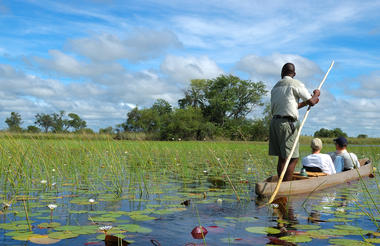
An Okavango Delta safari is a highly unusual and exciting because tourists haven't usually experienced the feeling of sitting in a traditional dug out canoe, locally called a 'mokoro' and watching the wild animals at close quarters. Waddling through the clear blue waters, you get this mystical feeling of being in a faraway land. Fish swim besides you shining in the heat while birds of prey await their time at a distance. Walking on the islands with an expert guide or exploring on horseback will take you real close to the wildlife. It is once in a lifetime experience to do this in the wild. This is the real Africa!
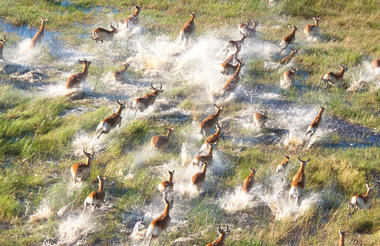
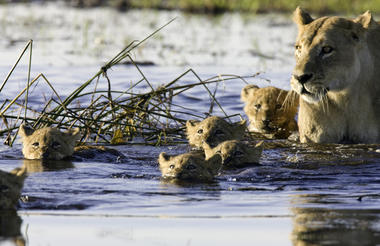
The wildlife is plentiful and gorgeous. With the reintroduction of rhino, it is a good place to get the Big Five out of your system! There are elephants all year round along with big herds of buffalo, giraffe, impala, zebra, kudu, waterbuck, bushbuck, reedbuck, tseesebe and many more. The predators include lion, cheetah, leopards frequently spotted at dusk, hyena and wild dog. Your guide will very likely also spot a large variety of birds, many which are particular to their preferred habitats. There are egrets, cranes, hornbills, eagles, kingfishers, jacanas, firefinches, storks, ibis, owls and coucals. You might also spot otters swimming across the waters in certain places. On night drives you might be lucky to find civets, servals, porcupines, honey badger and white tailed mongoose.
May to October is the dry season whence there are huge numbers of animals congregating towards the delta in search of water and food. In the 'green' season from December to April, most migrants have moved out leaving the residents behind along with a lot of baby animals and beautiful surroundings. This is also a good time to spot the nesting of few migrant birds. Most dry part of the delta is dominated by mopane woodland. Other than mopane, the papyrus and reed rafts make up most of the vegetation and during the flood season, they float on the water giving shelter to crocodiles in the gap between plants and river beds.
The camps in Okavango Delta are categorised as 'wet', 'dry' or 'mixed' according to the nature of the habitat near which they are situated. The wet camps offer mokoro safaris when the flow of the river is subtle and boating safaris when the river is in flood. They are set near very picturesque locations and can offer great wildlife views. The dry camps offer land-based safaris and are great to view big game and predators. The mixed camps, as the name suggests, offer walking, driving and boating safaris since they are located in areas with not much flooding but with enough dry areas to do dry camp activities.
There are nineteen sub-areas in Okavango each having it's own camps so there is lot to choose from when thinking about a best-suitable itinerary for any guest. The type of camp that's chosen will be in accord with the guest's interest, time of the year and budget. Hence it is possible to mix and match and opt for an amazing holiday at 2 or 3 different camps that might also be connected via the waterway.
The different sub-areas or concessions as they are called are: Abu, Chitabe, Duba Plains, Gudigwa, Gunns, Jao Flats, Khwai River, Kwara, Moklowane, Moremi Central (heart of the delta), Moremi Mopane, Nxabega, Okavango Mababe, Okavango Selinda South, Ranns, Shinde, Stanleys, Starlings and Vumbura.