


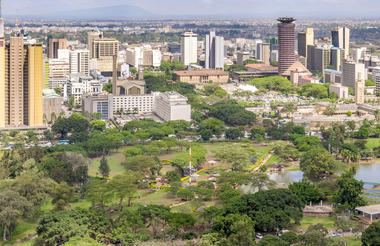
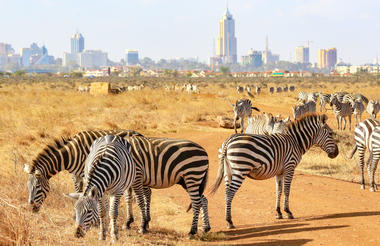
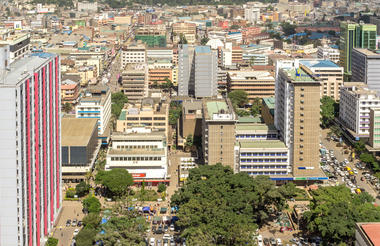
Widely regarded as one of East Africa’s most dynamic and cosmopolitan cities, Nairobi sits along the Nairobi River and serves as Kenya’s capital and largest urban centre, acting as a major gateway for safari travel across the country. The city features a growing café culture, active nightlife, and cultural landmarks such as the National Museum of Kenya and the Karen Blixen Museum. Just outside the city centre lies Nairobi National Park, where wildlife, including lions, giraffes, and buffalo, roam against a backdrop of skyscrapers — one of the rare cases in the world where a major national park borders a capital city. Visitors also often stop at the David Sheldrick Wildlife Trust elephant orphanage for close encounters with rescued calves.
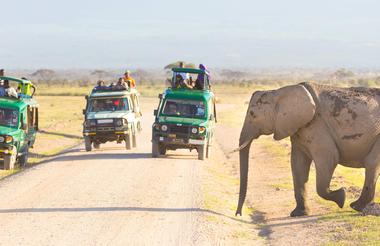
Located in the southern reaches of Kenya, the Amboseli National Park is renowned for its excellent variety of wildlife such as Maasai giraffe, elephant, lion and cheetah and not surprisingly it is one of Kenya's most popular parks. The landscape of Amboseli is dominated by the majestic snowcap of Mount Kilimanjaro, as well as open plains, acacia woodland, swamps and the massif of Ol Doinyo Orok. The birding is excellent, especially closer to the lakes and swamps. The park is famous for being the best place in Africa to get close to large herds of elephants among other wildlife species. Other attractions include opportunities to meet the Maasai people and soak up spectacular views of Mount Kilimanjaro, the highest free-standing mountain in the world.


Situated on the equator in central Kenya, Nanyuki is a thriving town renowned as a gateway to Mount Kenya and the surrounding wilderness areas. Framed by spectacular views of the mountain’s snow-capped peaks, it serves as a popular base for hikers ascending Mount Kenya via the Sirimon and Burguret routes. The town combines a relaxed atmosphere with a surprising selection of restaurants, including the famous Trout Tree, where diners enjoy fresh trout in a unique setting built around a giant tree. Beyond its mountain appeal, the area provides easy access to some of Kenya’s most celebrated conservation areas, including Mount Kenya National Park, Lewa Wildlife Conservancy, Ol Pejeta Conservancy, Samburu National Reserve and Shaba National Reserve. With its blend of outdoor adventure, wildlife encounters and scenic beauty, Nanyuki is an ideal starting point for exploring central Kenya.


Situated in southwestern Kenya, the Masai Mara encompasses the celebrated national reserve and its surrounding community conservancies, forming part of the Greater Serengeti–Mara ecosystem. Rolling savannahs, dotted with acacia trees and crossed by the Mara River, create a rich and varied landscape. Vast herds of wildebeest, zebra, and antelope graze across the plains, while elephants, giraffes, and buffalo roam freely. The river’s lush banks support hippos and crocodiles and sustain wildlife throughout the dry season. Predators are abundant, with lions, leopards, cheetahs, and hyenas regularly seen in action. Each year, the spectacular Great Migration transforms the region, as millions of wildebeest and zebra traverse the plains. Visitors can soak up the breathtaking scenery, diverse wildlife, and Maasai cultural heritage in one of Africa’s most iconic safari destinations.
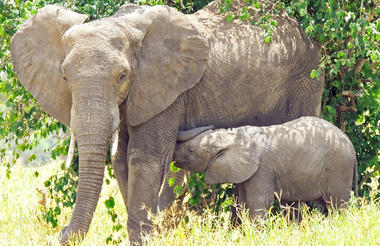
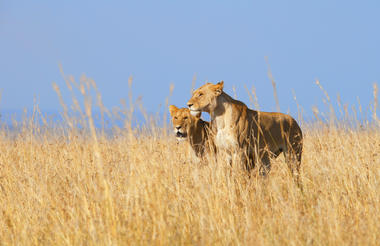
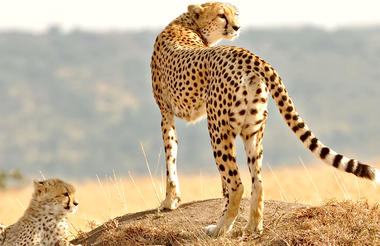
Stretching west from the central Serengeti towards Lake Victoria, the Western Corridor is a remote region characterised by open grasslands, riverine forests and the winding Grumeti River. The area is best known for the annual Great Migration, when vast herds of wildebeest and zebra move through the corridor and cross the crocodile-filled Grumeti, generally between May and July, although the timing varies each year. Visitors can enjoy excellent year-round game viewing, with opportunities to see elephants, lions, leopards, giraffes and large buffalo herds, while the riverine forests support a variety of birdlife and black-and-white colobus monkeys. With fewer visitors than the central Serengeti, the Western Corridor offers a quieter safari experience amid some of the park's most varied landscapes.


Located in Tanzania’s scenic northern highlands, Karatu is a small, colourful town surrounded by rolling green hills and fertile farmland. Travellers heading for the Serengeti National Park and Ngorongoro Crater often pass through Karatu, which lies beneath the towering Ol Deani Volcano. The town serves as a popular overnight stop for visitors exploring the region’s many game parks. Karatu offers a variety of activities, including browsing bustling local markets, sampling beer at a local brewery, visiting traditional homesteads, or taking guided walks through the Ngorongoro Forest in search of waterfalls and caves. Whether seeking cultural experiences, hiking and biking opportunities, or simply a relaxing break between safari drives, visitors will find plenty to enjoy in this welcoming town.


