Deep within Namibia’s Namib Desert, Sossusvlei is a striking landscape of towering red sand dunes, among the highest in the world, pale salt pans and immense open skies. Part of the Namib-Naukluft National Park, it has a remote, almost otherworldly atmosphere shaped by silence, shifting light and extreme desert conditions. Visitors can climb famous dunes such as Big Daddy or Dune 45 at sunrise, when the sand glows orange and shadows stretch dramatically across the valley floor. Nearby Deadvlei, with its blackened camel thorn trees standing against white clay and rust-coloured dunes, offers one of southern Africa’s most distinctive desert scenes. The dry heat, the soft crunch of sand underfoot and the vast sense of space create a powerful atmosphere, though early starts and challenging temperatures are part of exploring this remarkable region.


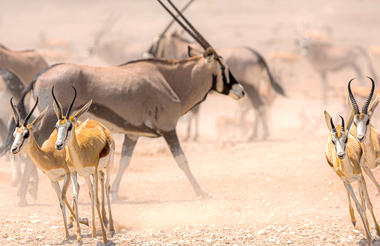
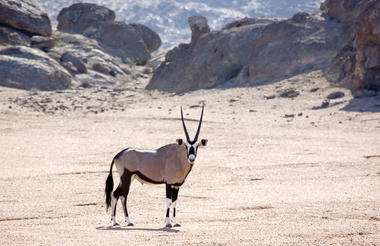
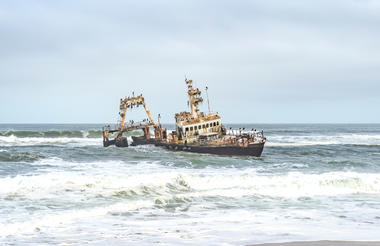
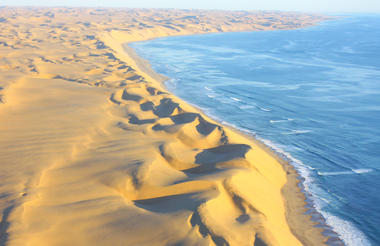
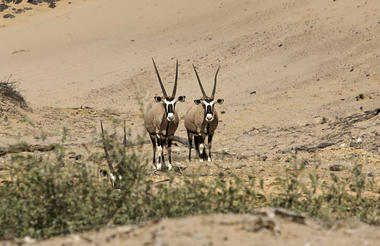
Stretching from the Swakop River to southern Angola, Namibia’s Skeleton Coast is known as the 'Land God Made in Anger'. Thousands of miles of sandy desert dotted with shipwrecks meet with the cold waters of the Atlantic, where ocean fog creeps over the shoreline. Somehow, an amazing array of wildlife and flora manages to survive in this harsh but beautiful environment. Animals living here include seabird colonies, Cape fur seals, zebras, gemsbok, desert-adapted elephants, lions, and many more. Surfing enthusiasts are drawn to the powerful crashing waves, and photographers flock from around the globe to snapshot the eerie shipwreck graveyards and breathtaking coastline.
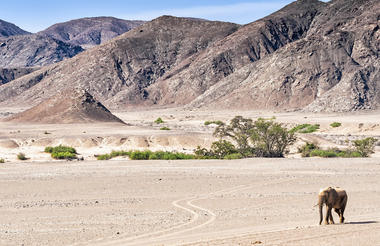
Stretching for approximately 270 kilometres through western Namibia, the Hoanib River flows between Kaokoland and the Skeleton Coast, creating one of the country's most remarkable desert wilderness areas. As one of Namibia’s last major desert watercourses, it provides a vital lifeline for an extraordinary variety of wildlife. The region is renowned for its desert-adapted elephants, lions, and rhinos, as well as populations of giraffe, zebra, kudu, and numerous other species uniquely adapted to this harsh environment. Visitors can explore the dramatic landscapes on scenic four-wheel-drive excursions, guided nature walks, and hiking trails, while towering sand dunes and striking rock formations offer endless opportunities for adventure and photography in this remote and captivating destination.
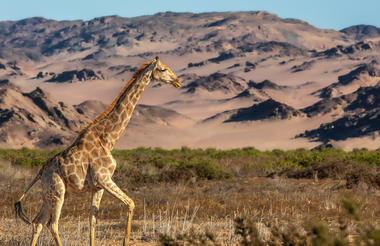
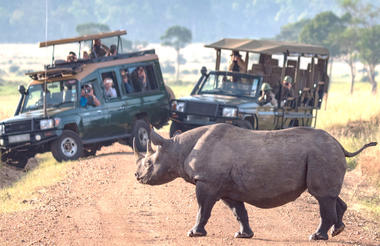
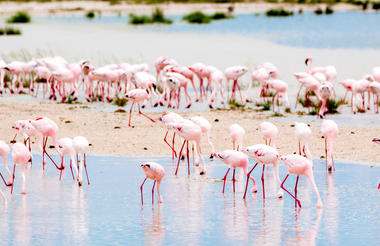
Situated in northwestern Namibia, the Etosha National Park offers a premier game viewing experience. The park’s diverse vegetation ranges from dense bush to open plains attracting a variety of wildlife. Located in the heart of the park is the Etosha Pan - a shallow depression that covers an area of 5000 square kilometres. Dry and shimmering for most of the year, the pans fill up with water after seasonal rains, making it the perfect habitat for wildlife. In the dry season, the wildlife is attracted to the perennial springs and waterholes that makes for excellent game viewing. Visitors can look forward to world-class game viewing including a variety of large mammals such as lion, elephant, leopard, rhino, zebra, giraffe, a diversity of birdlife such as flamingoes and pelicans.