


Namibia is a country of wide open spaces, calm surroundings and strong contrasts. The landscape ranges from the red dunes of the Namib Desert to the rocky hills of Damaraland and the open savannahs of the interior. Etosha National Park is one of Africa’s well-known wildlife areas, offering good game viewing around its natural waterholes. In the north-east, the scenery changes along the rivers, where greener vegetation forms a clear contrast to the dry regions. Along the Atlantic coast, regular fog creates a unique atmosphere. Namibia is known for its unspoilt nature, wide landscapes and close connection to the natural world.
Windhoek, Namibia’s capital, lies in the heart of the country amid the rolling Khomas Highlands, where wide skies and dry savannah frame a compact, orderly city. It blends German colonial heritage with contemporary African identity, creating a calm, understated atmosphere rather than a bustling metropolis. Landmarks such as Christuskirche and the Tintenpalast sit alongside modern civic buildings, while lively markets and cafés reveal everyday Namibian life. Visitors can explore museums, stroll shaded streets, or use the city as a gateway to the surrounding wilderness and safari regions. The air is often dry and clear, carrying the scent of dust and jacaranda blossoms, while distant hills glow at sunset. Windhoek offers a gentle introduction to Namibia’s landscapes and culture, with space, light and quiet defining its appeal.


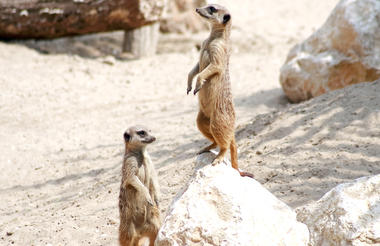
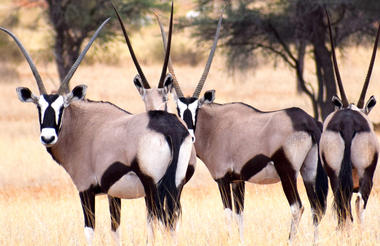
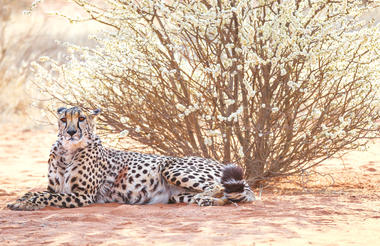
Spreading across Botswana, South Africa and Namibia, the Kalahari, meaning 'the great thirst', is an exceptionally beautiful living desert. The landscape is characterised by a large semi-arid sandy savannah, draped over a gently rolling inland sea of sand that covers most of Botswana and large parts of Namibia and South Africa. It is inhabited by the indigenous San people, with the modern world having enveloped all the other areas they once roamed. The Namibian portion is made up of red sands covered in thin, wispy, mostly golden grass and dotted with acacia trees and wide-ranging wildlife, including gemsbok, impala, jackals and cheetah.
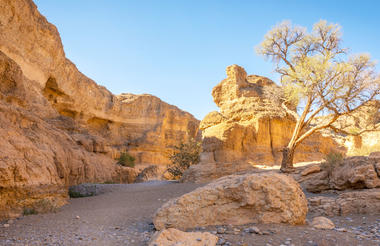
As there is no accommodation at Sossusvlei, visitors to this desert wilderness are likely to end up staying at Sesriem, 65 kilometres away, where camps and lodges serve as a base from which to explore the dunes. Sesriem Canyon, a deep chasm carved through the rocks by water, is a striking natural feature of the area that is best explored on foot. Stony walls rise up sharply on both sides of the canyon, while birds roost in its crags and lizards dart along the ledges. The canyon’s name was coined when early settlers used it as a water source, using six lengths of leather (‘ses riem – six thongs) tied together to lower buckets into the water at the base of canyon.)
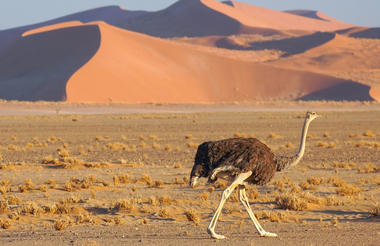
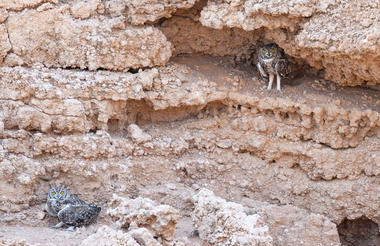
Set between the rolling dunes of the Namib Desert and the icy Atlantic coastline, Swakopmund is a relaxed seaside town in western Namibia known for its German colonial architecture, cool coastal climate, and adventurous spirit. Palm-lined streets, historic buildings, and ocean fog create an atmosphere unlike anywhere else in the country. Travellers visit for desert activities such as quad biking, sandboarding, and scenic flights over vast dunes and shipwreck-strewn shores. Cafés, bakeries, and small museums add to the town's laid-back charm, though the Atlantic waters are brisk rather than tropical. With its striking desert-meets-ocean setting and mix of adventure and history, Swakopmund is one of Namibia's most distinctive destinations.


Situated in central-western Namibia between the towns of Omaruru and Usakos, the Erongo Mountains are a striking granite mountain range renowned for their dramatic rock formations, ancient San rock art and diverse wildlife. Formed by an extinct volcano, the region offers scenic hiking trails that wind through massive boulders, rugged valleys and distinctive granite peaks. Visitors can explore prehistoric rock art sites, enjoy guided nature walks, birdwatching and game drives, with opportunities to spot species such as klipspringer, kudu, zebra and numerous birds. Towering granite domes, golden grasslands and spectacular sunsets create an unforgettable sense of wilderness, making the Erongo Mountains an ideal destination for travellers seeking natural beauty, cultural heritage and outdoor adventure.
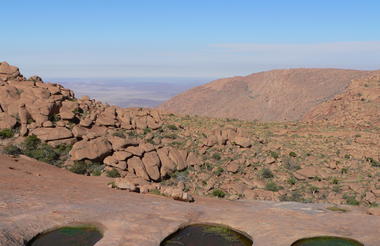


Ongava Game Reserve shares its southern boundary with Etosha National Park and is widely regarded as one of Namibia’s premier private wildlife reserves. Spanning approximately 30,000 hectares, it is internationally recognised for its conservation efforts, ecological research and immersive safari experiences. The landscape is defined by open savannah plains, scattered salt pans and a rich diversity of wildlife. Its location allows easy access into Etosha through Andersson’s Gate, making it an ideal base for combined safari experiences. Ongava is also known for its luxury lodges, thoughtfully designed using natural materials to blend into the surrounding environment. A highlight of the reserve is its healthy population of black and white rhino, offering guests exceptional viewing opportunities. Activities include guided game drives, night safaris, birdwatching and walking safaris, creating an intimate and rewarding encounter with Namibia’s wilderness.

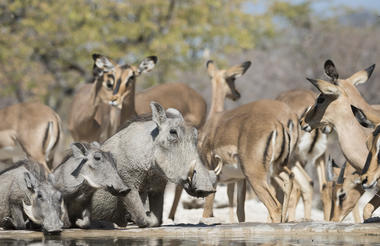
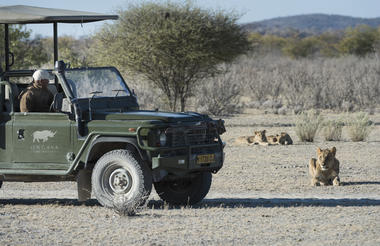
Located along the eastern boundary of Etosha National Park in northern Namibia, Etosha East is a rewarding safari destination known for its excellent wildlife viewing and convenient access to the park through the Von Lindequist Gate near Namutoni. Characterised by open savannah, mopane woodland and seasonal waterholes, the region attracts an abundance of wildlife, including elephant, lion, giraffe, zebra and a variety of antelope species. Visitors can enjoy self-drive or guided game drives, with the waterholes offering some of the best opportunities to observe animals gathering to drink, particularly during the dry season. Golden grasslands, distant birdsong and expansive African skies create an immersive safari experience in one of Namibia's most celebrated conservation areas.

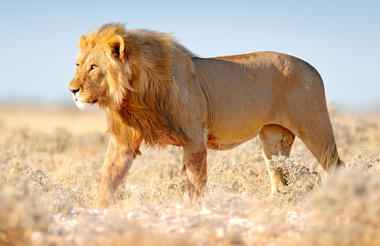

Situated between Namibia’s capital city of Windhoek and the renowned Etosha National Park, Okonjima Nature Reserve is a 22,000-hectare wilderness sanctuary celebrated for its conservation efforts and exceptional wildlife experiences. The reserve is home to the renowned AfriCAT Foundation, which focuses on the protection and rehabilitation of Namibia’s carnivores, particularly leopards, cheetahs, and other threatened species. Set against a backdrop of rolling plains, rocky outcrops, and acacia woodland, Okonjima offers visitors the opportunity to gain unique insight into conservation initiatives while enjoying outstanding game viewing. Activities include guided carnivore tracking excursions, leopard-spotting safaris, off-road night drives, birdwatching, and cultural experiences along the Bushmen Trail. Accommodation ranges from luxury lodges and private villas to intimate bush camps, providing a memorable base from which to explore this remarkable reserve.

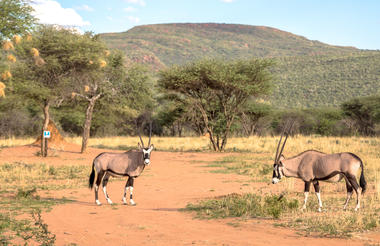

Situated just 30 minutes east of Namibia's Windhoek International airport, Zannier Reserve stretches for 900 square kilometres. It is known for its scenic savanna-covered landscapes inhabited by a vast variety of wildlife. Commonly spotted species include: leopard, giraffe, warthog, antelope, ostrich and jackal. It is also home to the Shiloh Wildlife Sanctuary which provides a refuge for injured or abandoned rhinos and elephants. Visitors can look forward to spotting an array of wildlife, soaking up the beautiful views, and enjoying a guided safari to track the animals.


