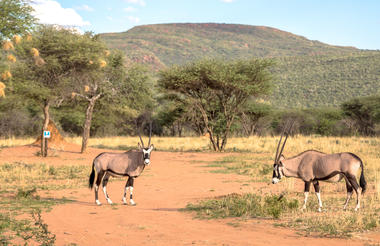
Spreading across Botswana, South Africa and Namibia, the Kalahari meaning 'the great thirst' is an exceptionally beautiful living desert. The landscape is characterised by a large semi-arid sandy savannah draped over a gently rolling inland sea of sand covering most of Botswana and large parts of Namibia and South Africa. It is also the last bastion of the indigenous San people with the modern world having enveloped all the other areas they once roamed. The Namibian portion is made up of red sands covered in thin, wispy, mostly golden grass and dotted with acacia trees and wide-ranging wildlife including gemsbok, impala, jackals and cheetah.


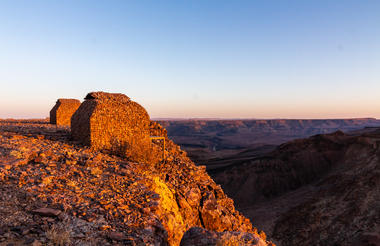
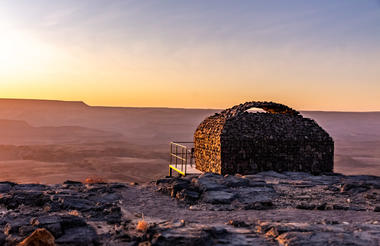
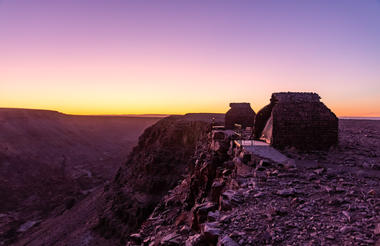
Prepare to be dazzled by the Fish River Canyon, a colossal masterpiece sculpted by time and nature in Namibia’s far south. Stretching an awe-inspiring 160 km in length, 27 km in width, and plunging up to 550 meters deep, it is Africa’s largest canyon — and the second-largest in the world. Its vast, rugged beauty captures the imagination of adventurers and dreamers alike.
For those who long to connect more deeply with this ancient landscape, Fish River Lodge offers a truly unique experience on the western rim of the canyon. Perched dramatically on the edge, the lodge provides exclusive access to guided walking trails that meander along the rim and descend into the canyon’s depths. Led by experienced local guides, these hikes reveal dramatic rock formations, weathered cliffs, ancient quiver trees, and the quiet signs of desert wildlife. Whether you prefer a gentle sunrise walk along the rim or a more challenging descent into the canyon, each trail offers a soulful, unforgettable connection to this geological wonder.
Those in search of serenity can simply relax at the lodge and take in the endless views from the rim, or explore the area on guided nature drives that reveal the canyon’s fascinating geology and sparse but resilient life.
Whether you come for adventure or reflection, the Fish River Canyon promises a journey through time — and a destination of epic natural beauty.
Nestled between the rugged, windswept Atlantic coast and the expansive arid reaches of the Namib Desert, Lüderitz stands out as a true gem. Picture a slice of the 19th century, perfectly preserved against the dramatic backdrop of the pink sand dunes of the Namib Desert—this is Lüderitz, a captivating time capsule.
This charming coastal town offers a fascinating blend of historical and natural wonders. Imagine strolling past picturesque Lutheran churches, relaxing in inviting coffee shops, and browsing through local supermarkets, all while admiring colonial buildings adorned with stunning German Art Nouveau architecture. A must-see is the Felsenkirche, a striking Lutheran church embedded into the rugged cliffs, offering panoramic views of the town and the sea. Its unique design and historical significance make it a highlight.
Another must-visit is the Namibia Maritime Museum, which opened in September 2024 under the auspices of the Lüderitz Waterfront Development Company. This new museum celebrates Namibia's maritime heritage with exhibits on the country's seafaring history, shipwrecks, and the ocean's crucial role in its economic and cultural development. It's a fantastic addition to the town's attractions, offering both locals and visitors deeper insights into Namibia’s maritime past.
Lüderitz also boasts a range of beautiful hotels and accommodations that make your stay even more enjoyable. From luxurious resorts to cozy guesthouses, there are options to suit every taste and budget, all providing comfort and style.
The windswept beaches of Lüderitz are a haven for a variety of wildlife, including graceful flamingos, curious ostriches, playful seals, and even charming penguins.
Just a short drive from Lüderitz, about 10 kilometers away, lies the eerie allure of Kolmanskop. This once-thriving diamond town, founded in 1908, was a bustling center of wealth and activity, complete with opulent homes, a casino, and even an opera house. However, as the diamond deposits were exhausted, Kolmanskop was abandoned and slowly reclaimed by the encroaching sand dunes. Today, the town is a captivating ghost town where shifting dunes have filled rooms with sand, creating surreal, photogenic scenes of former grandeur overtaken by nature. Guided tours offer a fascinating glimpse into Kolmanskop’s opulent past and highlight the contrast between its former splendor and its current ethereal state.
Another unforgettable experience awaits near the small town of Aus, where you can see herds of wild desert-adapted horses roaming freely across the rugged yet stunning landscape.
Lüderitz isn’t just a destination; it’s an adventure through time and nature where every corner tells a story and every view takes your breath away.


Perched above the plains of the Namib Desert in the rocky Aus Mountains, the small village of Aus lies at the heart of phenomenal botanic diversity. Aus serves as an excellent base from which to see the area’s major attraction: the feral horses of the Namib Desert, which run wild and free in the sparsely vegetated plains. The best place for viewings is at the water trough at Garub, which lies just twenty kilometres away from Aus. Visitors can gain insight into the Succulent Karoo by visiting beautiful Gondwana Sperrgebiet Rand Park, home to the most biodiverse desert in the world. Don't miss the opportunity to camp under the famously clear Namibian night sky and experience the desert landscape on horseback.


Nestled in the heart of the Namib Desert, Sesriem Canyon is a stunning geological wonder and a must-visit destination for nature lovers and adventure seekers. Carved over millions of years by the Tsauchab River, this deep chasm features dramatic rock formations, deep gorges, and striking colors, making it one of Namibia’s most unique and awe-inspiring landscapes.
As you explore the canyon on foot, you’ll be surrounded by sharp, towering walls that rise up on either side, creating a mesmerizing atmosphere. Birds roost in the crags of the canyon, and lizards dart along the sun-warmed ledges, adding to the beauty and life of the area. The canyon is easily accessible from the iconic Sossusvlei, offering visitors the chance to marvel at its rich history and the ancient layers of rock that tell the story of the land.
The canyon’s name, Sesriem, comes from the early settlers who used the area as a water source. They fashioned six lengths of leather (‘ses riem’ meaning "six thongs") to lower buckets into the water at the canyon’s base. Today, Sesriem Canyon offers an unforgettable experience, whether you're keen on photography, hiking, or simply soaking in the natural beauty and serenity of this remarkable landscape.
In the cooler hours of the morning and evening, the canyon comes alive with beautiful light, casting a magical glow over the surroundings. Don’t miss the opportunity to experience this mesmerizing feature of Namibia’s desert landscape, where the power of nature is on full display.


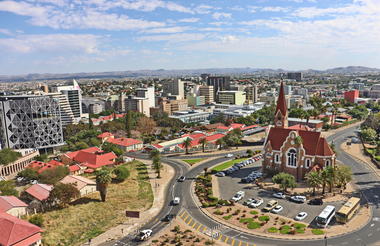
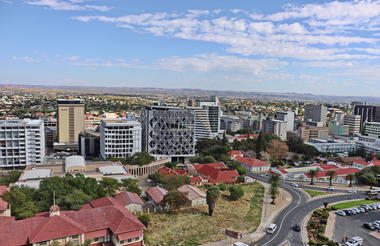
Discover Windhoek, the vibrant capital of Namibia nestled in Central Namibia, where history and modernity blend seamlessly! As the heart of the nation, Windhoek is more than just a city; it's a lively hub of culture and activity. With its international airport and a wealth of dining, shopping, and entertainment options, this cosmopolitan city is the perfect gateway to the wonders of Namibia.
Steeped in history, Windhoek's colonial past is evident in its charming German eateries and shops, and the continued use of the German language. The city's architecture is a fascinating mix of old and new. Stroll through the streets to marvel at the Alte Feste, a historic fort that stands as a testament to the city’s past. Visit the 1896 Christuskirche (Christ Church), an iconic symbol of Windhoek’s German heritage. And don't miss the Supreme Court, a striking example of modern architectural design.
Today, Windhoek is a clean, safe, and well-organized city that offers a dynamic urban experience while retaining its unique historical character. Whether you're exploring its historic landmarks or enjoying its contemporary attractions, Windhoek promises a memorable experience in Namibia’s bustling capital.

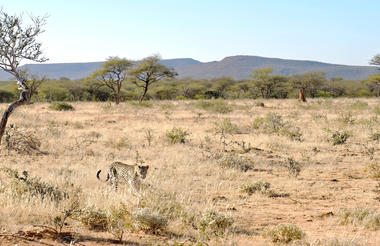
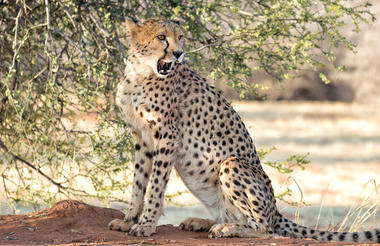
Midway between the spectacular Etosha National Park and the capital city of Windhoek, lies the well-known Okonjima Nature Reserve. The 22 000 hectare nature reserve is home to AfriCAT, a carnivore sanctuary, which gives the captive cats a second chance to be released back into the wild and become completely independent hunters in a protected area right in the middle of commercial cattle farmland. Visitors can enjoy a stay at a variety of excellent accommodation options including everything from luxury villas to secluded camping. Don't miss the opportunity to enjoy thrilling cat-tracking guided safaris, leopard-spotting, off-road night drives and learn about local San culture along the Bushmen trail.
Discover Etosha East, a lesser-known but spectacular region of Namibia’s iconic Etosha National Park. This remote part of the park offers a sense of untouched wilderness, where vast open plains, golden savannahs, and peaceful bush camps come together to create a truly immersive safari experience. It is here that you’ll find the magnificent Etosha Salt Pan — an ancient, shimmering expanse covering nearly 5,000 square kilometers. Visible even from space, the pan dominates the landscape and transforms dramatically with the seasons. In the dry season, its white crust stretches endlessly beneath wide blue skies, while during the rains, it can become a shallow lake, attracting thousands of flamingos and other waterbirds in a breathtaking display of life.
Etosha East is a sanctuary for wildlife enthusiasts and nature lovers alike. Lions, elephants, giraffes, zebras, and even the rare black rhinoceros roam freely through the area, often gathering at the natural and man-made waterholes that dot the terrain. Birdlife is equally rich and rewarding, with ostriches, eagles, hornbills, owls, and countless migratory species filling the air with movement and sound. The landscape itself is a stunning blend of contrast — from stark salt flats to mopane woodland and semi-arid grasslands, offering endless inspiration for photographers and serenity for those seeking solitude.
Thanks to its relative remoteness, Etosha East often feels quieter and more intimate than the busier western side of the park. Whether you're a seasoned safari-goer or visiting for the first time, the region promises unforgettable wildlife encounters, breathtaking scenery, and a deep connection to the rhythms of nature. For those looking to step off the beaten path and into the heart of Namibia’s wild beauty, Etosha East is a destination not to be missed.


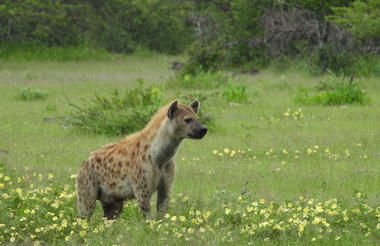
One of the largest and oldest national parks in Africa, Etosha National Park is Namibia’s premier tourist destination and a true showcase of the country’s wildlife. The park is home to 114 species of large and small mammals, over 400 recorded bird species, numerous reptiles, and even a unique species of fish, making it a haven for wildlife enthusiasts. Although its boundaries have been reduced since it was first proclaimed in 1907, Etosha still covers an area larger than several European countries, underscoring its immense scale and ecological significance.
The name “Etosha” originates from the Oshindonga word Etotha, meaning “the place where no plants grow.” Early European traders, finding the original pronunciation challenging, adopted the name “Etosha.” The pan itself was once part of the vast Lake Kunene, fed by the Kunene River, which dried up long ago, leaving the spectacular salt pans that define the park today. Fossils recently unearthed — including those of marsh-dwelling antelopes such as sitatunga, lechwe, and tsessebe, as well as a 90-centimeter-long catfish — reveal that this region once experienced much wetter conditions.
Etosha has earned a global reputation for its conservation efforts, particularly for the black rhinoceros, while white rhinos have been successfully reintroduced in recent years. The park has also been instrumental in the recovery of the endemic black-faced impala, further highlighting its critical role in preserving Namibia’s unique biodiversity. Its Etosha Ecological Research Institute continues to attract scientists from around the world, making the park not only a destination for travelers but also a center of important ecological research.


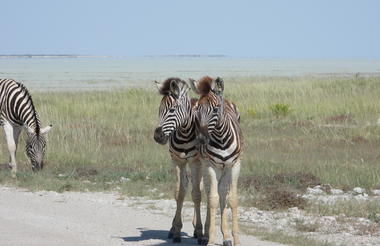
Palmwag is a nature reserve idyllically located along a palm-lined tributary of the Uniab River, halfway between Swakopmund and Etosha, providing an ideal base from which to see the sights of the Kunene region or embark on one of the many local hiking trails. Water is scarce in this area, so the river’s presence often lures elephants closer to the camps. The reserve is notable for its unusual species of palm tree, the hyphaene petersiana, and for being home to the largest population of southwestern black rhinos in Africa. Animal lovers can also get a peek at leopard, lion, cheetah, mountain zebra, Angolan giraffe, springbok, kudu, and African bush elephant.
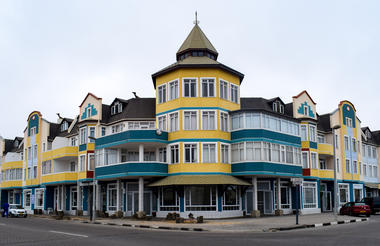
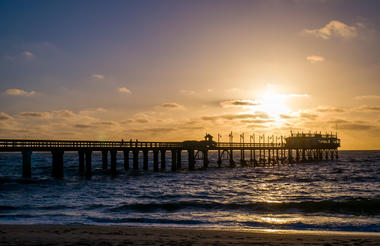
Welcome to Swakopmund, Namibia’s coastal gem where history and adventure collide in the most spectacular way! Nestled along Namibia's breathtaking coastline, this charming seaside town boasts wide-open avenues, colonial architecture, and a backdrop of otherworldly desert landscapes. Established in 1892 as the main port for German South West Africa, Swakopmund has retained a unique German flair that feels almost more authentic than Germany itself. Its quaint buildings and nostalgic charm make it feel like a step back in time.
Swakopmund's architecture, nestled between the vast desert and the rolling ocean, echoes its German colonial roots. But don’t let the historic vibe fool you—this town is alive with excitement and a relaxed beachside ambiance. Think palm trees, pleasant promenades, and gardens where the sea breeze keeps things cool and refreshing.
Today, Swakopmund is the bustling heart of Skeleton Coast tourism, and there’s no shortage of thrilling activities to dive into. Whether you're into quad biking through the dunes, horseback riding along the coast, paragliding over stunning landscapes, or casting a line in the ocean, Swakopmund has got you covered. For those who prefer exploring, the fascinating desert tours offer a unique look at the region’s natural wonders.
Gear up for a thrilling experience in the vibrant town of Swakopmund, for a mix of history, adventure, and laid-back charm in Swakopmund—where every corner promises a new discovery!