

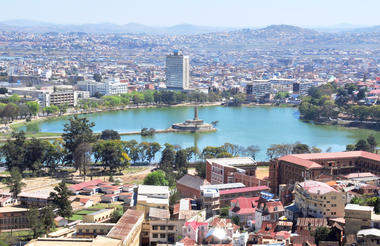
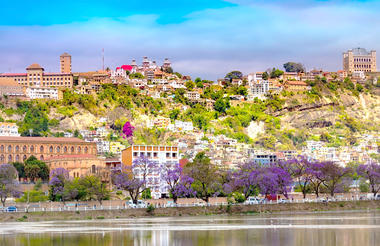
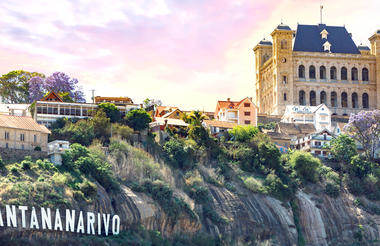
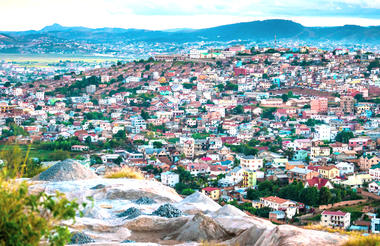
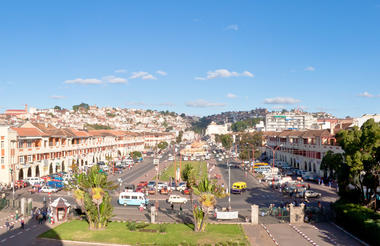
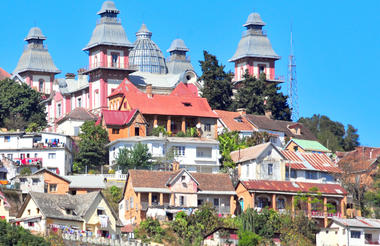
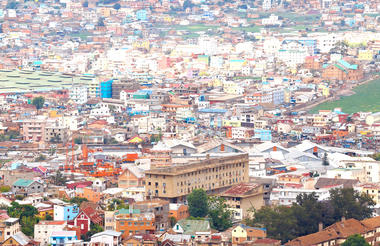
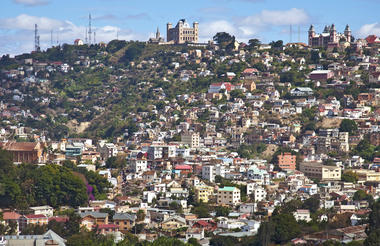
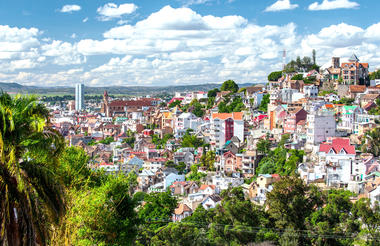
Set across a series of hills in Madagascar's central highlands, Antananarivo is the country's vibrant capital and cultural heart. Often referred to as "Tana", the city combines a rich history with a lively urban atmosphere, where colourful markets, colonial-era buildings, and bustling streets reflect a blend of Malagasy traditions and past influences. Visitors can explore the historic Upper Town, admire panoramic views from the restored Queen's Palace, and browse local crafts, spices and produce in the city's markets. The scent of street food drifts through the air, while narrow lanes and steep stairways reveal hidden corners of everyday life. Dynamic and energetic, Antananarivo offers an authentic introduction to Madagascar's culture, history and distinctive character.
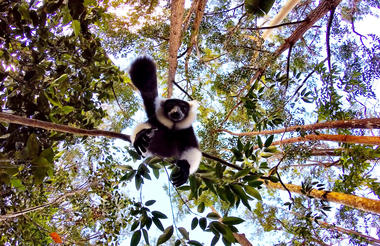
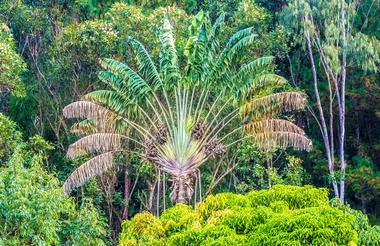
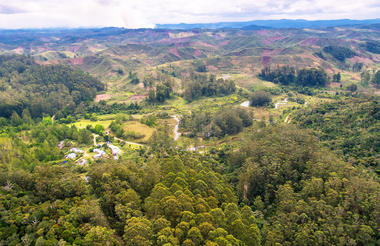
Located in eastern Madagascar in the Moramanga District, the small village of Andasibe is surrounded by a belt of protected rainforest and several parks boasting incredible natural scenery and an array of exotic Madagascan wildlife. It serves as an excellent base from which to explore the spectacularly scenic surrounds. Visitors can look forward to discovering the natural wonders of the nearby Andasibe-Mantadia National Park, Analamazaotra Reserve and Perinet Special Reserve. Don't miss the opportunity to hear the unique song of the large indri lemur, explore a network of incredible trails that wind past glistening lakes and magnificent waterfalls and discover the rich biodiversity in the local flora and fauna.
As previously described
Situated in western Madagascar, the subject of geological fascination and scientific wonderment, the Tsingy de Bemaraha National Park is well-suited for the robust explorer. Its canyons, gorges, swamps, forests and lakes are home to an astonishing array of fauna and flora, many of which have not been fully recorded. This is mainly due to the largely impenetrable labyrinth of limestone ‘forests’ that make up the Great and Little Tsingy of which the park consists. The tsingys (tsingy means ‘where man cannot walk barefoot’) are karstic plateaus whose groundwater has gouged out caverns and fissures into the limestone over millennia. It may be a tough trek, but it’s worth it to see the diverse variety of lemurs, more than 100 bird species – including the endangered Madagascar fish eagle – and around 45 reptile and amphibian species.


The seaside town of Morondova is situated on the west coast of Madagascar. The town serves as a gateway to the area’s claim to fame and main attraction: the world-renowned ‘Avenue of the Baobabs’. These massive, ancient Baobab trees tower over the terrain and create magical otherworldly silhouettes at sunrise and sunset. Other places to explore in the surrounding area include: Kirindy Forest, home to a host of endemic lemurs; and the magnificent Tsingy de Bemaraha National Park to the north, featuring unique, spiny rock formations. Don’t miss the opportunity to browse Morondava’s local market for a selection of locally made textiles and other sought-after Madagascan handicrafts.


Within the southwestern Ihorombe region, this national park is known for its varied and unique terrain. Centuries of wind and rain erosion have whittled the landscape of Isalo National Park into a series of deep gorges, vast canyons and bizarrely shaped sandstone rock formations, punctuated by palm-lined oases and sprawling grasslands. This spectacular scenery makes the park a magnet for hikers, with treks ranging from a few hours to several days. Besides the striking vistas the park affords, visitors will also be able to enjoy cooling off in the natural swimming holes dotted across it and catch glimpses of the resident lemurs and other endemic wildlife species.


As previously described
Off Madagascar’s north-west coast, between Nosy Be and the mainland, Nosy Komba rises as a small volcanic island covered in lush vegetation and fringed by sheltered coves. With no cars and only footpaths linking fishing villages, it moves at a quiet, nature-led pace shaped by sea and forest. Black lemurs move through the trees, while local artisans craft intricate wood carvings in hillside communities. Visitors can hike shaded trails, snorkel clear waters over nearby reefs, or watch traditional pirogues cut across the bay at dusk. The air carries salt, damp earth and tropical blossoms, accompanied by cicadas and surf. Basic infrastructure and limited services preserve its raw charm, appealing to those seeking simplicity and immersion in island life, though comfort levels remain modest.


