


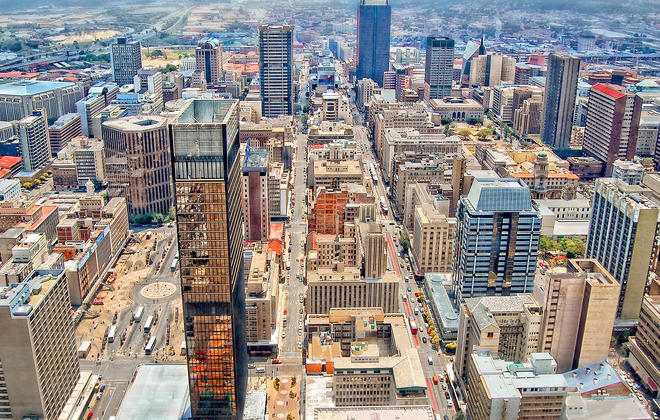
Located on South Africa’s Highveld plateau, Johannesburg is a fast-paced, creative city shaped by gold-rush history, cultural diversity and constant reinvention. Its atmosphere is energetic and urban, with contemporary galleries, rooftop bars and leafy suburbs existing alongside powerful reminders of the country’s past. Visitors can explore the Apartheid Museum, tour Soweto’s historic streets or browse vibrant markets and design spaces in neighbourhoods such as Maboneng. The city’s soundtrack shifts from lively jazz and amapiano beats to the hum of busy streets, while the scent of grilled street food drifts through open-air cafés and market stalls. Johannesburg rewards travellers who engage with its complexity and culture, though its size, traffic and contrasts mean it is best experienced with some planning and local insight.


Bordering Zimbabwe, Mozambique, and Botswana, the Limpopo Province is South Africa’s northernmost province, renowned for its quintessentially African landscapes and rich natural heritage. This diverse region is known for its immense scenic beauty, where rugged mountains meet vast, pristine savannah plains that shelter an abundance of wildlife. It encompasses striking natural features such as the Makgabeng Plateau and the Blouberg Mountains, along with a variety of towns and rural communities surrounded by numerous private and public reserves, including the world-renowned Kruger National Park. Visitors are drawn to Limpopo to explore the fossil-rich caves of Makapansgat, discover the UNESCO-listed archaeological site of Mapungubwe, and experience authentic safari adventures in some of South Africa’s most untouched wilderness areas. Combining cultural heritage, archaeology and spectacular wildlife, Limpopo offers a truly immersive African travel experience.


Located in the northern province of Limpopo, the Soutpansberg, meaning ‘Salt Pan Mountain’ is South Africa’s most northern mountain range, which forms part of the UNESCO-designated Vhembe Biosphere Reserve. Known as the gateway to the neighbouring countries of Botswana, Zimbabwe and Mozambique, the spectacular Soutpansberg mountain range stretches from east to west covering over 130 kilometres. These mountains boast a rich cultural heritage, diverse fauna and flora, and unspoilt wilderness featuring rugged peaks rising from the baobab-dotted plains. Take a guided tour to a nearby Venda village, explore the sacred valleys and lakes, and discover the ancient historical rock art of this beautiful area.


Situated in the northernmost reaches of South Africa’s renowned Kruger National Park, the Makuleke Contractual Park is a rich and diverse ecological region known for its exceptional wildlife and dramatic landscapes. Often referred to as the Pafuri Triangle, the area takes its name from the wedge-shaped tract of land formed by the confluence of the Limpopo and Luvuvhu rivers at the historic Crook’s Corner. Covering approximately 26,500 hectares of remote and unspoilt wilderness, the park encompasses riverine forests, floodplains, baobab-studded landscapes, and open woodlands. Its unique location creates a natural wildlife corridor that attracts an extraordinary variety of animals. Visitors may encounter large herds of elephant, buffalo, lion, leopard, rhinoceros, and numerous antelope species. The region is also a premier birdwatching destination, with more than 350 recorded bird species.


Located in the Limpopo province of South Africa, the Klein Letaba River joins the Groot Letaba River on the western boundary of the Kruger National Park, where it forms the Letaba River and flows through the width of the world-renowned park. The banks of the Klein Letaba River are brimming with a remarkable variety of African wildlife, including elephant, buffalo, zebra, impala and giraffe. One of the area’s highlights includes what is possibly the largest and most stable breeding herd of elephant in the Kruger National Park, which finds its stomping ground at the confluence of the Klein Letaba and the little Byashishi rivers.


Situated in the heart of Kruger National Park, Central Kruger is a renowned safari region characterised by open savannah, rolling grasslands and the Olifants River, whose waters attract an abundance of wildlife. The area's nutrient-rich plains support large herds of buffalo, zebra and blue wildebeest, making it one of the park's best locations for spotting predators such as lions, cheetahs and leopards, alongside elephants and white rhinos. Visitors can enjoy self-drive safaris and guided game drives through this diverse landscape, where exceptional wildlife viewing and classic bushveld scenery combine to create an authentic South African safari experience.
As previously described
Manyeleti Private Game Reserve shares unfenced borders with Kruger National Park, Timbavati Game Reserve and Sabi Sands Game Reserve, forming part of a vast wilderness where wildlife roams freely. The reserve is managed by the Mnisi people, who have lived on this land for generations. In Shangaan, the language most widely spoken in the region, Manyeleti means ‘Place of Stars’, a fitting name for an area renowned for its clear night skies and brilliant stargazing. Dry for much of the year, the reserve offers exceptional wildlife viewing as animals gather around waterholes. Aside from its outstanding safari experiences, Manyeleti also provides visitors with insight into the rich culture and traditions of the Mnisi community.


