
Windhoek to Etosha National Park via Okonjima
Overnight: 2 nights at Ongava Tented Camp
This morning you will be collected from your various accommodation establishments or from the Windhoek International Airport (assuming you land before 07h00). You then depart Windhoek in your safari vehicle with your private guide and set off on your journey.
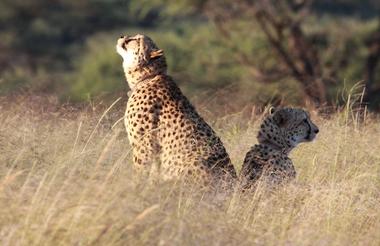
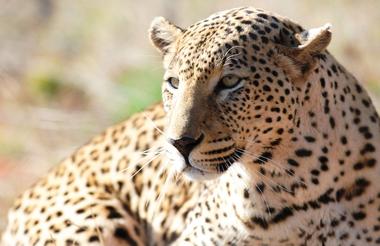
On your way to the Ongava Private Reserve you will visit the Okonjima’s AfriCat Day Centre, a wonderful highlight with which to start your safari. Okonjima is home to the AfriCat Foundation, a wildlife sanctuary which focuses on the research and rehabilitation of Africa's big cats, especially injured or captured leopard and cheetah. You will arrive in time to embark on an exciting and informative game drive and tour of the center. Here you will learn about the function and vision of the AfriCat Foundation and will also get to meet some of the Foundation’s special captive carnivore ambassadors.
PLEASE NOTE: There will be no tracking of wild cats on this visit and should that be required a pre-overnight extension should be booked.
After the excursion you will enjoy a light lunch before you journey continues further north. You arrive in time for an afternoon game drive

Explore the Eastern Etosha National Park
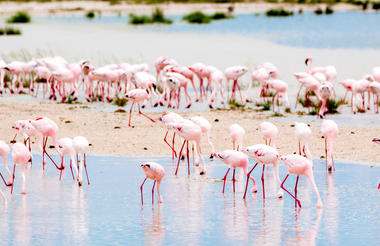
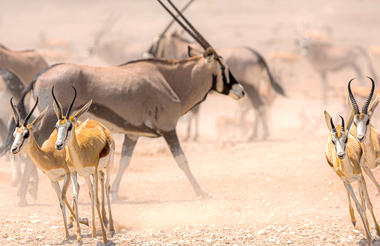
Today is full of exciting game viewing within the eastern section of Etosha National Park, with the option to go on across towards Halali or to concentrate on the areas closer to Namutoni and north to Fischer’s Pan.
You also have the option to return to the camp for lunch, or spend the entire day in the park to maximize your game viewing experience
Drive from Eastern Etosha National Park to Damaraland
Overnight: 3 nights at Camp Doros
This morning after breakfast you will continue your safari to the heart of Namibia, Damaraland, traveling through farmlands and the small towns. You enjoy a delicious Magic Box picnic en route and arrive in time in time to enjoy fireside sundowners at your exclusive Camp Doros.
Visit to Damaraland
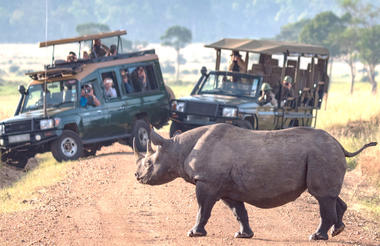
Today you will spend an exciting and memorable morning out rhino tracking with the assistance of local trackers. It is worth noting that these black rhino form part of one of the only free-roaming black rhino populations in Africa and tracking animals in an unfenced and uninhibited environment is an absolute privilege. You will return to camp for a freshly prepared lunch and with time to relax at camp during the heat of the day. Later in the afternoon you head out again for a scenic nature drive or walk to explore this vast and astounding ecosystem.
Camp Doros works together with the Save the Rhino Trust (SRT) - an NGO that has been instrumental in the preservation of the rare, endangered, desert adapted black rhino. Having barely survived the slaughter in many parts of Africa during the '80s and '90s, the black rhino population of Namibia increased substantially since the formation of SRT.
Desert Black Rhinoceros: Namibia is home to the larger of two subspecies of the black rhinoceros found in southern Africa. The only population that remains in the wild, unfenced and outside reserves occupies an arid range in the western Kaokoveld. Their preferred habitat is the mountainous escarpment, but they follow ephemeral rivers into the northern Namib as well, especially when conditions are favorable after rains. They are the only black rhinoceros in Africa that are internationally recognized as a “desert group”. Like desert-adapted elephant, they cover great distances.


Spend an exciting and memorable morning out rhino tracking
Exploring all that Damaraland has to offer
Today you continue your adventures exploring Damaraland, enjoying the freedom to discover the fascinating landscapes with your private naturalist guide both by vehicle and on foot.
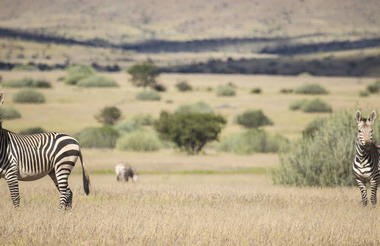
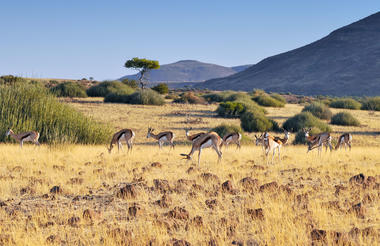
Damaraland is a surprising refuge for desert adapted wildlife that may include elephant, giraffe, oryx, springbok and even some predators such as lion. However, as with any wildlife sightings in Namibia, this depends on many factors including seasonality so specific sightings are never guaranteed. The wildlife roams large tracks of unfenced desert landscapes and finding game can be challenging, but this is all part of the adventure of exploring this wild untouched gem of Namibia.
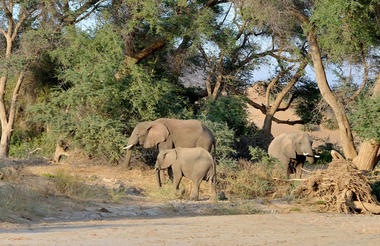
Today’s focus will be largely on tracking the elusive desert adapted elephants in the ephemeral river systems, an activity which will mean spending most of the day out. Your guide will take along a delicious picnic lunch and you will return to camp in the late afternoon.
Desert Adapted Elephant: In habitats with sufficient vegetation and water an adult elephant consumes as much as 300 kg of roughage and 230 liters of water every day of its life. Consider what a herd of them would eat and drink in a week or a month or a year. African elephant in a desert? Well, yes! Not only elephant, but other large mammals like black rhinoceros and giraffe as well. Their ranges extend from river catchments in northern Kaokoveld as far south as the northern Namib. Apart from the Kunene River, seven river courses northwards from the Ugab provide them with possible routes across the desert, right to the Skeleton Coast.


Damaraland to Swakopmund
Overnight: 1 night at Desert Breeze
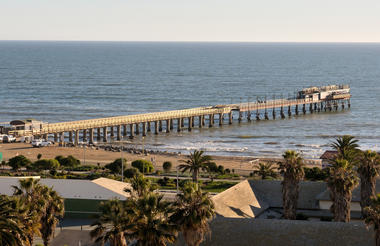
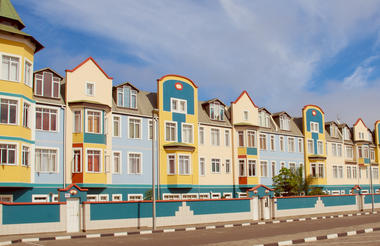
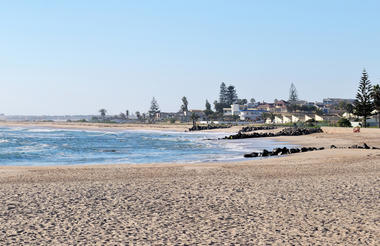
After an early breakfast the drive today takes you south past Namibia’s highest mountain, the Brandberg which peaks at 2,573m above sea level, and west to meet the coast at Henties Bay. You then continue south to the coastal town of Swakopmund where you can enjoy the pleasant seaside location and cooler coastal air for the night.
You stay on the eastern outskirts of the town, overlooking the Swakop River valley and desolate desert dune landscapes. Tonight, includes dinner at a popular restaurant which specializes in locally harvested fresh seafood as well as other local and international dishes.
Swakopmund to Namib Tsaris Conservancy, Sossusvlei
Overnight: 2 nights at Camp Sossus
After an early breakfast you depart on a fascinating drive which takes you south-east through awesome and ever-changing desert landscapes via the impressive Gaub and Kuiseb canyons to meet the dunes at the settlement of Solitaire. A picnic lunch will be had en route and you will continue onto the Namib Tsaris Conservancy, where you will spend your final two nights of your safari at Camp Sossus. Arrival should be in the mid to late afternoon with enough time to acquaint yourself with the camp and enjoy a hot bucket shower before dinner.

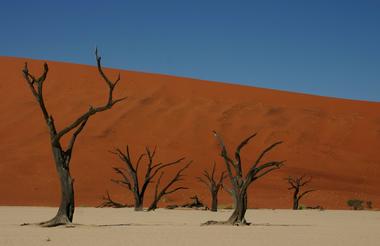
Sossusvlei Excursion
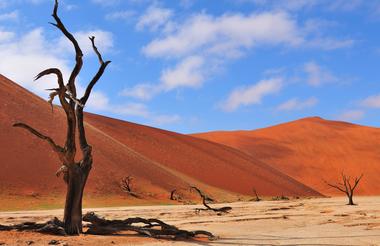
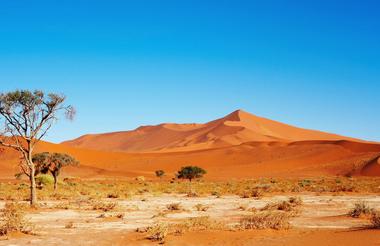
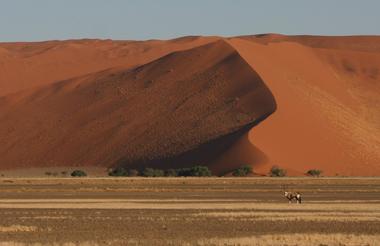
This morning you will need to rise early for a magical excursion with your guide to Sossusvlei in the Namib Naukluft National Park, normally setting off before sunrise to enter the park at sunrise and capture the dunes whilst the light is soft and shadows accentuate the towering shapes and curves. The Sossusvlei area boasts some of the highest free-standing sand dunes in the world and your guide will give you an insight on the formation of the Namib Desert and its myriad of fascinating creatures and plants that have adapted to survive these harsh environs.
Once you have explored Sossusvlei, Deadvlei and surrounding dune fields to your heart’s content you can enjoy a relaxed picnic brunch in the shade of a camel thorn tree. You will return to camp for a late freshly prepared lunch and with time to relax at camp during the heat of the day.

Namib Tsaris Conservancy to Windhoek
After a leisurely breakfast this morning you will depart from Sossusvlei and return to Windhoek, driving northeast up the Great Escarpment and through the scenic Khomas Hochland highlands. A tasty picnic lunch will again be served en route and arrival in Windhoek should be by the mid-afternoon.


