


Upon arrival at Windhoek’s International Hosea Kutako Airport, located about 40km outside of Windhoek, you will be warmly welcomed by your private safari guide, who will transfer you to the comfortable Galton House, where you will spend the night.
The rest of the afternoon is yours to relax and unwind after your flight.
Later, your guide will provide a detailed overview of your personalized itinerary, discussing the exciting experiences and highlights that await you during your time in Namibia. This will be a perfect opportunity to ask any questions and ensure you're fully prepared for the adventure ahead.
In the evenings, you can unwind and reflect on the day’s experiences at your leisure, enjoying the peace and tranquility of your surroundings.
Throughout the tour, your guide will be available to offer insights and suggestions tailored to your interests, ensuring you get the most out of your time exploring Namibia’s stunning landscapes and wildlife.


This morning, after breakfast, you’ll depart from Galton House with your private safari guide in your comfortable safari vehicle. You’ll journey southwest through the scenic Khomas Hochland highlands, before descending the Great Escarpment into the Namib Desert below. A stop for a picnic lunch at a scenic spot along the way will allow you to enjoy the stunning landscapes.
Arriving at Camp Sossus in the mid-afternoon, you’ll settle in for a two-night stay in this serene desert retreat.
In the afternoon, you have the option to explore the surrounding area with your guide, perhaps enjoying a leisurely walk, and ending with sundowners while taking in the sweeping views of the vast desert plains.


This morning, you will embark on an unforgettable excursion into the Namib Naukluft National Park, entering the park gates at sunrise to witness the dunes bathed in soft morning light. The park is home to some of the highest free-standing sand dunes in the world.
You’ll spend the day exploring the iconic dune landscape, including Dead Vlei and the Sossusvlei pan, which may have water at this time of year. A picnic brunch will be provided, allowing you to enjoy the stunning surroundings throughout the morning.
The contrast of the towering red dunes against clear blue skies, the ever-changing light, and the shimmering sands make this one of Africa’s most breathtaking natural wonders.
Your guide will give insights on the formation of the Namib Desert and its myriad of fascinating creatures and plants that have adapted to survive these harsh environs.
You'll then return to Camp Sossus in the early afternoon for a late lunch, stopping off to view Sesriem Canyon along the way. The rest of the afternoon is at leisure (from experience, this is usually welcomed after an exhilarating morning in the dunes).


Today’s itinerary takes you northwest through the breathtaking and ever-changing desert landscapes of the Namib Naukluft National Park, including the impressive Gaub and Kuiseb canyons. If you’d prefer, speak with your guide in advance about the option of taking a scenic flight (additional cost).
You will arrive at the coast in the port town of Walvis Bay, then continue north to Swakopmund, where you can enjoy the cooler coastal air and scenic seaside surroundings. Depending on your arrival time, you may have the opportunity to explore Swakopmund by foot before heading to dinner at a popular local restaurant.
As an alternative to the drive from Dead Valley Lodge to Swakopmund, you may choose to take a scenic light aircraft flight over Sossusvlei, the Diamond Coast, Sandwich Harbour, and the salt pans, before landing at Swakopmund Airport (additional cost applies).
Your guide will drive ahead with the luggage and meet you in Swakopmund later in the day.


You’ll have a full day to enjoy the coastal town of Swakopmund.
This morning, head to the Walvis Bay Waterfront for a marine sightseeing tour of the bay, where you’ll search for the marine big 5: whales, dolphins, mola molas, leatherback turtles, and seals. While enjoying hot coffee and tea, you’ll pass by oyster farms and approach Pelican Point, home to a large colony of 60,000 Cape fur seals. Depending on the season (July to November), you may spot larger mammals like the Southern Right Whale or Humpback Whales. Bottlenose, Heaviside, and Dusky dolphins are also occasionally seen, along with seabirds such as pelicans and cormorants. Onboard, you'll be served fresh oysters with sparkling wine, along with savory snacks, desserts, and drinks. The tour concludes around 12h15 as you return to the Waterfront.
Alternatively, you may opt for a kayaking trip to get closer to the fur seals. This option is suitable for beginners and provides a different perspective of the bay, depending on interest.
In the afternoon, enjoy Swakopmund’s café culture, explore the shops and curio market, or take in the stunning coastal scenery. The lighthouse and surrounding coastline offer fantastic photo opportunities, or for those feeling more energetic, a hike up the white dunes is a great way to experience the landscape and its changing light.


After a leisurely breakfast, you’ll depart Swakopmund and head north along the coastline, stopping to visit the haunting remains of the Zeila Shipwreck, just south of Henties Bay. Though a relatively modern wreck, its atmospheric presence makes it a fascinating site to explore. From there, you’ll continue to the Cape Cross Lodge for your overnight stay. Here, you’ll have the opportunity to sketch at the remarkable seal colony at Cape Cross, known for its large number of seals and their pups.
The Skeleton Coast, with its eerie shipwrecks and fog rolling in from the Atlantic, offers a mystical atmosphere, especially on the headland where sunshine often breaks through. The rocky promontory at Cape Cross is home to thousands of seals, and their proximity makes it an unforgettable experience for wildlife enthusiasts.
The Zeila Shipwreck, stranded in August 2008, remains a striking symbol of this coast’s haunting history. Once a fishing trawler, it now serves as a home for hundreds of cormorants and seabirds, adding to the eerie, otherworldly feel of the Skeleton Coast.


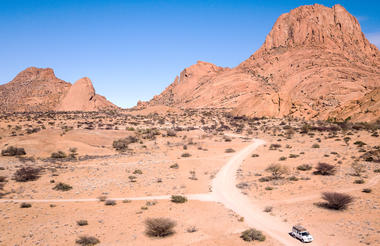
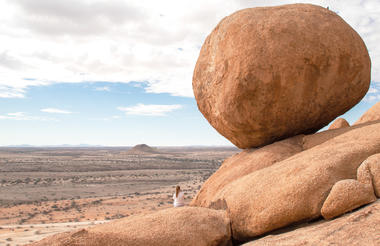
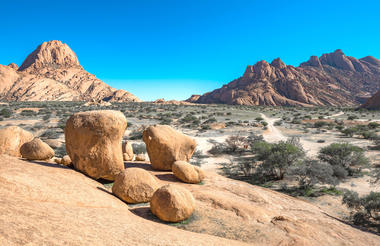
This morning, you’ll depart from Cape Cross Lodge and head northeast to Spitzkoppe, a striking area known for its towering granite peaks in shades of yellow and orange that rise dramatically from the surrounding desert.
Spitzkoppen Lodge, located on the northern edge of the Spitzkoppe Inselberg, offers breathtaking views of the Brandberg and Erongo Mountains. The stylish accommodation consists of 15 spacious chalets, each with a private bathroom and an outdoor viewing deck. The lodge's Dining, Lounge, and Bar Area opens onto a pool deck with a 360° view of the illuminated granite boulders at night. From an elevated spot, you can enjoy a sun-downer platter while taking in the unique biodiversity of the area.
Spitzkoppen Lodge offers a range of activities, all designed with an emphasis on responsible recreation in this delicate environment. Options include mountain hiking, nocturnal safaris, cycling tours, and rock climbing. You can also take guided tours to archaeological sites, such as Bushman’s Paradise National Monument and the Golden Snake Painting, which provide insight into the region’s rich cultural heritage.
The Grosse and Kleine Spitzkoppe mountains are historically significant, offering over 40 rock art sites that highlight the patterns of hunter-gatherer settlement. In addition to their historical importance, these sites hold great cultural and spiritual value, making the Spitzkoppe area an essential heritage site for Namibia. Guests can also use the lodge's maps to explore the famous Rock Arch and enjoy the spectacular starry skies nearby.
This morning, you’ll depart from Cape Cross Lodge and head northeast toward Cheetah View Lodge, passing through small towns en route to Otjiwarongo. A picnic lunch will be served at a scenic stop along the way, with the journey taking approximately 4 ½ to 5 hours, excluding breaks.
You’ll arrive at the lodge in the afternoon, with some time to relax and freshen up before heading out on a game drive through the lodge’s reserve.
Cheetah View Lodge is a well-regarded destination, known for its excellent wildlife sightings. While this will be a new location for you, there will be plenty of opportunities to observe and photograph the cheetahs in the reserve. These incredible animals have become accustomed to visitors, allowing for close-up views and the chance to appreciate their beauty.
After sunset, you’ll return to the lodge and enjoy a delicious dinner, reflecting on the day's experiences.


The next two days will be filled with a variety of activities at the lodge, including time spent in the cheetah run and a tour of the Cheetah Conservation Fund (CCF) facilities.
You’ll also take a drive to see the ambassador cheetahs, gaining valuable insight into the conservation efforts of this world-renowned project. This experience offers a unique opportunity to learn more about cheetah conservation and the work being done to protect these remarkable animals.


Cheetah Conservation Fund: CCF's focus is on research, conservation and education. An extensive modern Visitor and Education Centre encourages visitors to learn about cheetahs, their habitat, and issues of conservation, with an opportunity to see resident non-releasable cheetahs, acting as 'cheetah ambassadors' for the species.
A stop over at CCF makes a very worthwhile, enjoyable, and informative visit for the tourist. The large modern Education Centre houses a museum that provides visitors and students the opportunity to learn more about the behaviour and biology of the cheetah, and the Namibian ecosystem that supports Africa's most endangered cat species. The excellent graphics and interactive displays in the centre bring the visitor through the history of the cheetah from pre-history to modern times and explain how their range and numbers have diminished.
Other exhibits show where the cheetah fits into the cat species family tree, how the cheetah differs from the 36 other cat species, how the cheetah is adapted for a highspeed sprint and its specialized hunting techniques, and finally, the cheetah's lifecycle from cub to adult. A life-size 'play tree' shows the importance of these trees in a cheetah's territory.
Continuing through the Education Centre, the visitor can learn about other aspects of conservation and the work of CCF: for example, how the cheetah lives within an ecosystem together with prey, and how farmers can live with cheetahs on their land by using non-lethal predator control methods, a prime example being the use of Kangal Anatolian Livestock Guarding Dogs from Turkey. CCF has been promoting the use of these dogs since 1994, breeding and donating them to Namibian farmers to guard their flocks. Finally, a Future Room highlights the need for continued research so that humans and nature can live together. The Research Centre houses a veterinary clinic, laboratory and main offices. The Visitor's Centre has a large meeting room, gift shop, veranda and the predator prey ground' outside is a learning area for school groups and children of all ages. Enjoy the view of the Waterberg Plateau from the veranda and relax in the landscaped courtyard with native gardens and an attractive sculpture of a cheetah.


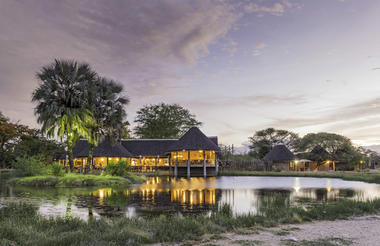
After an early breakfast, you’ll drive to Etosha National Park, arriving at Mushara Bush Camp, located near the Namutoni Gate.
The day begins with an exciting activity before returning to camp for a hearty brunch. Afterward, you’ll head into the park, arriving at the eastern side of Etosha by mid-afternoon. In the afternoon, your guide will take you on your first game drive into Etosha National Park, returning to camp in time to freshen up before dinner. Alternatively, you can explore the surrounding area or simply relax at the camp, enjoying the tranquil scenery.
Over the next few days, you’ll have the chance to encounter a variety of wildlife, including zebras, gemsbok, rhinos, lions, elephants, cheetahs, giraffes, and many antelope species. Etosha is known for its diverse wildlife, and you'll have plenty of opportunities to observe and photograph these incredible animals in their natural habitat.
As we explore the park, your guide will offer expert advice on the best areas for game viewing and where to spot the most interesting wildlife. You’ll also have the chance to ask questions and learn more about the animals and the environment of Etosha.


The next two full days will be dedicated to exploring the winding roads and waterholes of Etosha National Park, offering plenty of opportunities to discover the diverse fauna and flora the park is known for.
Lunch can be enjoyed either back at camp, at one of the resorts within the park, or, if preferred, you may opt for a full day in the park with a scenic picnic lunch. Regardless of the choice, you’ll exit the park before sunset and return to the lodge with time to relax and freshen up before dinner.
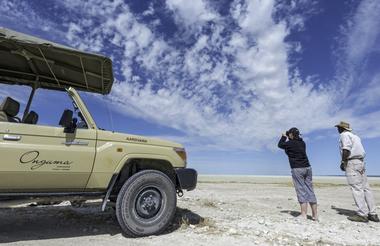


Game drives in Etosha.
Etosha National Park: Etosha National Park covers 22,270km², of which approximately 5,000km² is made up of saline depressions or pans. The largest of these pans, the Etosha Pan, can be classified as a saline desert in its own right. The Etosha Pan lies in the Owambo Basin, on the north-western edge of the Namibian Kalahari Desert. Until three million years ago it formed part of huge, shallow lake that was reduced to a complex of salt pans when the major river that fed it, the Kunene, changed course and began to flow to the Atlantic instead. If the lake existed today, it would be the third largest in the world. Etosha is the largest of the pans at 4,760km² in extent. It is nowadays filled with water only when enough rain falls to the north in Angola, inducing floods to flow southward along the Cuvelai drainage system.
The Park consists of grassland, woodland, and savannah. Game-viewing centres on the numerous springs and waterholes where several different species can often be seen at one time. The Park boasts some 114 mammal and over 340 bird species. Wildlife that one might see includes elephant, lion, giraffe, blue wildebeest, eland, kudu, gemsbok (Oryx), zebra, rhino, cheetah, leopard, hyena, honey badger and warthog, as well as the endemic black faced impala.


After an early breakfast, we begin our journey back to Windhoek, traveling south through Namibia's central highlands and commercial farmlands. Upon arrival in Windhoek, your guide will transfer you to Galton House for the final night of the safari.
You’ll gather for drinks to reflect on the incredible images and memories collected throughout the trip, sharing thoughts on future projects once back home.
In the evening, your guides will take you out to a popular local restaurant for a dinner where you can reminisce about the highlights and memorable moments of the journey.


This morning can be spent relaxing at our guesthouse, exploring Windhoek, visiting NamCrafts and the Craft Centre, or doing some last-minute souvenir shopping if time allows, before your guide collects you from the guesthouse for your transfer out to the Windhoek International Airport, getting you there in time to check in for your ongoing flight.


