Cha Cha Metsi

The Niven Family have a long pioneering and explorative history with Botswana.
While the three boys were still just a twinkle in the couples eyes, they spent as much time as possible in Botswana.
Clyde, the great grandson of Sir Percy Fitzpatrick, Author of Jock of The Bushveld and pioneer, has always had his great grandfather’s pioneering spirit. While most of their circle of friends headed for the beaches of South Africa during school holidays, the Niven’s packed their Land rover and Jerry cans and would head north to explore yet another part of Botswana.
When they sold their Lodge in South Africa, Botswana was the next logical step for the pair.
After many years of planning, Clyde have finally realised his dream, the ability to share with others and their family one of the most beautiful and well looked after natural areas of the world, the Okavango Delta.
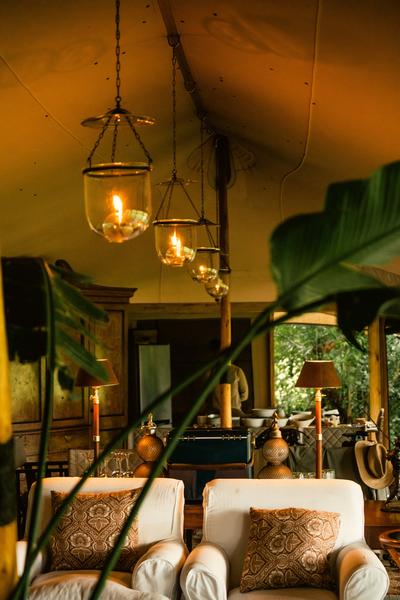
Styled around the 1930’s Safaris Experience they wanted to create an authentic experience with all the necessary comforts, but still close to nature.
Think Great Gatsby meets Out of Africa.
Styled around a bygone era of Safaris, the camp is intimate, stylishly colonial and authentic. .
Bread is baked fresh daily, the paths are lit with paraffin lanterns and a Gin is never far away as the sun sets.
Clyde has managed to gently and considerately create a beautiful camp amongst the knob thorn forest on a permanent waterway so as to feel that it is all rather incidental. It is unpretentious, but delivers on all the comforts required for the climate and most importantly, the game experience.
The staff are all from a local village that has thrived in this Delta for years and the superior knowledge of fauna and flora is evident in discussions on the vehicle.
Clyde’s philosophy has always been to touch the earth lightly from building an off the grid lodge (long before it was fashionable) to now owning a piece of this paradise.
Water at the Heart of It All
Metsi means “water, truly,” and there couldn’t be a more fitting name. The camp spills out onto a private lagoon fed by the meandering veins of the Okavango — a delta unlike any other in the world. It is a living, breathing oasis where animals appear as if from behind a curtain of reeds. At any given moment, a kudu might walk into view, pausing with poetic stillness at the water’s edge. Elephants pass slowly through the shallows, sometimes with a calf in tow, dusting their backs in the early sun.
Mornings unfold slowly.
It begins with birdsong — that gentle, golden hour chorus that rises with the mist off the water as the sun rises into sight. At Cha Cha Metsi, time doesn’t pass so much as it unfolds. Each morning arrives not with urgency but with grace, stretching its limbs across the floodplains and slipping beneath the canvas of your tent. Here, in the heart of the Okavango Delta, the wild and the refined meet in quiet harmony This watery stage is ever-changing minute by minute as the first cup of tea or coffee is poured. It glows pink in the morning, turns silver by noon, and melts into honey and rose gold by dusk while hippos grunt in the expanse of water in front of camp. At night, it reflects the firelight from lanterns hanging in ancient trees.
The lake is the heartbeat of the camp, and everything — every meal, every story, every pause — seems to circle back to it.
The rhythm of camp life
A typical day at Cha Cha Metsi is anything but typical. There’s a structure, of course — a gentle rhythm, like the delta itself. But it never feels scripted.
Just before sunrise, a soft knock on the door and a gentle “KoKo”wake up is followed by a slow gentle nudge towards the spoils in the main area, there, waiting, simple indulgences, like homemade rusks and coffee just before game drives.
Wrapped in blankets and waiting in anticipation for the unknown, one is piled in a classic Land Rover and the game drive begins The Okavango reveals itself in slow, dramatic scenes — lions still lounging after a night’s hunt, Lechwe bounding through reeds, a leopard draped across a Jackalberry branch. Sometimes the delta is still; other times, it teems with life so abundant one can hardly take it all in.
Back at camp, brunch is a spread beneath the shade — ripe pawpaw, warm muffins, eggs made to order, freshly baked bread with an assortment of dishes. Everything is thoughtful, but never fussy. That’s part of Cha Cha Metsi’s charm: it doesn’t try to impress with extravagance, but with authenticity. It’s not about excess, it’s about effortlessness.
Afternoons are slow by design. Some nap. Some read on the veranda while warblers chirp in the reeds. Some enjoy the swimming pool, sipping iced rooibos tea, occasionally glancing up to see a pair of giraffes moving like sentinels across the floodplain. The camp is deliberately peaceful — the kind of place where your senses sharpen and your mind softens.
In the evening, the magic intensifies. You might find yourself whisked away to a bush dinner — a long table set in a clearing, hung with antique lanterns and draped in linen. The sound of hyenas in the distance, the laughter of strangers who feel like old friends by now. It’s these moments — dinner beneath stars undimmed by anything but time — that stay with you long after you’ve gone.
A camp from another time
Cha Cha Metsi wasn’t built in a hurry. It doesn’t look like anywhere else because it’s not trying to. There’s a romance here, a sense of timelessness that’s deliberate and deeply felt. The camp has the soul of the 1930s golden era of safari — campaign furniture, canvas walls that billow with the breeze, and chairs with arms worn smooth by stories told late into the night.
Every detail has a tale. Family heirlooms and photos grace the structures. The antique drinks cabinet that holds your sundowner gin and tonic. The weathered binoculars left out for spotting fish eagles, the art deco sconces casting warm pools of light onto leather-bound books and faded maps all make up the story of Cha Cha Metsi. A camp that makes you feel you have stepped back in time to those old hunting safari days of Dennis Finch Hatten and Karen Blixen This is not nostalgia for nostalgia’s sake — it’s memory made tactile. And it’s rare.
Fine Dining, Fireside Stories
Despite the wild setting, the cuisine at Cha Cha Metsi rivals that of any city bistro — and surpasses it in spirit. Brunch is fresh and light — fresh fish cakes, garden greens, artisan breads and delights that make you more than just full, but rather happy. Dinners are layered and indulgent. Slow-roasted lamb with wild rosemary and pomegranate glaze, followed by a chocolate tart so delicate it shimmers under candlelight.
Meals are never rushed. They’re occasions. Sometimes shared around a long communal table.
Other times in private, under a canvas canopy with just the sound of cicadas and cutlery.
Each meal is paired with stories — of animals spotted that day, of ancestors who once crossed this same terrain with tents and typewriters, of flood patterns and bird migrations. Here, storytelling is part of the menu.
The Delta’s Spell
The Okavango Delta is a World Heritage Site, yes. A miracle of seasonal floodwaters, absolutely. But more than that, it is a living artwork, constantly redrawn by water, light, and instinct.
From mokoro rides through river channels, to golden evenings watching elephants cross like pilgrims, the delta offers luxury in its purest form: space, silence, and soul.
At Cha Cha Metsi, you feel that magic in every corner. In the way the staff know your name and your favorite tea. In the scent of wild sage as you are guided back to your room. In the lion tracks on the path in the morning — fresh and full of possibility.
Why this is ultimate luxury
Luxury is a word often overused. But here, it regains its meaning. It’s not marble bathtubs or WiFi in the bush. It’s the sound of a honeyguide calling. It’s the warmth of a hand-written note left on your pillow. It’s the absence of noise, the abundance of detail, and the feeling of being completely — exquisitely — present.
Signal is not great here, but you are more connected than ever.
Cha Cha Metsi will leave you changed. Not in some grand, cinematic way. But in the subtle, private way that all truly great journeys change you.
Come, walked slower, listened more and dream differently.