Vietnam is a land of breathtaking contrasts and sensory delights. It is a country that features everything from exotic culinary delights to breathtaking scenery. Seemingly endless, tranquil rice paddies stand in stark contrast to bustling cities such as Ho Chi Minh City and Hanoi which embrace all the technology and conveniences that the modern world has to offer. The well-preserved colonial buildings of Hoi An play host to a slew of charming boutiques and tempting cafes while, further north, the local hill-tribe people of Sapa sell a wide variety of exquisite crafts and handmade trinkets. Beyond the urban areas, this diverse country is characterised by vast, verdant jungles and lush mountainous regions as well as an enticing coastline peppered with golden sand, palm-lined beaches.
Hoi An, on Vietnam’s central coast, is a town steeped in history and timeless charm. Known as Faifo to foreign traders centuries ago, it was a bustling port from the 15th to 19th centuries, attracting merchants from China, Japan, Portugal, and the Netherlands. This rich trading heritage is evident in its eclectic architecture: Japanese merchant houses with curved rooflines, Chinese assembly halls adorned with intricate carvings, and French colonial buildings lining the ancient streets. The town’s canals once carried goods from the Thu Bon River to the sea, facilitating Hoi An’s prominence in regional and global trade. Today, with cars restricted from the main streets, visitors can wander peacefully through its lantern-lit alleys, riverside markets, and temples, while boutique hotels, tailor shops, art studios, and cafés bring the historic port to life. Nearby, the ruins of My Son Sanctuary offer a glimpse into the Cham Kingdom’s Hindu past, complementing Hoi An’s multi-layered history and cultural heritage.


Hanoi, Vietnam’s captivating capital, is a city of contrasts where centuries-old traditions coexist with vibrant urban energy. Its wide boulevards, tree-lined lakes, and ancient pagodas are infused with the elegant legacy of French colonial architecture, creating a uniquely atmospheric backdrop. Visitors can witness synchronized t’ai chi at the serene Hoan Kiem Lake, meander through the bustling Old Quarter with its maze of narrow streets, lively traders, and weaving scooters, or enjoy the whimsical art of water puppetry at the Thang Long Puppet Theatre. Highlights also include the UNESCO-listed Imperial Citadel of Thang Long, the tranquil Perfume Pagoda temple complex, and the stately Hanoi Opera House in the French Quarter. Beyond its historic sites, Hanoi pulses with cafés, markets, and street-side eateries, offering an authentic taste of Vietnam’s culture, cuisine, and daily life—making it a city that charms at every turn.


Wedged between a number of larger neighbouring countries, Laos is often overlooked in favour of tourism giants such as Thailand and Vietnam. But these travellers are missing out on an extraordinarily scenic and culturally rich destination. Laos boasts a reputation as the least visited, least Westernised, and most untouched of all Indochinese nations. Only time will tell how long this will last, but while it does, visitors who choose to explore this nation’s remote areas will be richly rewarded. Laos’ primary drawcard is undoubtedly the mighty Mekong River which traverses the length of the country and is considered the second most biodiverse river in the world. In the north, the landscape is characterised by little-explored jungle-clad mountainous areas where visitors can witness the intriguing cultures of the various hill tribes that populate this region. Travellers on the hunt for cultural interest should head for the bustling capital of Vientiane, with its innumerable temples and Buddhist monuments. It is this variety of exotic wildlife, remote wilderness and remarkable cultural treasures that make Laos a truly unique and unforgettable holiday destination.
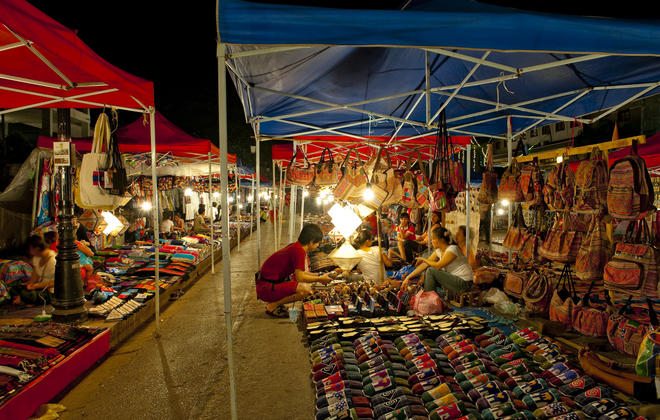
Luang Prabang is a historic town in northern Laos, set at the confluence of the Mekong and Nam Khan rivers and surrounded by forested mountains. A UNESCO World Heritage-listed destination, it is renowned for its well-preserved Buddhist temples, French colonial architecture and relaxed riverside atmosphere. Travellers can explore ornate monasteries, climb Mount Phousi for panoramic views, and visit the Kuang Si waterfalls, where turquoise pools cascade through lush jungle. Early risers can witness the traditional alms-giving ceremony, while the lively night market offers local handicrafts and Lao cuisine. With its blend of spiritual heritage, natural beauty and unhurried pace, Luang Prabang provides a distinctive introduction to Laos and is particularly appealing to travellers seeking culture, scenery and authentic local experiences.