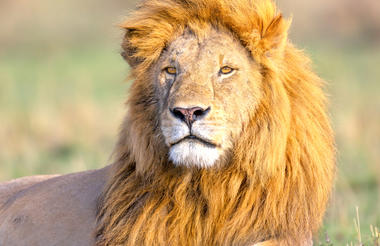
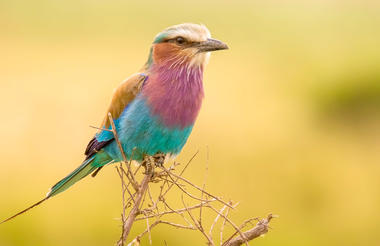
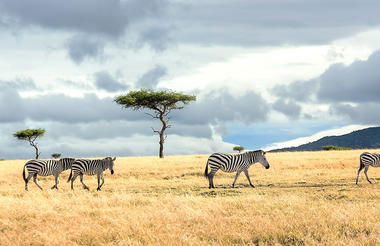
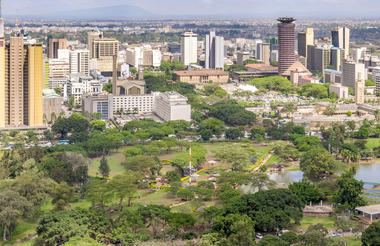
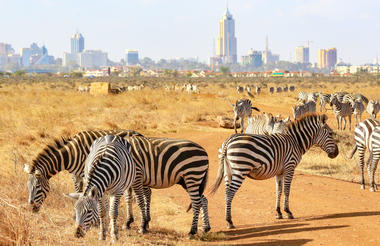
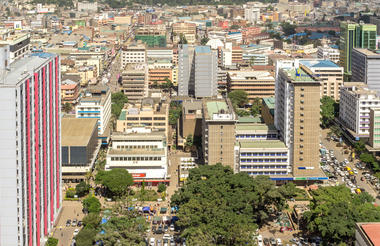
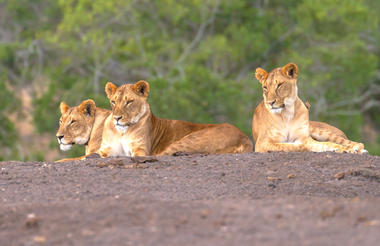
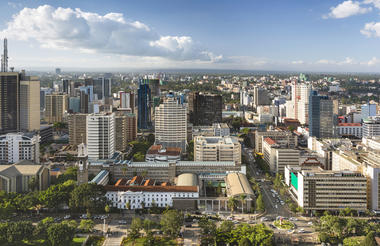
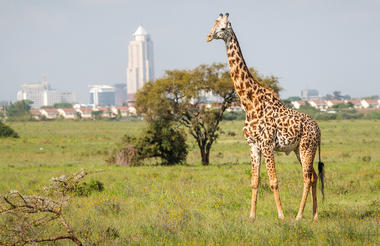
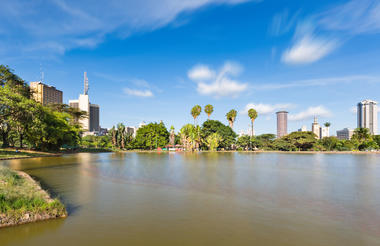
Widely regarded as one of East Africa’s most dynamic and cosmopolitan cities, Nairobi sits along the Nairobi River and serves as Kenya’s capital and largest urban centre, acting as a major gateway for safari travel across the country. The city features a growing café culture, active nightlife, and cultural landmarks such as the National Museum of Kenya and the Karen Blixen Museum. Just outside the city centre lies Nairobi National Park, where wildlife, including lions, giraffes, and buffalo, roam against a backdrop of skyscrapers — one of the rare cases in the world where a major national park borders a capital city. Visitors also often stop at the David Sheldrick Wildlife Trust elephant orphanage for close encounters with rescued calves.
Situated on the equator in central Kenya, Nanyuki is a thriving town renowned as a gateway to Mount Kenya and the surrounding wilderness areas. Framed by spectacular views of the mountain’s snow-capped peaks, it serves as a popular base for hikers ascending Mount Kenya via the Sirimon and Burguret routes. The town combines a relaxed atmosphere with a surprising selection of restaurants, including the famous Trout Tree, where diners enjoy fresh trout in a unique setting built around a giant tree. Beyond its mountain appeal, the area provides easy access to some of Kenya’s most celebrated conservation areas, including Mount Kenya National Park, Lewa Wildlife Conservancy, Ol Pejeta Conservancy, Samburu National Reserve and Shaba National Reserve. With its blend of outdoor adventure, wildlife encounters and scenic beauty, Nanyuki is an ideal starting point for exploring central Kenya.


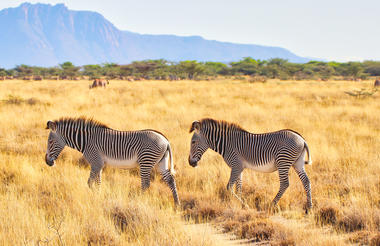
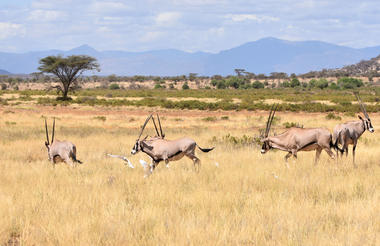
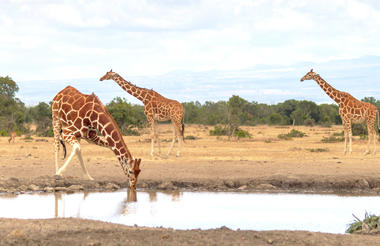
Set on the banks of the Ewaso Ng'iro River and neighbouring the Buffalo Springs National Park, Samburu National Reserve is characterised by a spectacular landscape of rugged hills, undulating plains and riverine forests. The park is home to abundant wildlife including a variety of rare species such as the reticulated giraffe, the long-necked gerenuk, Somali ostrich, Grevy's Zebra, and Beisa Oryx. Visitors can also enjoy spotting over 900 elephants, a variety of predators, and over 450 bird species. The ancient culture of the Samburu people is still alive here, and it is possible to see two unique customs firsthand. In the first, watch as herds of cattle respond to each man’s individual voice as they call. In the second, see the tribesmen perform incredible dances that go back hundreds of years.
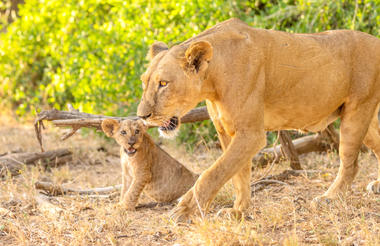
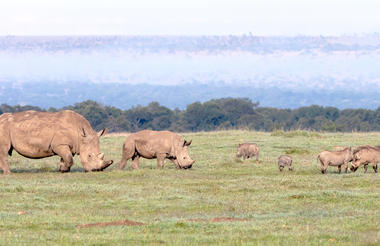
Resting at the foothills of Mount Kenya and the Aberdare Mountain Range, in central Kenya's Laikipia County, the Ol Pejeta Conservancy is the largest black rhino sanctuary in East Africa. It is also home to some of the last remaining northern white rhino in the world. Originally a working cattle ranch in colonial Kenya and now a pioneering wildlife conservancy, Ol Pejeta works to protect wildlife and provide a sanctuary for rescued chimpanzees. The Conservancy is a popular safari destination and is home to the renowned ‘Big Five’ as well as a wide selection of other African animals including zebra, giraffe, hippo, cheetah, jackal, serval, hyena, vervet monkey, and many more. Visitors can look forward to an assortment of outdoor activities such as horse rides, game walks, and nocturnal game drives.
As previously described
Situated in southwest Kenya, the Mara North Conservancy is a beautiful private wilderness area spanning more than 30 000 hectares. It is home to a spectacular array of plants, reptiles, birds and mammals; including elephant, rhino, buffalo, lion, leopard, cheetah and large concentrations of wildebeest, zebra, gazelle and other migratory wildlife. Leopard Gorge, in the heart of the conservancy, is famous as the setting of countless BBC Big Cat Diaries and National Geographic documentaries. Neighbouring the well-known Maasai Mara National Reserve, this conservancy is vital for sustaining the famous Serengeti wildebeest migrations as well as the endangered African wild dog and black rhino.