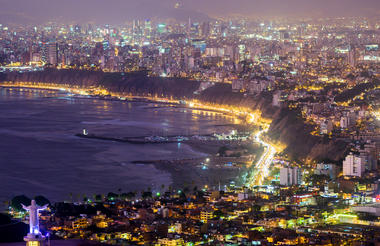
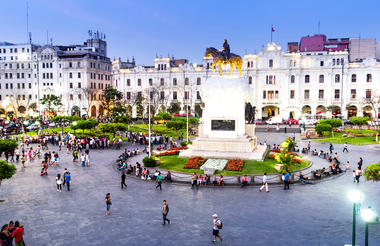
Peru’s capital is a fantastic city to tour, dotted with a multitude of cultural sites and beautifully preserved architecture. Founded by the conquistador Francisco Pizarro in 1535, Lima was first named ‘City of Kings’ – a biblical reference to the ‘Three Wise Men of the East’ – before its name was changed by the Spanish colonialists. The most significant historical buildings are located around the Plaza Mayor, the most notable being the Government Palace, where one can still observe the changing of the guard performed by the Húsares de Junín. The beautiful Cathedral and the various small palaces and colonial balconies also play also their part in the beauty of the city. Another highlight is the famed Larco Herrera Museum, documenting the millennial cultures that preceded the Inca civilization and containing a priceless collection of pre-Columbian artifacts, including some of South America's finest pre-Inca erotic pottery.

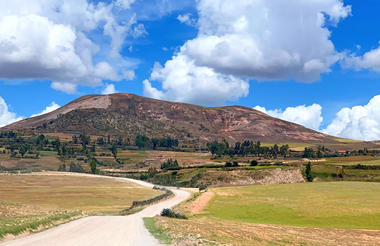
Also known as Urubamba Valley, the Sacred Valley of the Incas is located in the Peruvian Andes, beneath the world-famous site of Machu Picchu and not far from Cuzco, the unofficial Inca capital. This fertile valley is fed by a network of waterways and encompasses a wealth of archaeological sites, including Ollantaytambo, renowned for its extensive Inca ruins; Tipon, which features ancient agricultural terracing and a working irrigation system; and Pisac, with its ancient vestiges and colourful weekly market.
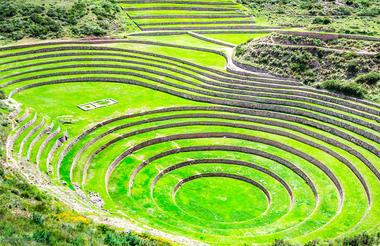
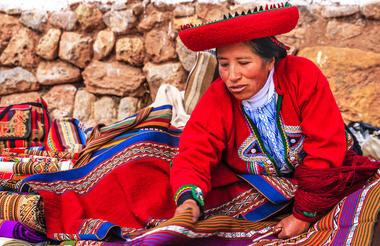
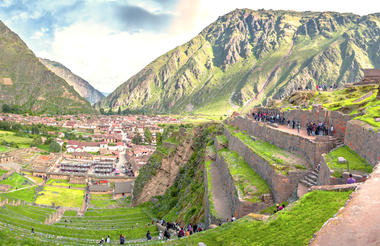
A “Living Inca Town” on the western edge of the Sacred Valley, Ollantaytambo, also called Ollanta, has narrow cobblestone streets that have been continuously inhabited since the 13th century. The town is dominated by two massive Inca ruins, including a fortress built to guard the valley and later used as a stronghold during Inca resistance against Hernando Pizarro. The site functioned as an agricultural, administrative, religious, and social centre, with terraces, a temple, and an urban area. Two sections stand out within the complex: Araqama Ayllu, the ceremonial zone with fountains and ritual spaces, and Qosqo Ayllu, the residential district where locals still live in Inca-era buildings. Ancient roads, aqueducts, walls, and towers reveal its strategic importance. Today, travellers often pause here on the way to the renowned Machu Picchu.


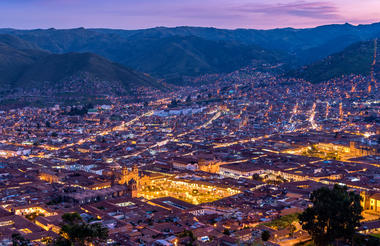
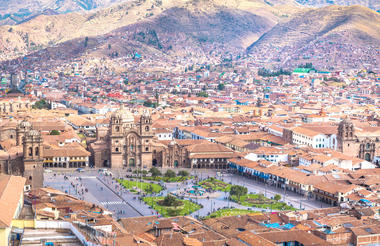
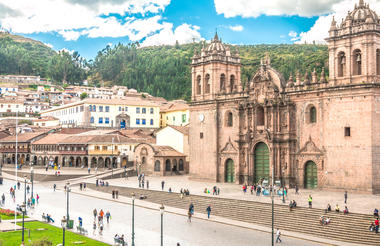
Once called the ‘Navel of the World’ by the Incas, Cusco rises in the southern Andes of Peru, where colonial grandeur meets the enduring stonework of the Inca Empire. A UNESCO World Heritage Site, it serves as the main gateway to Machu Picchu, the Sacred Valley, and surrounding ruins. At its centre, the Plaza de Armas—once Huacaypata—remains alive with cafés, arcades, and the 16th-century Cusco Cathedral, built from Sacsayhuamán’s stones. Nearby, the San Blas district unfolds with whitewashed adobe houses, blue balconies, and workshops where artisans craft metalwork, woodcarvings, and sacred art. Across the city, layers of history reveal themselves in landmarks such as the Korikancha, the Inca street of Hatun Rumiyoc with its twelve-angled stone, the Museum of Colonial Art, and the ancient shrines and water temples scattered through the surrounding hills.
As previously described