Adventurous travellers seeking a truly remote African safari will be thrilled to discover it in central Botswana. The Central Kalahari Game Reserve is the second largest game reserve in the world and one of the least visited, nothing can prepare you for the sheer wonder of exploring this vast reserve with its wild, untouched beauty. The landscape is dominated by sand veld, acacias, and Kalahari apple-leaf, interspersed with grasslands and dotted with occasional sand dunes, pans and fossil river valleys. While the reserve is home to an impressive variety of wildlife, there is one animal that is rather obviously absent, the human being. It is this lack of human traffic, combined with the park’s lack of infrastructure, that makes for a challenging and marvellously authentic African experience. Visitors need to be entirely self-sufficient but those willing to make the effort will be richly rewarded.


Located between the Chobe National Park and the Moremi Game Reserve in Botswana, the 200 000-hectare Khwai Conservancy is an enthralling place of wild landscapes and abundant wildlife. The plentiful Khwai River running through the park and dense Mopani forests in the interior provide the perfect home for numerous animals, and the incredible scenes of animals drinking from the river allow for superb photography opportunities. Visitors can look forward to seeing large elephant herds, and spotting lions, leopards and hyenas quite easily. Other species include wild dog, zebra, giraffe, wildebeest, buffalo, lions, cheetahs, leopard, hyenas, hippos, Kudu, Tsessebe, and reasonably rare Roan and Sable. Hiking, game drives, guided walks, spa treatments, and open-air camping are just some of the activities on offer.
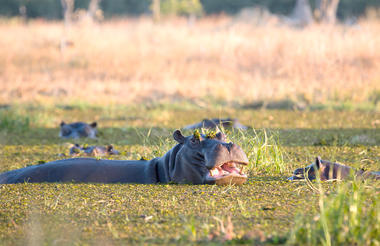
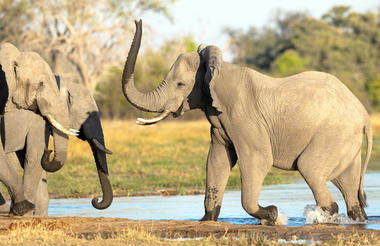
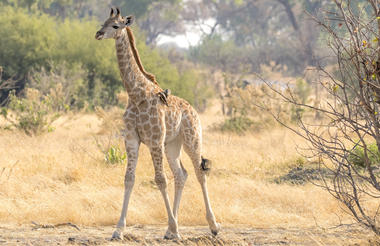
Savuti, also known as Savute, lies in the heart of Botswana’s renowned Chobe National Park and is one of the country’s most fascinating wildlife destinations. This dynamic wilderness features vast open savannahs, ancient rocky outcrops, and the remnants of a historic marsh fed by the enigmatic Savuti Channel. Famous for its unpredictable wet and dry cycles, the landscape is constantly changing, creating unique habitats for a remarkable variety of wildlife. Wild dogs hunt along the dry riverbed where crocodiles once swam, highlighting the area’s ever-shifting nature. Visitors can encounter large herds of elephants, Cape buffalo, zebra, and wildebeest, as well as predators such as lions, cheetahs, hyenas, black-backed jackals, and bat-eared foxes. Savuti is also home to abundant birdlife, antelope species, tsessebe, kudu, and many other iconic African animals.


The Chobe River forms the northern boundary of Chobe National Park and is one of southern Africa’s most rewarding wildlife riverfronts, especially in the dry season when animals concentrate along its banks. Elephant herds gather in large numbers at the water’s edge, hippos crowd the channels, and buffalo move regularly through the floodplain grasslands, while lions range through the wider system and may hunt buffalo in the surrounding landscape. The river also supports exceptional birdlife across reeds, sandbanks, and woodland edges, and visitors typically explore it through guided game drives on designated park tracks as well as boat safaris that bring them level with elephants and hippos along the shoreline.


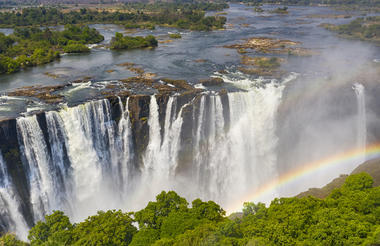
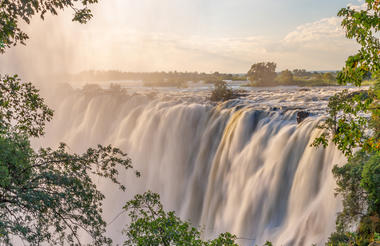
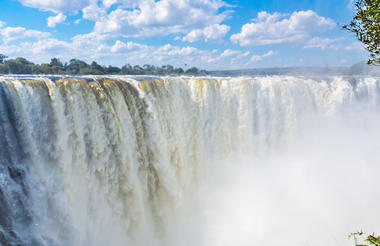
Known locally as Mosi-oa-Tunya—“The Smoke That Thunders”—Victoria Falls is one of the world’s great natural landmarks. Straddling the Zambezi River between Zambia and Zimbabwe, it forms a vast curtain of water that fills the air with mist and sound. The Zimbabwean side grants the most dramatic views, where mist rises like ghostly curtains and rainbows arc through the spray. Measuring about 1,708 metres across, it is regarded as the largest single continuous sheet of falling water on Earth. The adjacent town of Victoria Falls provides a convenient base for exploring the region, with a wide range of activities from scenic flights and microlight trips to white-water rafting, bungee jumping, kayaking, and safaris into Chobe National Park.