


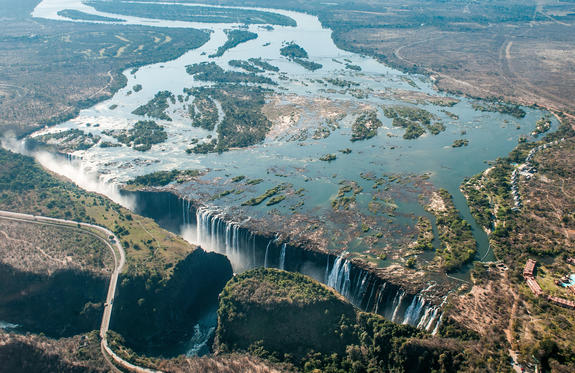
Situated on the Zambia–Zimbabwe border along the Zambezi River, Victoria Falls is experienced from the Zambian side within Mosi-oa-Tunya National Park, where walkways trace the cliff edge above a vast basalt gorge. Knife Edge Bridge pushes visitors into the spray line for a close view of the Main Falls, a continuous curtain of water, and the Eastern Cataract, where the flow breaks into narrower channels across the far side. Rainbow Falls, the highest section of the cascade, often reveals shifting arcs of colour in fine mist when light breaks through the spray. The Boiling Pot viewpoint looks directly into a deep whirlpool where the river is forced into the Batoka Gorge. Upstream, boat access reaches Livingstone Island, a rocky outcrop on the lip of the falls, and the seasonal Devil’s Pool, a natural rock pool at the edge of Victoria Falls that becomes safely accessible during low water when river levels drop and currents weaken. Activities extend beyond the rim, including white-water rafting through gorge rapids, kayaking, ziplining across the chasm, bungee jumping from the bridge, bridge swings, sunset cruises, game viewing along the riverbanks, and visits to the local market.
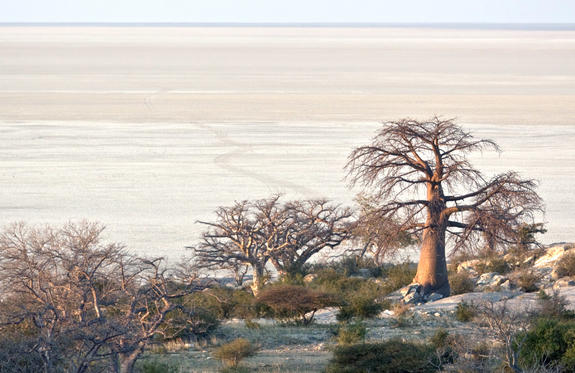
Set in the heart of the dry savanna of northeastern Botswana, the Makgadikgadi Pan is the world's largest network of salt pans stretching over 3900 square kilometres and formed on the bed of the ancient Makgadikgadi Lake that began evaporating aeons ago. Visiting Makgadikgadi is a unique salt desert experience: in the dry season, this vast expanse of sun-baked salt glistens in the light, and when the rains come, the pan is home to a cornucopia of flamingos and other waterbirds, as well as one of Africa's largest zebra populations, whose annual migration is a wonder to behold. Visitors can immerse themselves in the stark beauty of this incredible landscape, spot a host of wildlife and enjoy a number of activities, including horse riding safaris, game drives, and excellent birdwatching. Other highlights include: quad biking across the vast expanse of dry salt pans or jumping in a helicopter and viewing countless flamingo flocks creating a magnificent pink spectacle dotting the landscape.

Windhoek, Namibia’s capital, lies in the heart of the country amid the rolling Khomas Highlands, where wide skies and dry savannah frame a compact, orderly city. It blends German colonial heritage with contemporary African identity, creating a calm, understated atmosphere rather than a bustling metropolis. Landmarks such as Christuskirche and the Tintenpalast sit alongside modern civic buildings, while lively markets and cafés reveal everyday Namibian life. Visitors can explore museums, stroll shaded streets, or use the city as a gateway to the surrounding wilderness and safari regions. The air is often dry and clear, carrying the scent of dust and jacaranda blossoms, while distant hills glow at sunset. Windhoek offers a gentle introduction to Namibia’s landscapes and culture, with space, light and quiet defining its appeal.

Sossusvlei is where you will find the iconic red sand dunes of the Namib. The clear blue skies contrast with the giant red sand dunes to make this one of the natural wonders of Africa and a photographer's heaven. Aside from the attractions at Sossusvlei - Dune 45, Hiddenvlei, Big Daddy and Deadvlei - other attractions in the area include the Sesriem Canyon and Namib-Naukluft National Park, where the mountains of the Namib meet its plains.

Situated in the rugged landscapes of northwestern Namibia's Kunene Region, Palmwag is a remote safari destination renowned for its dramatic desert scenery and remarkable wildlife. Set amid rocky hills, ephemeral riverbeds and iconic makalani palms, it lies within one of Namibia's largest wilderness conservation landscapes. Visitors can enjoy guided nature drives and walking safaris in search of desert-adapted elephants, black rhinos, giraffes, springbok and other wildlife adapted to this arid environment. Sweeping vistas, striking red-earth landscapes and peaceful starlit skies create a profound sense of solitude, making Palmwag an exceptional destination for travellers seeking wilderness, conservation experiences and the untamed beauty of Namibia.

Bordering Angola in northern Namibia, Kunene is a region as well as the name of a river, which is one of just five perennial rivers in Namibia. The Kunene River is an invaluable source of water for the local Himba people, and it has been the mainstay of their existence for hundreds of years. For travellers, the river’s most striking feature is the magnificent Epupa Falls, which cascade over a distance of more than a kilometre downstream, with an impressive vertical drop of around 60 metres. Whitewater rafting and kayaking are both popular pursuits in these areas. Visitors can take sundowner cruises; explore sublime hiking routes; enjoy excellent bird watching opportunities; learn about local culture with a trip to a traditional Himba village; or go canoeing, kayaking, and game viewing.
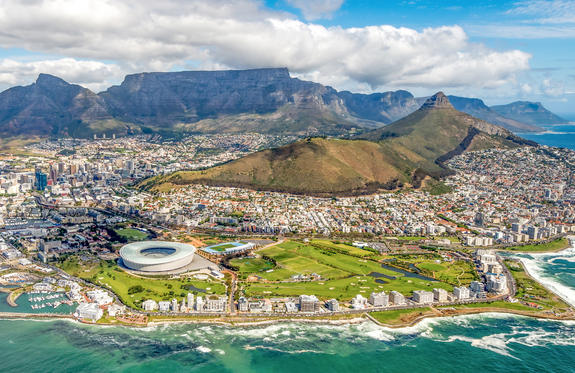
Cape Town is one of the world's most beautiful cities. Perched between the ocean and the mountain, with a national park as its heart, there is nowhere like Cape Town. Cape Town, the "Mother City", is the oldest city in South Africa and has a cultural heritage spanning more than 300 years. The unique topography of the region makes it easy to orientate oneself as long as you remember that with Table Mountain behind you and Robben Island before you, you are facing north, looking across Table Bay and up the west coast of Africa.


