


Resting in the magnificent Great Rift Valley and presided over by the majestic Mount Kilimanjaro, Kenya is characterised by hauntingly beautiful natural landscapes of forested hills, patchwork farms, wooded savanna and vast forests brimming with an extraordinary abundance of wildlife. The nation’s diverse range of traditional African cultures is influenced by over 70 unique ethnic groups from the Maasai, Samburu, Kikuyu, and Turkana tribes to the Arabs and Indians that settled on the coast. Add to this: an exquisite tropical coastline fringed with breathtaking golden sand beaches; gorgeous coral gardens providing excellent snorkeling and diving opportunities; and a slew of lively beach resorts, and it is easy to see why so many visitors flock here from around the world to experience a truly unique African adventure in one of the world’s most pristine safari destinations.
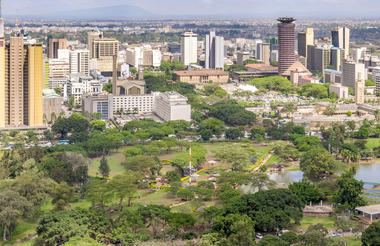
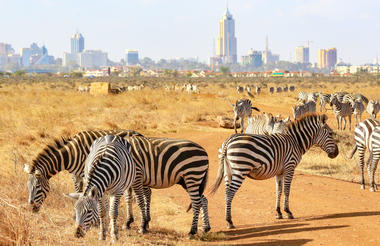
Widely regarded as one of East Africa’s most dynamic and cosmopolitan cities, Nairobi sits along the Nairobi River and serves as Kenya’s capital and largest urban centre, acting as a major gateway for safari travel across the country. The city features a growing café culture, active nightlife, and cultural landmarks such as the National Museum of Kenya and the Karen Blixen Museum. Just outside the city centre lies Nairobi National Park, where wildlife, including lions, giraffes, and buffalo, roam against a backdrop of skyscrapers — one of the rare cases in the world where a major national park borders a capital city. Visitors also often stop at the David Sheldrick Wildlife Trust elephant orphanage for close encounters with rescued calves.

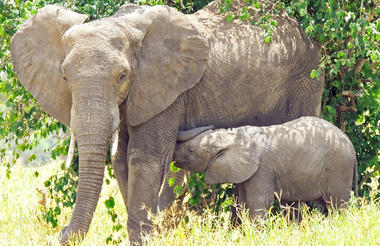
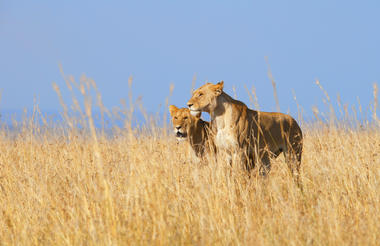
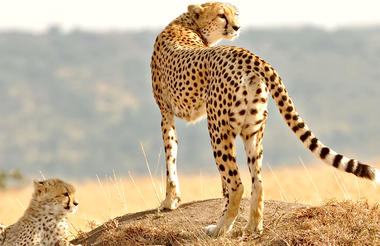
Situated in southwestern Kenya, the Masai Mara encompasses the celebrated national reserve and its surrounding community conservancies, forming part of the Greater Serengeti–Mara ecosystem. Rolling savannahs, dotted with acacia trees and crossed by the Mara River, create a rich and varied landscape. Vast herds of wildebeest, zebra, and antelope graze across the plains, while elephants, giraffes, and buffalo roam freely. The river’s lush banks support hippos and crocodiles and sustain wildlife throughout the dry season. Predators are abundant, with lions, leopards, cheetahs, and hyenas regularly seen in action. Each year, the spectacular Great Migration transforms the region, as millions of wildebeest and zebra traverse the plains. Visitors can soak up the breathtaking scenery, diverse wildlife, and Maasai cultural heritage in one of Africa’s most iconic safari destinations.
Sandwiched between the Tsavo West National Park and Amboseli National Park, the Chyulu Hills National Park protects an important water catchment area. This unique habitat features vast grass plains, forested rolling hills and rugged volcanic cones and craters set against the beautiful backdrop of Mount Kilimanjaro. Visitors can look for to a wide selection of exciting activities, such as camping, mountain climbing, horse riding, and excellent bird watching. Commonly spotted wildlife include: elephant, bushbuck, eland, leopard, bush pig, reedbuck, buffalo and giraffe. Don’t miss the opportunity to explore the longest lava tube in the world.
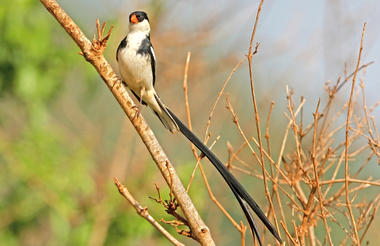
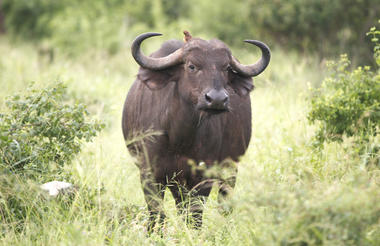
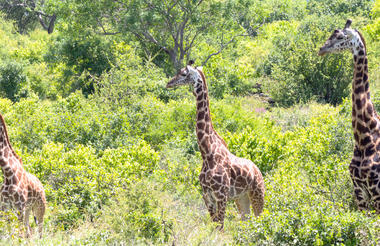
Kalama Community Wildlife Conservancy, an exclusive and collectively-owned 95,000 hectare-large wildlife Conservancy, borders the Samburu National Reserve in Northern Kenya. It also borders Ngutuk Ongiron Group Ranch to the west, Namunyak Community Conservation Trust to the north, and Sera Community Wildlife Conservation to the northeast. Kalama is part of the Northern Rangelands Trust. The Samburu ecosystem is a well-known area in central Kenya comprising of Buffalo Springs National Reserve, Samburu National Reserve, and Kalama Conservancy. The natural environment is arid and semi-arid; open scrub and grasslands with significant environmental variation based on altitude. The area is home to the ‘Samburu Special Five’ – indigenous species only found in this area namely the Beisa oryx, the gerenuk, the Somali ostrich, the Grevy’s zebra, and reticulated giraffe.
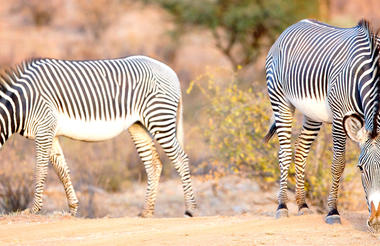
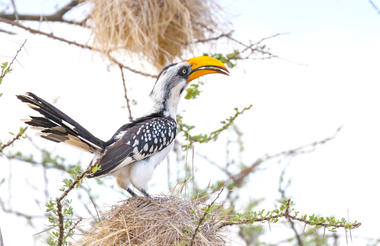

Elmenteita, meaning ‘place of dust’, is a photogenic, little soda lake situated in Kenya’s Great Rift Valley. Famously attracting many visiting flamingos as well as many other birds, it has been named as a World Heritage Site for its prolific birdlife. This is where Kenya’s most famous settler Lord Delamere lived and he was responsible for much of Kenya’s early agricultural experimentation in this fertile area; it is still inhabited by some of his descendants. The shores are often filled with wildlife and the surrounding forests are perfect for long walks and bird watching. Visitors can look forward to visiting the idyllic Kekopey hot springs, game viewing along the lake’s edge, and numerous other activities. Look out for eland, kudu, zebra, gazelle, and warthog families.


The name Tanzania conjures up images of wildebeest stampeding across vast savannah, rain forests teeming with monkeys and birdlife, and great plains brimming with legions of game. All of these natural wonders and more are on offer in this exceptionally diverse African nation. Visitors typically visit Tanzania to partake in at least one of the four well-known Tanzanian tourist experiences: a relaxing seaside vacation on the picturesque island paradise of Zanzibar, an underwater tour of some of the world’s most renowned dive sites around the gorgeous Spice Islands, a safari adventure in some of Africa’s most impressive game reserves, or a hiking excursion around Mount Kilimanjaro National Park. Whichever of these incredible holidays you choose, you will undoubtedly be welcomed by some fabulously friendly and peaceful inhabitants who, despite being divided into 120 different ethnic groups and cultures, live in harmony with one another and provide some of the most wonderfully exotic local cuisine you could imagine. With all of this diversity on offer, the most difficult part of your Tanzanian holiday experience is likely to be deciding where to go!
Just off the north-east coast of Tanzania, Mnemba Island is a private island surrounded by the turquoise waters of the Zanzibar Archipelago and its encircling coral reef. The atmosphere is quiet and exclusive, with powder-soft sand, rustling palms and little beyond the sound of waves and traditional fishing boats in the distance. Renowned for its clear waters and vibrant marine life, the island offers exceptional snorkelling and diving, where dolphins, green sea turtles and shoals of reef fish are frequently seen, along with occasional rays and reef sharks. Days unfold slowly between barefoot beach walks, dhow cruises and ocean swims. While access is limited and accommodation is intentionally understated in scale, the island’s appeal lies in its seclusion, natural beauty and unhurried coastal atmosphere.


