


Surrounded by the peaks of the Andean Plateau and overlooked by the 6402m Mt. Illimani, La Paz is a truly breathtaking city whose buildings sprawl across the surrounding canyon, reaching altitudes of up to 4100m. While the sight of the city is reason enough to visit, La Paz holds a number of attractions sure to keep tourists fascinated. Take a walk along Calle Jaen, a colonial street lined with museums, explore the city's cathedrals or wander through some of the colourful markets, including the 'Witches' Market' where llama foetuses and dried frogs can be found for sale.


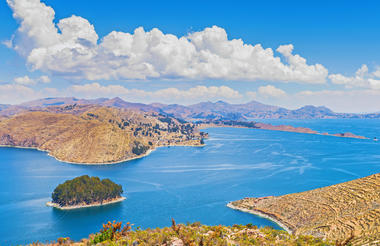
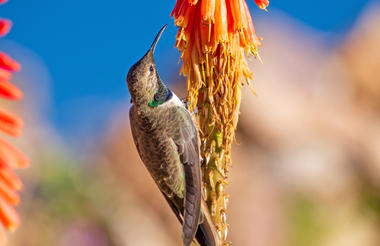
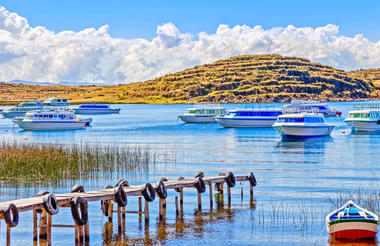
Huatajata, a small community, rests on the Bolivian bank of the mighty Lake Titicaca, the largest and arguably most magical South American lake. Huatajata draws in travellers from far and wide to admire its scenic surroundings, sample the delicious local cuisine and learn about the interesting culture of building reef boats from the locals. This delightful destination is the perfect base for exploring all that the enchanting, reflective waters of Lake Titicaca have to offer, including its many lush islands, diverse vegetation and active wildlife. From fishing and kayaking to hiking and bird watching, the activities are endless.
As previously described


The tiny town of Colchani is primarily a salt production centre, and is located on the border of the Uyuni Salt Flat, 80 kilometres northwest of the city of Uyuni. However, in recent years this remote hamlet has gained traction on the tourist circuit for its striking vistas of the salt flat and its authentic Bolivian culture. When you’re not out on the pan absorbing the views and taking photographs, wander through the tiny main street, which is dotted with vendors selling original handicrafts, or take a tour of one of the salt processing plants to see the industry on which the town is built. There is also a tiny museum, built entirely of salt and housing exhibits crafted from it.


Tucked away in the mountainous province of Jujuy in northwestern Argentina, the tiny village of Huacalera is located about 16km north of Tilcara. A roadside attraction, Huacalera’s favourable latitudinal location on the Tropic of Capricorn brings throngs of tourists travelling on the Ruta 9 to stop for a ‘selfie’; just outside of town travellers will find the Tropic of Capricorn monolith and oversized sundial. For fans of historical architecture, the small chapel in town is worth seeking out, as is the neo-colonial homestead of the Hotel Huacalera.


An enticing mix of historical architecture, picturesque views and sprawling vineyards await travellers to Salta, located in the lovely Lerma Valley in the Andean foothills. Simply wandering through the streets of the central city area will take you past a variety of impressive 18th and 19th-century buildings, including the neoclassical Cathedral of Salta, the ornate Church of Saint Francis and the Museum of High Mountain Archaeology – housing a collection of ancient Inca relics. Other popular attractions are the area’s array of exceptional wineries, and the panoramic views over the region visitors from the top of San Bernado Hill.


Cafayate is situated 183 km away from the capital city of the province through Nº 68 National Road. In the last years it has become the most important site in the Calchaquí Valleys.
Located at 1,660 m above sea level, Cafayate is well known because of its famous torrontes wine product of the exquisite combination of temperature and humidity that provides the ideal environment to the growth of the sweet and deep fruit flavor.
Getting to know its streets, its houses and mainly its people is a pleasant experience. One cannot miss to observe the unique architecture of the Cathedral, the flowery main square, the picturesque stone mill or the wine museums.
Among other interesting excursions, one can visit wine cellars, taste wines, get to know colourful Las Conchas gorge or go for a stroll among Quilmes ruins while enjoying the outstanding waterfalls of Colorado river or Santa Teresita Hill.
Not far from Cafayate, one can other cities of Salta, such as Coronel Moldes or Cachi cities along the unforgettable Calchaquí Valleys.


Situated on Argentina’s stunning Rio de la Plata coast, Buenos Aires is a thriving portside capital defined by a rich history, vibrant culture, and strong European influence - thus nicknamed the Paris of South America. Countless museums covering a cornucopia of subjects; an active theatre culture; carnivorous buffets second to none; sensuous tango performances; a mosaic of architecture; and shops to fit all fancies – all these facets and more make up the seductive blend that is Buenos Aires. Some of the city’s highlights include the buzz of the La Bombonera Stadium; tango and milonga venues like the Bohemian La Catedral; and heritage architecture such as that at the Cementerio de la Recoleta, where visitors can wander through a ‘city’ of massive statues and marble mausoleums. Don’t miss the International Festival of Independent Cinema and the vibrant annual Pride Parade.


