


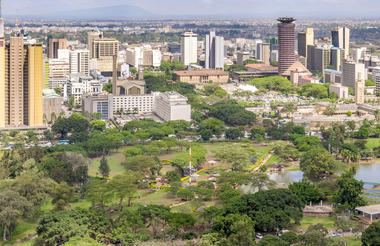
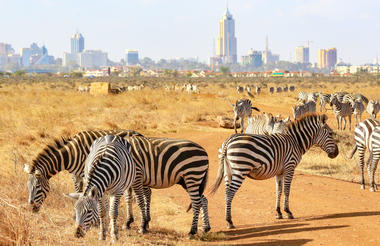
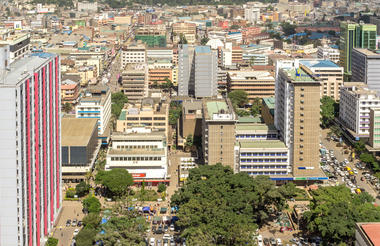
Situated in along the Nairobi River in beautiful Kenya, the capital of Nairobi is East Africa's most cosmopolitan city. It serves as an excellent starting point for African safari trips around Kenya. Nairobi is Africa’s 4th largest city and is a vibrant and exciting place, and although it has developed a reputation which keeps tourist visits brief, there are some fascinating attractions: its cafe culture, unbridled nightlife, the National Museum, the Karen Blixen Museum and most notably just 20 minutes from the city centre wild lions and buffalo roam in the world’s only urban game reserve. Make sure you pay a visit to the elephant orphanage operated by the David Sheldrick Wildlife Trust.
NOTE: Plastic bags are now banned in Kenya, Rwanda, Tanzania and Uganda, and are likely to be confiscated by customs officials on arrival, whether in clients’ baggage or carried by hand. For example, Duty-Free bags
Sandwiched between the Tsavo West National Park and Amboseli National Park, the Chyulu Hills National Park protects an important water catchment area. This unique habitat features vast grass plains, forested rolling hills and rugged volcanic cones and craters set against the beautiful backdrop of Mount Kilimanjaro. Visitors can look for to a wide selection of exciting activities including camping, mountain climbing, horse riding, and excellent bird watching. Commonly spotted wildlife include: elephant, bushbuck, eland, leopard, bush pig, reedbuck, buffalo and giraffe. Don’t miss the opportunity to explore the longest lava tube in the world.
NOTE: Plastic bags are now banned in Kenya, Rwanda, Tanzania and Uganda, and are likely to be confiscated by customs officials on arrival, whether in clients’ baggage or carried by hand. For example, Duty-Free bags
Spreading out from the shores of beautiful Lake Tanganyika, the mountainous terrain of the Mahale Mountain National Park is home to some of Africa’s last surviving wild chimpanzees and trekking in search of these incredible primates is one of the main attractions of the reserve. Other highlights include walking game safaris that take in the park’s diverse wildlife, hiking up the 2460-metre Mount Nkungwe – the highest of the Mahale mountain range’s six peaks – and fishing and snorkelling in Lake Tanganyika on the park’s western border. While the park is home to over 900 chimpanzees, it is also home to a variety of other wildlife including: leopards, blue duikers, red colobus monkeys, giant pangolins, lions, elephants, buffaloes, giraffes, hippos, crocodiles, otters and a variety of bird species.

Although in Mozambican waters, Likoma Island is Malawian territory and is the larger of the two inhabited islands of Lake Malawi, measuring seventeen square kilometres across. The island boasts some lovely beaches, friendly locals, and predominantly flat terrain with a baobab dotted southern side. It is home to the headquarters of the University Mission to Central Africa, Livingstone’s mission, and hence it remained British territory when the Lake was divided politically after World War Two. The island is famous for the large, beautiful St. Peter's Cathedral, featuring numerous stained glass windows and intricate soapstone details. Visitors can relax on pristine beaches, snorkel and dive in the crystal-clear waters, and enjoy a variety of watersports.
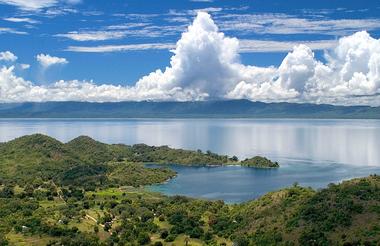


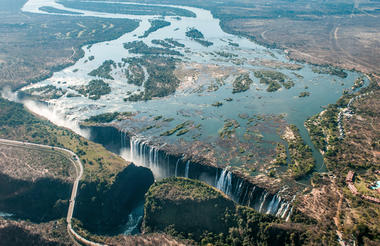
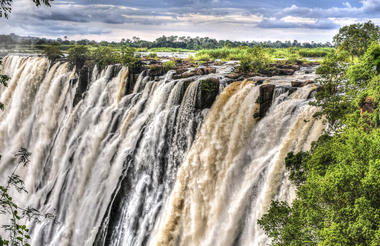
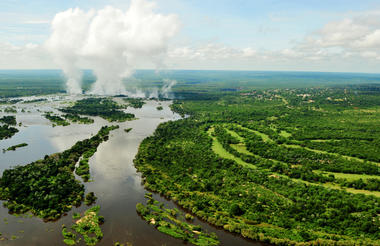
Situated on the Zambia–Zimbabwe border along the Zambezi River, Victoria Falls is experienced from the Zambian side within Mosi-oa-Tunya National Park, where walkways trace the cliff edge above a vast basalt gorge. Knife Edge Bridge pushes visitors into the spray line for a close view of the Main Falls, a continuous curtain of water, and the Eastern Cataract, where the flow breaks into narrower channels across the far side. Rainbow Falls, the highest section of the cascade, often reveals shifting arcs of colour in fine mist when light breaks through the spray. The Boiling Pot viewpoint looks directly into a deep whirlpool where the river is forced into the Batoka Gorge. Upstream, boat access reaches Livingstone Island, a rocky outcrop on the lip of the falls, and the seasonal Devil’s Pool, a natural rock pool at the edge of Victoria Falls that becomes safely accessible during low water when river levels drop and currents weaken. Activities extend beyond the rim, including white-water rafting through gorge rapids, kayaking, ziplining across the chasm, bungee jumping from the bridge, bridge swings, sunset cruises, game viewing along the riverbanks, and visits to the local market.
Ongava Game Reserve shares its southern boundary with Etosha National Park and is widely regarded as one of Namibia’s premier private wildlife reserves. Spanning approximately 30,000 hectares, it is internationally recognised for its conservation efforts, ecological research and immersive safari experiences. The landscape is defined by open savannah plains, scattered salt pans and a rich diversity of wildlife. Its location allows easy access into Etosha through Andersson’s Gate, making it an ideal base for combined safari experiences. Ongava is also known for its luxury lodges, thoughtfully designed using natural materials to blend into the surrounding environment. A highlight of the reserve is its healthy population of black and white rhino, offering guests exceptional viewing opportunities. Activities include guided game drives, night safaris, birdwatching and walking safaris, creating an intimate and rewarding encounter with Namibia’s wilderness.

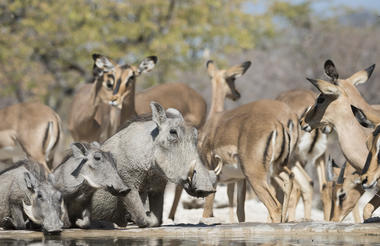
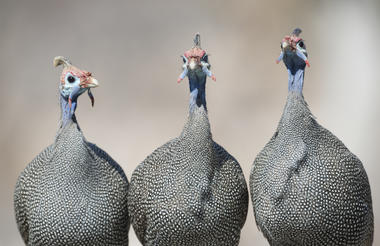
Bordering Angola in northern Namibia, Kunene is a region as well as the name of a river, which is one of just five perennial rivers in Namibia. The Kunene River is an invaluable source of water for the local Himba people, and it has been the mainstay of their existence for hundreds of years. For travellers, the river’s most striking feature is the magnificent Epupa Falls, which cascade over a distance of more than a kilometre downstream, with an impressive vertical drop of around 60 metres. Whitewater rafting and kayaking are both popular pursuits in these areas. Visitors can take sundowner cruises; explore sublime hiking routes; enjoy excellent bird watching opportunities; learn about local culture with a trip to a traditional Himba village; or go canoeing, kayaking, and game viewing.


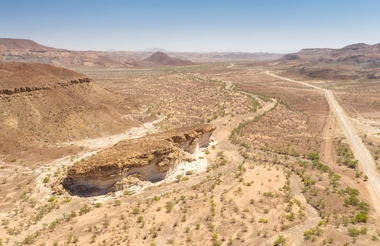
Windhoek, the capital of Namibia, lies at the heart of the country, encircled by magnificent mountains, expansive valleys, and fertile farmlands. The landscape of the Greater Windhoek area surrounding this bustling city is characterised by vast valleys, thick scrub, rocky hills, and covered in golden savannah. Visitors can explore the dry river beds and mountainous scrublands, as well as enjoy birding, leopard-spotting and view large quantities of wildlife in the north; visit the more arid eastern part with its olive, potato, and date plantations; explore the rolling hills of the Khomas Hochland Mountains in the west of the Greater Windhoek area and soak up the epic views along a number of scenic passes leading off the high plateau, including Bosua Pass, Gamsberg Pass, and Spreetshoogte Pass.
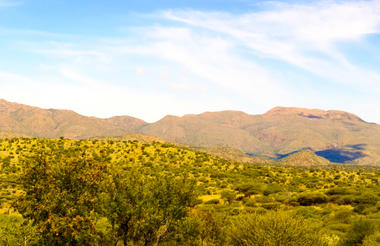
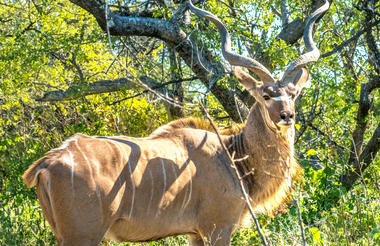
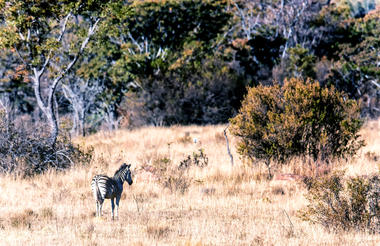
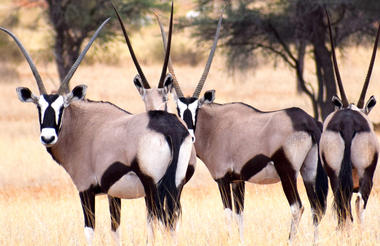
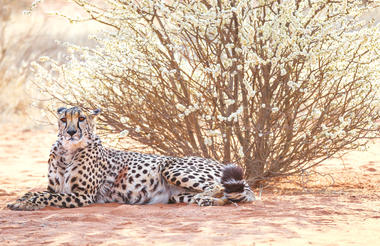
Spreading across Botswana, South Africa and Namibia, the Kalahari, meaning 'the great thirst', is an exceptionally beautiful living desert. The landscape is characterised by a large semi-arid sandy savannah, draped over a gently rolling inland sea of sand that covers most of Botswana and large parts of Namibia and South Africa. It is inhabited by the indigenous San people, with the modern world having enveloped all the other areas they once roamed. The Namibian portion is made up of red sands covered in thin, wispy, mostly golden grass and dotted with acacia trees and wide-ranging wildlife, including gemsbok, impala, jackals and cheetah.
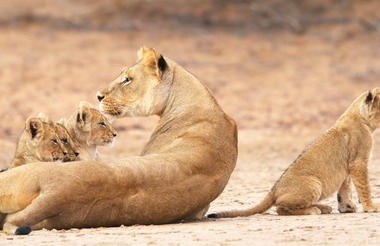
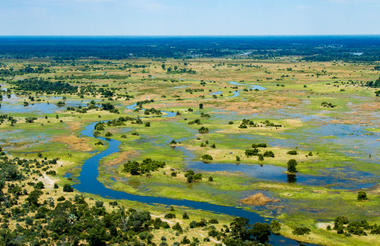
Situated in the northwestern corner of Botswana, the Okavango Delta is a World Heritage Site as it is the largest inland delta in the world. The magnificent Okavango River sprawls out over the dry sands of the Kalahari Desert forming this flourishing waterlogged oasis featuring countless meandering waterways and crystal clear lagoons studded with water lilies, as well as fertile floodplains and reeded islands inhabited with abundant wildlife. The Okavango Delta stretches over an impressive15000 square kilometres. Visitors can enjoy a number of wonderful activities such as game viewing, fishing, bird watching or taking an authentic guided Mokoro excursion through this wetland paradise in a traditional dugout canoe. Commonly spotted animals include: lion, rhino, leopard, giraffe, hippos, elephants, crocodiles and countless species of bird.
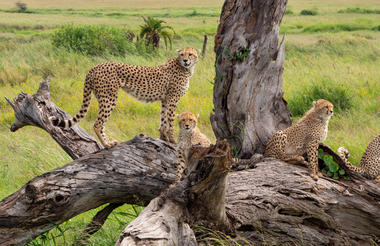
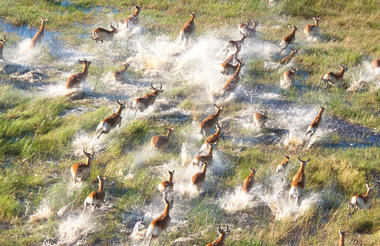
Located in northern Zimbabwe, the life-giving power of the Zambezi River makes Mana Pools National Park one of Zimbabwe’s most lush and flourishing regions. Characterised by a diversity of landscapes including floodplains, forests, and baobab trees, the park has been designated as a UNESCO World Heritage Site for its natural beauty; providing a fantastic destination for photographers. It is an Important Bird Area and is also one of the continent’s premier game-viewing locations, known for its good chances of seeing elephants, wild dogs, lions, and leopards. Visitors can look forward to an array of activities such as canoe trips, guided walks, game drives, river cruises, nature walks, bird watching, and catch-and-release fishing.

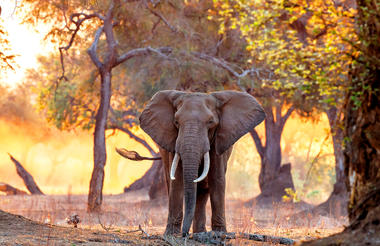

Liwonde National Park lies along the Shire River in southern Malawi. One of the country's premier safari destinations, it is celebrated for its abundant wildlife, scenic river landscapes and successful conservation initiatives. The park is home to large populations of elephants, hippos and crocodiles, while black rhinos, cheetahs and lions have been successfully reintroduced. Boat safaris offer close-up wildlife encounters, complemented by game drives through floodplains, mopane woodlands and open grasslands. Liwonde is also one of Malawi's leading birdwatching destinations, with more than 400 recorded species, and its palm-fringed riverbanks create striking scenery for photographers and nature lovers alike.


Located in central Tanzania, Ruaha National Park is one of Africa’s largest protected wilderness areas, covering more than 20,000 square kilometres following its expansion in 2008 to incorporate the Usangu Game Reserve and surrounding wetlands. Renowned for its rugged landscapes, ancient baobab trees, and exceptional wildlife diversity, the park is home to one of East Africa’s largest elephant populations, as well as buffalo, lion, leopard, cheetah, wild dog, and numerous antelope species. The Great Ruaha River, which forms part of the park’s eastern boundary, provides a vital water source for wildlife and supports thriving populations of crocodiles and hippos. During the dry season, from July to November, animals gather around the remaining water sources, creating spectacular game-viewing opportunities. Ruaha is also a premier birdwatching destination, with hundreds of recorded bird species


Just off the north-east coast of Tanzania, Mnemba Island is a private island surrounded by the turquoise waters of the Zanzibar Archipelago and its encircling coral reef. The atmosphere is quiet and exclusive, with powder-soft sand, rustling palms and little beyond the sound of waves and traditional fishing boats in the distance. Renowned for its clear waters and vibrant marine life, the island offers exceptional snorkelling and diving, where dolphins, green sea turtles and shoals of reef fish are frequently seen, along with occasional rays and reef sharks. Days unfold slowly between barefoot beach walks, dhow cruises and ocean swims. While access is limited and accommodation is intentionally understated in scale, the island’s appeal lies in its seclusion, natural beauty and unhurried coastal atmosphere.


As previously described


