De Kelders is a small town in Walker Bay, about two hours drive from Cape Town. Protected coves and inlets provide the ideal conditions for Southern Right Whales to mate and give birth, and, every year between July and November, these giant creatures can be spotted in the waters. A collection of caves offer much to explore; at Klipgat, some of the oldest human remains and stone artefacts have been found; while Drupkelders presents a freshwater pool cave perfect for swimming and decorated by striking stalagmites and stalactites. The tranquil cove at Standford’s Bay is another perfect place to swim, surrounded by 150-year-old fig trees. Visitors can also enjoy hiking, angling, quad biking, and horse riding in the area, and the exquisite natural beauty of the Walker Bay Nature Reserve. Make sure to visit one of the local restaurants, too, which serve up wonderful fresh seafood.


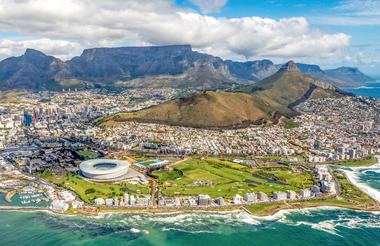
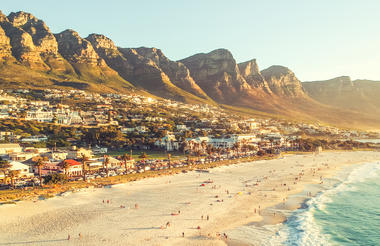
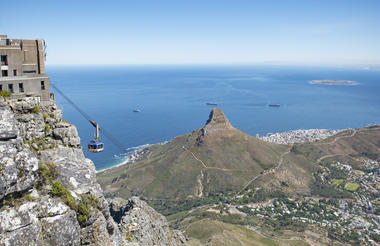
Set at the confluence of the Indian and Atlantic oceans and backed by the iconic Table Mountain, the bustling city of Cape Town presents an alluring combination of drawcards. Incredible powdery white beaches, highly acclaimed wine routes, and astonishingly beautiful mountain trails surround a cosmopolitan hub. This diverse metropolis is filled with superb shops and restaurants, extraordinary heritage monuments, a multitude of entertainment venues, and a spectacular, chic waterfront harbour. Highlights include the Zeitz Museum of Contemporary African Art; Table Mountain's jaw-dropping views; Boulders Beach, where penguins might swim right up to you in the warm Indian ocean waters; the Kirstenbosch Botanical Gardens, where you can walk along a treetop canopy among incredible native flora or watch an open-air concert at the base of the mountain; Robben Island, where visitors can see the cell where Nelson Mandela was imprisoned for 18 years; and many more.
Stretching for over 1000 kilometres along South Africa’s scenic West Coast, the Namaqualand is known for its stark, arid beauty. Once a year in early Spring, the Namaqualand landscape explodes into a kaleidoscope of colour. The dusty plains are transformed into a blanket of thousands of flowering wildflowers. International and local visitors flock here to see this seasonal natural splendour. Aside from the endless photogenic landscapes, visitors can look forward to viewing a wide variety of wildlife and exploring the quaint seaside towns dotting the coast as well as the various historic towns scattered in the hinterland.


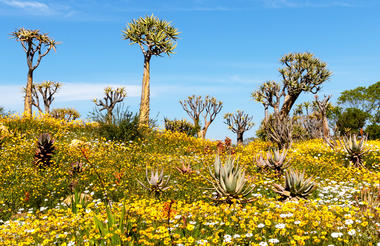
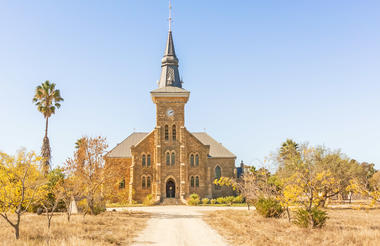
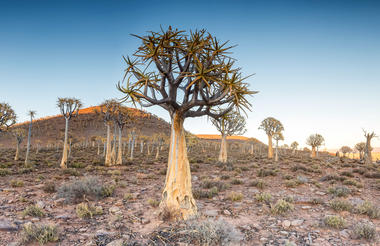
Resting on the Bokkeveld Escarpment in the Namakwa District Municipality of the Northern Cape, Nieuwoudtville is a town boasting extraordinary natural scenery and fascinating history. The agricultural village is known as the 'bulb capital of the world' and hosts a profusion of brightly coloured wildflowers over the springtime. Offering something for everyone, travellers can hike through one of the most extensive quiver tree forests in the world, wonder at the glacial rock striations millions of years old and watch rare species of wild birds in the Oorlogskloof Nature Reserve. The intriguing Khoisan rock paintings in Papkuilsfontein show the incredible use of red, yellow and black ochres, while the 20 old silver windmills that continue to swirl at the Fred Turner Museum are a showcase of much more recent heritage. Don't miss a chance to admire the spectacular 100-metre-high Nieuwoudtville Falls and swim in the turquoise pools below.

Paternoster is a picturesque fishing village on South Africa's Western Cape coast, approximately 150 kilometres north of Cape Town. Known for its whitewashed cottages, sandy beaches and rugged Atlantic shoreline, it offers a relaxed alternative to the region's busier coastal destinations. The village is renowned for its fresh seafood, with local restaurants serving West Coast specialities, while nearby Cape Columbine Nature Reserve offers hiking trails and dramatic coastal scenery. Birdwatching, kayaking and seasonal whale watching further enhance its outdoor appeal. Paternoster also serves as an excellent base for exploring the wider West Coast, including the spectacular spring wildflower displays that brighten the surrounding countryside.


Set within the rugged mountains of the Western Cape, the Cederberg is a remote wilderness of burnt-orange rock formations, ancient San rock art, and wide valleys scented with fynbos after rain. The atmosphere is quiet and elemental, shaped by dramatic cliffs, star-filled skies, and long stretches of untamed landscape. Travellers come for hiking through sandstone trails, swimming in natural rock pools, and discovering formations such as the Maltese Cross and Wolfberg Arch. Rooibos tea farms and small rural communities add a distinctly local character to the region. While summer days can be intensely hot and distances between attractions are considerable, the Cederberg rewards visitors with solitude, crisp mountain air, and a rare sense of stillness far from South Africa’s busier destinations.