Namibia is a unique and fascinating country. Attractions in Namibia range from prime wildlife safaris to fascinating desert landscapes, diverse culture and a whole lot of unpopulated places and wide open spaces in between.
The highlights of Namibia have taken millennia to reach their present state. Nowhere is the age of the earth more evident than in the ancient landscape of the world's oldest desert - The Namib Desert and of course the famous Sossusvlei. In Namibia, the layers of time are clearly marked and preserved: a dinosaur's footprints fossilised in rock; an ancient volcano worn by wind to its core; a 20,000-year-old meteorite; rock paintings over 26,000 years old; a river canyon 300 million years in the making. It took 5 million years for the dunes in the Great Sand Sea to get to their present state and they are considered young. Their petrified counterparts are over 20 million years old.
Despite its parched reputation, Namibia is one of the best wildlife safari destinations in Africa. Etosha National Park is a phenomenon unto itself. With a vast saline desert as its eye it is surrounded by tear ducts of natural springs that support an astonishing array of indigenous species. The Waterberg Plateau, Damaraland, Kalahari and Caprivi add fascinating and widely contrasting wildlife dimensions to complete the game viewing experience.
The people who inhabit this land, few though they may be, are no less captivating than their surrounds. San hunter-gatherers continue their ancient traditions in the area known as Bushmanland ; the Himba are nomadic herdsman with proud traditions who live in the remote and rugged Kaokoland and along the Kunene River. Coastal towns bear witness to the changing fortunes of an inhospitable shoreline. The ghost of a diamond-rush era remains in Luderitz; Swakopmund thrives despite its precarious location and shipwrecks along the Skeleton Coast reveal the source of its grisly name.


Surrounded by the stubble-covered Auas Mountains and the endless Khomas Hochland, Windhoek lies in a long valley fed by ancient hot springs in the central highlands. Namibia’s capital and bustling city. More often than not, the start or end place of your Namibia safari.
In Windhoek there are many interesting historical buildings, museums, galleries and craft shops. The city has several good restaurants and modern shops and services making it an excellent base camp from which to launch your Namibian adventure.
Star dunes with up to five crests rise 300m into the air and rank among the biggest in the world; the dune valleys are marked by vast clay pans where the Tsauchab River gave up its fight to reach the sea more than 60,000 years ago.
Besides the dunes and pans of Sossusvlei and Sesriem Canyon, a sideshow of activities and sights has developed around the region and there are plenty of game lodges that provide additional desert-adapted activities. Plants and birds are the dominant life form in this dessicated realm and they support a tiny world of mammals, reptiles and insects that, in the absence of coastal fog, seldom wander far from the rivercourse and its pans.


Surrounded by the ancient Namib Desert and the inhospitable - but bounteous - Atlantic Ocean, Swakopmund is alive with activity and has a lot on offer for the adventure-seeker: quad-biking, sand-boarding, horse-riding, skydiving and more.
Swakopmund has many interesting German-influenced buildings from the early 1900s in a variety of styles and, for its size, Swakopmund has an astonishing array of restaurants that serve mainly seafood, steak and many German staples.
Walvis Bay is an industrial port which lies along the Atlantic Ocean, off Namibia's Skeleton Coast. The large bay and surrounding sand dunes help make Walvis Bay a tourist mecca with loads of activities on offer to explore it.
- Explore the Skeleton Coast where the dunes meet the sea at Sandwich Harbour
- Go on a dolphin boat cruise in the harbour. Enjoy champagne and oysters
- Kayak among the seals at Pelican Point
- Visit and climb the mighty Dune 7
- Visit the RAMSAR wetland birding site and the Walvis Bay Lagoon. Thousands of flamingos from October to April
- Explore the neighbouring town of Swakopmund. Activities abound and dining delights


Damaraland features vast khaki plains, sheer rocky mountains and incredible desert-adapted wildlife. Track rhino and desert elephant, explore the rugged land or sit back and enjoy the dramatic and endless scenery. Damaraland's hilly savannah supports a large number of species including lion, leopard, cheetah, hyena, eland, kudu, giraffe, klipspringer, steenbok, gemsbok and springbok. Birdlife is prolific with over 33 raptors recorded including cuckoo hawks, Egyptian vultures and peregrine falcons - the world's fastest animal.
Damaraland is divided into several enormous private game reserves, known as concessions, that support most species of Namibia's large game and provide some of the best birding and wildlife experiences in the country - and southern Africa for that matter.
Situated along the southern boundary of Etosha National Park in northwestern Namibia, Etosha South encompasses the park's southern safari region and a collection of private game reserves and lodges. The park is accessed via Andersson Gate, placing visitors within easy reach of renowned waterholes and excellent wildlife viewing. Lions, elephants, giraffes, white and black rhinos, and a wide variety of antelope are among the species commonly seen. Guided 4×4 game drives are the main attraction, with half- and full-day safaris available, some including picnic lunches in the bush.


On the eastern edge of Etosha National Park, the park itself is bordered by numerous private reserves and access into the park is via the Von Lindequist Gate, named after Dr. Friedrich von Lindequist who proclaimed it a game reserve in March 1907. This side of the park is characterised by flat endless plains, tree-savanna type of vegetation and fantastic waterholes, where you could easily spot any of the prolific wildlife Etosha is known for. There's an abundance of wildlife here.
Caprivi West forms part of the Caprivi strip that protrudes from the northeastern corner of Namibia into Botswana and bordering on Angola. Here you're east of Rundu and on the western side of the Bwabwata National Park. The Caprivi is a lush, sub-tropical wetland offering a wealth of natural resources and serves as a haven for an abundance of wildlife, including the critically endangered African wild dog. This is the only spot in Namibia where one can spot the majestic Nile crocodile and the mighty hippo.
The Caprivi is a paradise for nature lovers with its free-roaming wildlife and postcard-perfect areas. Birdwatchers will be overjoyed as they keep an eye out for the 400 plus bird species that soar above. Visit the rapids of Popa Falls, go on game drives in the Mahango and Buffalo Core Areas of the greater Bwabwata National Park and enjoy the Okavango River.


Botswana is home to some of Africa’s greatest game parks. A safari destination where the Chobe and Okavango River are the lifeblood to an abundance of wildlife year round. A big game safari in wild wild Africa.
A safari destination where the Chobe and Okavango River are the lifeblood to an abundance of wildlife year round. Game reserves account for one fifth of the country so you can expect a big game safari of epic proportions. A true African wilderness experience. When you think of going on a safari in Africa, this is it in all its glory.
Almost devoid of infrastructure, it is impossible for humans to get in and destroy anything. Most of Botswana really has remained unchanged since the dawn of time offering you a true African wilderness experience.
The highlight of Botswana is the extraordinary Okavango Delta - a boundless network of channels, islands and plains the size of Israel. The Kavango River meets its end in a fan-shaped watery wilderness that is the veritable Garden of Eden for wildlife and birds. Remote, inaccessible and serene, the delta as seen from a mokoro (a rudimentary African version of a gondola) is the quintessential Botswana experience.
Next on the list of essential Botswana attractions is Chobe National Park in the far north-east. At a shade over 10,000 sq km this is no petting zoo in size yet it boasts one of the largest concentrations of plains wildlife in Africa. Chobe National Park features the full spectrum of African wildlife and scenery with diverse habitats including the riparian forests along Chobe River, the lush Linyanti Wetlands and Savuti with its mix of marshland and open woodland plains.
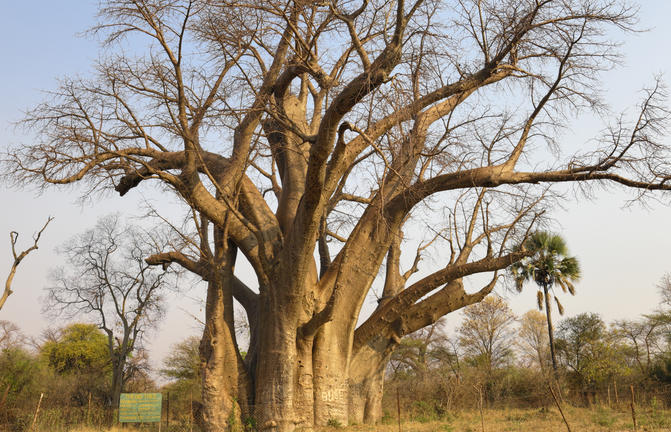
The Makgadikgadi Pans National Park on the northern edge of the Central Kalahari, encompasses Nxai Pan, Makgadikgadi Pans, Ntwetwe Pan, Nata Bird Sanctuary, Kubu Island and Baines' Baobab. During the rainy season – December to March – the second largest migration in Africa occurs as hundreds of thousands of Zebra migrate to the fresh pastures of this vast basin. During the dry winter, the cracked salt pans are a spectacle of solitary beauty.
Central Botswana is dominated by the Central Kalahari Game Reserve – the world's second largest reserve (after Selous in Tanzania) weighing in at 52,800 sq km. With almost no facilities, the reserve is wonderfully unspoilt and the focal point is a place called Deception Valley; many private reserves dot the fringe of the Central Kalahari with excellent game viewing and scenic activities.


Maun. A town in northern Botswana on the banks of Thamalakane River. To the San people, the place of short reeds. To today’s tourists, the gateway to the Okavango Delta, Moremi Game Reserve and Chobe river. It's a tiny outpost really, halfway between the juicy delta and the parched salt pans. This is Botswana’s tourism capital and the fifth largest town of Botswana.
From Maun take a day trip to explore the famed wetlands of the Okavango Delta or take a scenic flight to discover the vast expanse of sprawling river channels that bring to life to this verdant oasis. Have a sundowner on the Thamalakane River, a great spot for a drink and to enjoy one of Africa's famed sunsets. Enjoy local village and cultural tours and meet the friendly Batswana people
Crammed with every conceivable species of bird and beast, the delta is an Eden of excess. Amazing game viewing and birding in a scenic and tranquil African wilderness. If you’re looking for a true African safari. Look no further.
The quintessential delta experience: game drives in open safari vehicles and gliding in silence through the waterways on an African-style gondola carved from a single tree.
Access into the Okavango Delta is difficult, getting around is difficult, carting supplies in and waste out is difficult. These are all good things for this vast wildlife wilderness is utterly picturesque and devoid of human influence.
If constant close-ups of elephant, buffalo, lion, giraffe, hyena, jackal and plenty of large and small antelope start to grow old, there's always the chance encounter with cheetah, leopard, wild dog, and red lechwe to spice things up.


The Chobe River is the arterial life-line that shoulders its way towards its confluence with the Zambezi River. En route it gets tangled up with the Kwando River to form the Linyanti Wetlands - an area of pristine beauty and exceptional game viewing.
Elephants abound along the Chobe River along with the gamut of plains species including buffalo, lion, leopard, cheetah, hyena, wild dog, giraffe, zebra, kudu and so on down the height chart to the rare water-friendly red lechwe and puku antelopes.
Lush tropical mountain forests, savannah plains, gigantic rivers and fascinating ancient ruins. Add the diversity of wildlife and the wonder of Victoria Falls to top it off. Zimbabwe is your all-in-one African safari holiday destination.
Zimbabwe is a small country and its diverse attractions are packed into short easy drives or even quicker, easier flights. Expect beautiful waterfalls and rivers, exceptional wildlife safaris and spectacular scenery from classic African plains to vast river valleys, mystical hills and misty mountains.
Unless you've been hiding under a rock, you probably associate Zimbabwe with great political and economic turmoil. We won't go there. We will instead tell you how it is now and we'll do it in a word: fantastic!
The Zimbabweans, known for their happy outlook on life, gentle ways and generous spirit have rallied around each other to save one of Africa's true gems from ruin. Now, fuel, food and general supplies are back in the shelves at the supermarkets; the banks dispense US dollars in manageable wallet-sized wads - replacing the shopping trolleys of trillion-dollar notes; and the magnificent natural attractions remain undisturbed as they have been for millennia.
Besides the world-famous attractions in Zimbabwe, there are many smaller and equally opportunities for specific activities such as birding, fishing, hunting, photography, adventure, golf, cultural and historical pursuits or just plain relaxing. These we call the secret attractions and as we explore them we will post our reports here. In the meantime, please talk to your Travel Expert for details of Zimbabwe's hidden gems - real ones that is, not diamonds.
Zimbabwe Attractions
The main attractions, however, are the main attractions for good reason. Zimbabwe is the ultimate all-in-one African holiday and safari destination. With World Heritage Sites galore - including Victoria Falls, Mana Pools, Great Zimbabwe Ruins, Matopos Hills and Khami Ruins - travelling through Zimbabwe is like traversing the highlights of an entire continent.
- Victoria Falls: seventh wonder of the natural world, UNESCO Natural World Heritage Site and adventure capital of Africa
- Hwange National Park: among seasoned safari-goers, many agree Hwange to be one of the best game reserves in the region
- Mana Pools National Park: pristine wilderness safari destination, UNESCO Natural World Heritage Site famous for its walking safaris and big game
- Lake Kariba and Matusadona: one of the world's largest man-made lakes and a great fishing/game viewing/birding/relaxing destination
- Eastern Highlands: slice of Scotland in Africa with mountains, rain-forests, rivers and waterfalls including the 5th highest in the world at 762m
- Great Zimbabwe and Midlands: UNESCO Cultural World Heritage Site and one of the oldest and largest man-made structures in southern Africa
- Matobo National Park: a UNESCO Cultural World Heritage Site of great beauty crammed with history from the Stone Age to the present day
- Chizarira National Park: a large and untamed beast of a game reserve on the Zambezi escarpment where leopards are rife and walking safaris are your only means of transport
- Khami Ruins: the successor dynasty to Great Zimbabwe also a UNESCO Cultural World Heritage Site
- Ghona-re-zhou, Matestsi, Chete, Mavhuradona, Nyanga, Bunga Forest, Upper Zambezi, Charara, Kazuma Pan, Chimanimani...The many lesser-known wildlife parks and nature reserves offer beautiful scenery, fascinating flora and fauna and a refreshing break from over-developed tourist areas.
- The People: without doubt Zimbabwe's best asset and greatest attraction will be your abiding memory of its people; Zimbabweans are innately friendly, warm and welcoming and you will experience this warmth wherever you go.
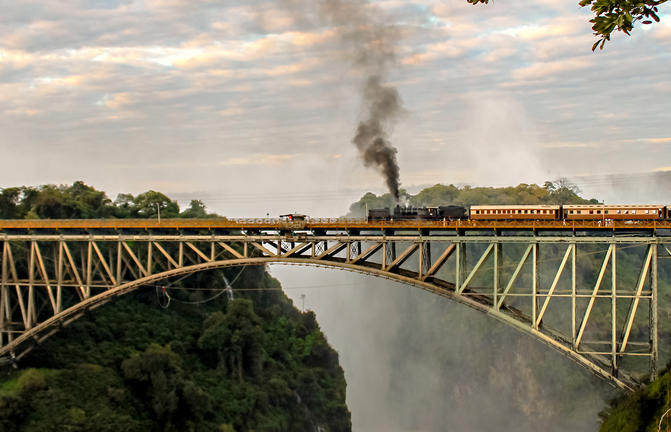
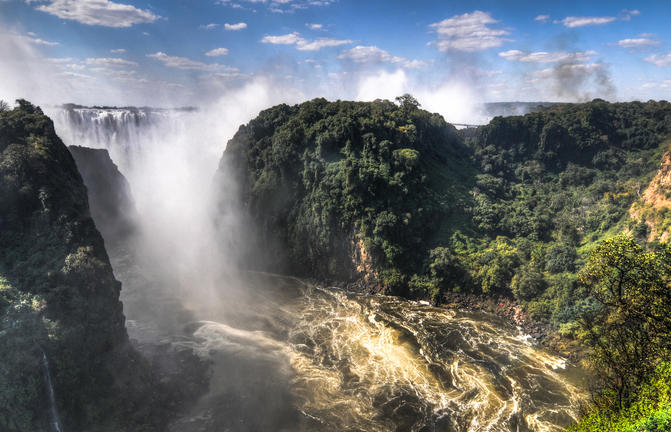
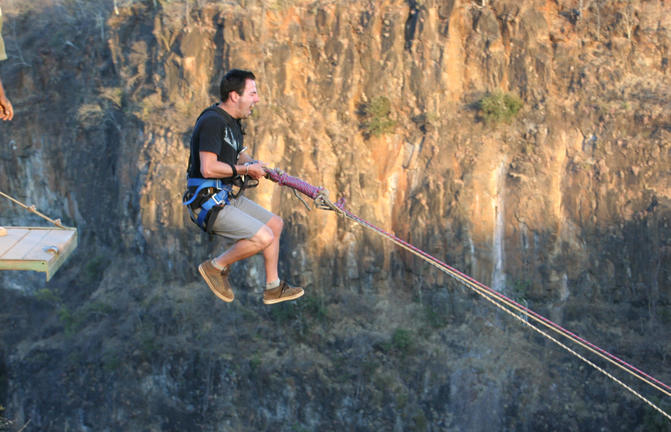
A gazillion tonnes of water thundering over a sheer cliff drowns all other sounds. The swirling mist hides all sign of human activity. Beyond your rain forest sanctuary people are hurling themselves off bridges, across gorges, into walls of raging water and out of aircraft.
Victoria Falls is a paradox of tranquil beauty and exciting adventure.
Mosi-oa-Tunya, 'The Smoke that Thunders' is undoubtedly Zimbabwe's finest and most well-known attraction. It is or rather was (if you're keeping up with the latest list) one of the Seven World Wonders. We still believe it deserves the title. It truly is spectacular and not considered to be one of the world's largest waterfalls without good reason. It's not the widest or the highest, yet it is considered to the largest based on its combined width, at 1,708 metres wide and height, at 108 metres. Impressively it takes the title for the largest sheet of falling water.