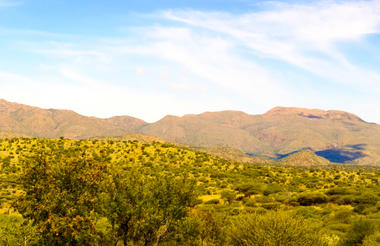
Windhoek, the capital of Namibia, lies at the heart of the country, encircled by magnificent mountains, expansive valleys, and fertile farmlands. The landscape of the Greater Windhoek area surrounding this bustling city is characterised by vast valleys, thick scrub, rocky hills, and covered in golden savannah. Visitors can explore the dry river beds and mountainous scrublands, as well as enjoy birding, leopard-spotting and view large quantities of wildlife in the north; visit the more arid eastern part with its olive, potato, and date plantations; explore the rolling hills of the Khomas Hochland Mountains in the west of the Greater Windhoek area and soak up the epic views along a number of scenic passes leading off the high plateau, including Bosua Pass, Gamsberg Pass, and Spreetshoogte Pass.
Full Carnivore Feeding Tour
Ancient San Skills Academy
Hunting with the Bushmen
Set just 250 kilometres from the bustling capital of Namibia, the 10,000-hectare Intu Afrika Kalahari Game Reserve presents a landscape of unparalleled natural splendour. Deep red and clay-coloured dunes fan into the distance, decorated with areas of grasslands, shrubs, and trees. The park is home to an impressive array of wildlife, including black wildebeest, springbok, oryx, giraffe, and a large population of meerkats. This is the perfect place to learn about the ancient way of life; visitors can follow a !Kung guide through the desert and learn survival techniques. Make sure to take a look at the exquisite handmade crafts in the village. Hiking, 4x4 excursions, and quad-biking will appeal to adrenaline seekers.


Intu Afrika Afternoon Game Drive
Bushmen walk
Deep within Namibia’s Namib Desert, Sossusvlei is a striking landscape of towering red sand dunes, among the highest in the world, pale salt pans and immense open skies. Part of the Namib-Naukluft National Park, it has a remote, almost otherworldly atmosphere shaped by silence, shifting light and extreme desert conditions. Visitors can climb famous dunes such as Big Daddy or Dune 45 at sunrise, when the sand glows orange and shadows stretch dramatically across the valley floor. Nearby Deadvlei, with its blackened camel thorn trees standing against white clay and rust-coloured dunes, offers one of southern Africa’s most distinctive desert scenes. The dry heat, the soft crunch of sand underfoot and the vast sense of space create a powerful atmosphere, though early starts and challenging temperatures are part of exploring this remarkable region.


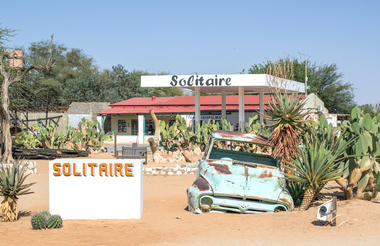
Situated in the Khomas region of Central Namibia, the desert town of Solitaire serves as an oasis in the Namib Desert. The town provides an important stop on the way to the ancient dunes of Sossusvlei, allowing travellers to stock up on essentials as they make their way further into the wilderness. Solitaire also has a small bar and is renowned for its famous apple pie - said to be the best in the country. Enjoy a scenic sundowner with views of the spectacular Namib desert, hike and bike through the unspoilt natural surroundings, or visit the wonderful local Cheetah Sanctuary.
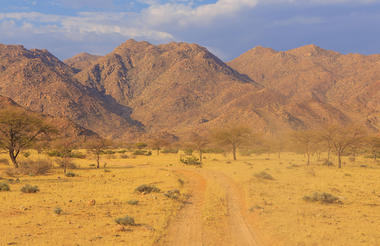
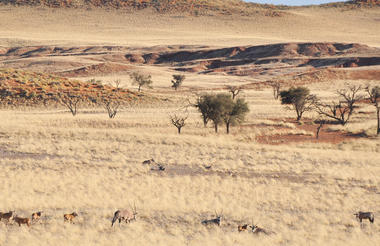
Set between the rolling dunes of the Namib Desert and the icy Atlantic coastline, Swakopmund is a relaxed seaside town in western Namibia known for its German colonial architecture, cool coastal climate, and adventurous spirit. Palm-lined streets, historic buildings, and ocean fog create an atmosphere unlike anywhere else in the country. Travellers visit for desert activities such as quad biking, sandboarding, and scenic flights over vast dunes and shipwreck-strewn shores. Cafés, bakeries, and small museums add to the town's laid-back charm, though the Atlantic waters are brisk rather than tropical. With its striking desert-meets-ocean setting and mix of adventure and history, Swakopmund is one of Namibia's most distinctive destinations.


Situated in the Kunene Region of northwestern Namibia, on the edge of the Huab Valley, Twyfelfontein is a remarkable archaeological and geological site renowned for its exceptional collection of ancient rock engravings. Designated a UNESCO World Heritage Site, it is home to more than 2000 petroglyphs created over thousands of years by hunter-gatherer communities, making it one of Africa's most significant concentrations of prehistoric rock art. Guided walks lead visitors through dramatic sandstone outcrops to view engravings depicting wildlife, human figures and symbolic motifs, while the surrounding desert landscape is known for its striking scenery and adapted wildlife, including desert elephants that occasionally roam the region. Nearby attractions include the Organ Pipes, Burnt Mountain and the Damara Living Museum.
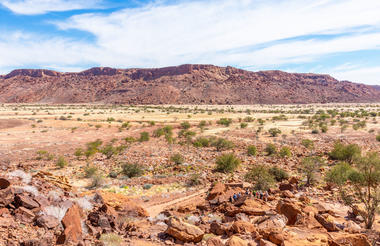
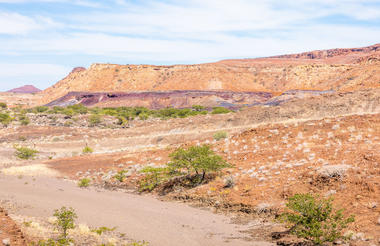
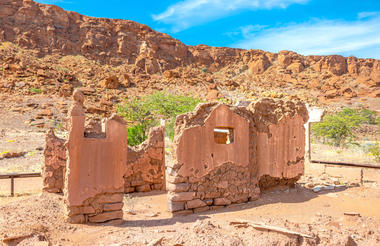
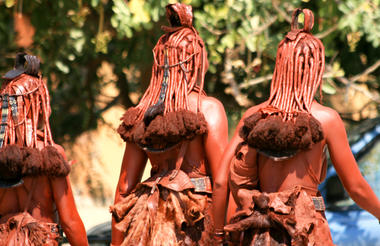
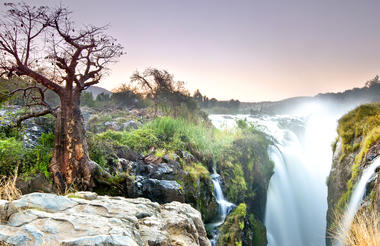
Opuwo, meaning 'the end' in Herero, lies in the north western Kunene region of Namibia. It serves as the capital of the region and is known as the gateway to the magnificent Epupa Falls. The surrounding landscape is characterised by low-lying hills, and vast dry desert plains inhabited by a wealth of desert-adapted wildlife. It serves as the central hub for the Himba culture. The town provides a perfect base for visitors wishing to explore the Kaokoland area and visit the local villages of the itinerant Himba people. The town and the Opuwo surrounding area is known as one of the cultural highlights of a trip to Namibia as it features an incredibly rich cultural heritage. Don’t miss an opportunity to learn about the fascinating Himba community within this starkly beautiful landscape.
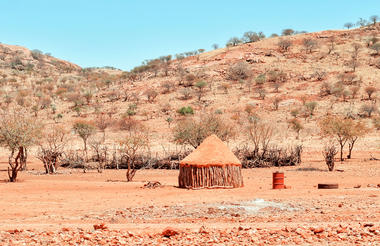
Encompassing northern Namibia and southern Angola, Ovamboland lies north of the great Etosha Pan. Ovamboland is very different from the rest of Namibia with an environment which allows for crop farming and therefore is home to a significantly higher population, with more than half of the country’s population settled in this unique part of the country. The landscape is mostly flat and dotted with small settlements, and after extensive rain, Owamboland is covered with large pans. Oshakati is the largest town in the region and to the south, magnificent Etosha National Park is accessible via the King Nehale Gate. The Ovambo people sell their local handicrafts to travellers, including intricately weaved baskets, pottery, beautiful jewellery and animal wood carvings.
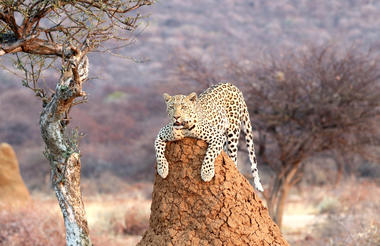
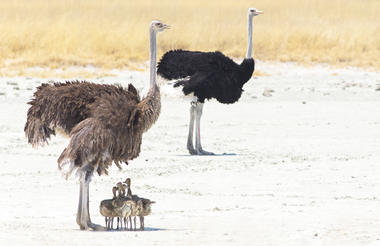

Grootfontein sits in the Otjozondjupa Region of Namibia, where open savannah plains and scattered acacia trees meet a quiet, small-town atmosphere shaped by agriculture and frontier history. Once a German colonial outpost, it is still marked by its orderly streets and historic buildings and now serves as a relaxed gateway to northern Namibia. Its most remarkable attraction is the nearby Hoba meteorite, the largest known intact meteorite on Earth, drawing visitors into a striking encounter with deep time in an otherwise sunbaked landscape. Surrounding farms and cattle stations add to the rural rhythm, while dust-laden air, distant livestock sounds and wide, bright horizons define the sensory experience. Grootfontein is modest and unpolished, but its geological wonders and expansive skies offer a compelling stop for travellers exploring Namibia’s interior.
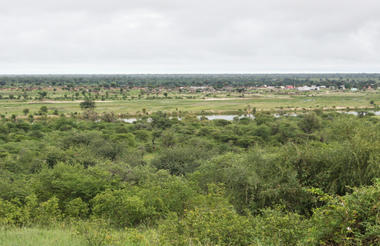

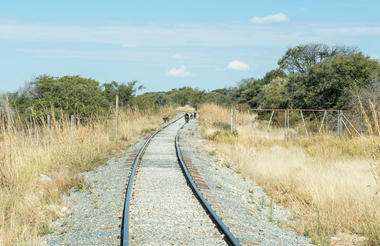
Windhoek, Namibia’s capital, lies in the heart of the country amid the rolling Khomas Highlands, where wide skies and dry savannah frame a compact, orderly city. It blends German colonial heritage with contemporary African identity, creating a calm, understated atmosphere rather than a bustling metropolis. Landmarks such as Christuskirche and the Tintenpalast sit alongside modern civic buildings, while lively markets and cafés reveal everyday Namibian life. Visitors can explore museums, stroll shaded streets, or use the city as a gateway to the surrounding wilderness and safari regions. The air is often dry and clear, carrying the scent of dust and jacaranda blossoms, while distant hills glow at sunset. Windhoek offers a gentle introduction to Namibia’s landscapes and culture, with space, light and quiet defining its appeal.