


AN OVERVIEW
South Africa is one of the most culturally and geographically diverse places on earth. Each of its 9 provinces have their own unique flavour from the hot and almost barren Limpopo to the wide savannahs of the Northwest Province, while the Western Cape and Gauteng are complete opposites, from the laid back to the ‘never sleep’, the wild and often harsh Western Cape is also a stark contrast to the spectacular forests, mountains, valleys and waterfalls of Mpumalanga. The people are just as diverse. South Africa is fondly known as the 'Rainbow Nation'. While English is the language in which all legal documents and government proceedings are conducted in, there are in fact, 11 official languages. Many South Africans can speak a minimum of 2 and sometimes 3 languages – English, Afrikaans, and their mother tongue.
The vast majority of the population are black, the rest are made up of Europeans – historically English or Dutch, Coloureds, Indians or Asians. While for overseas visitors the term ‘coloureds’ may seem offensive, the majority of the mixed-race population see ‘coloured’ as the best definition of their own as it stems from the very beginning of South Africa’s history – a mixed lineage of indigenous Khoisan, African slaves from other parts of the continent and white settlers. The black population is divided into four major ethnic groups – Nguni, Sotho (pronounced Sutu), Shangaan-Tsonga, and Venda. Zulu and Xhosa (pronounced Khosa) are the largest tribes within the Nguni group. The largest population of Indians outside of India live in South Africa’s KwaZulu-Natal province.
Becoming the South Africa of today wasn’t an easy ride and one of the miracles of the country is that after an often-tragic past, its people are some of the friendliest, to visitors and to each other, that you will find on the African continent.
Explore the country’s history through the battlefields dotted all over the land, the Apartheid Museum, the Cape Town Castle, the District 6 Museum, Simon’s Town Museum, the Settlers Museum and Robben Island, among many others. Every population group’s history, culture, food, language, and music have contributed to making South Africa the ‘Rainbow Nation’. Exploring this magical place will take you to gourmet restaurants, impressive art galleries, vibrant nightlife, a delicious braai (barbecue) almost anywhere but especially in Soweto, and into the bush. You can browse the bustling Indian markets in Durban, discover the delights of the strangely named Bunny Chow (no bunnies included), or sample some of the world’s finest wines at one of the many world-class, and award-winning, famous Cape Winelands estates.
As varied and beautiful as the population is the country itself. In between the sometimes snow-bound highlands of Hogsback, Golden Gate National Park or Sani Pass to the hot, dry, stark landscape of the Karoo, you will find some of the most stunning lush and wildlife-rich places on earth. Places like the Blyde River Canyon - the largest green canyon in the world, the 2nd largest canyon in Africa and the 3rd largest on earth. If beaches are more your thing, South Africa is surrounded on 3 sides by some of the wildest, most beautiful and varied beaches to be found anywhere on the planet.
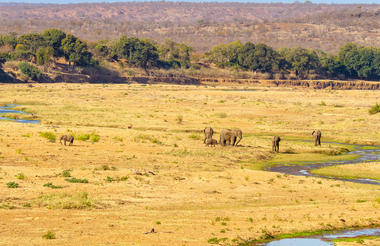
Africa is famous for its wildlife and South Africa has some of the largest populations outside of the Serengeti and Botswana. The game parks, such as the world-famous Kruger National Park, are world-class, as are the guides, lodges and camps within them.
South Africa is a must-see for world travellers!


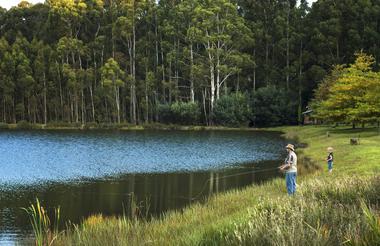
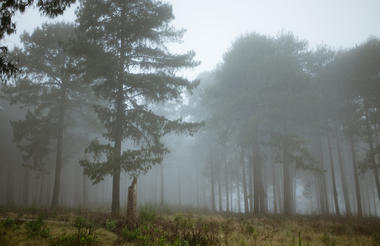
Three hours from Johannesburg’s OR Tambo Airport, and situated in South Africa’s beautiful Mpumalanga Province, is a place deep within a magnificent forest commonly referred to as ‘Scotland’s Only Outpost in Africa’ or ‘the Place of Eternal Mist’. On the map, it’s called Dullstroom. Despite its widespread appeal, the quaint village of Dullstroom still has its own calm, distinctive, and singular atmosphere. The area is known for its excellent fishing opportunities. In fact, the town is the unofficial capital of the piscatorial sport in South Africa. It’s taken so seriously that bait fishing and spinning is not allowed. Dullstroom marks the source of the Crocodile River and is home to other major tributaries providing excellent river and still water fishing as their streams and dams are stocked with both rainbow and brown trout. If fishing isn’t your thing, some dams, thankfully, allow float tubes.
The area’s sub-alpine climate, abundant wildflowers, rare mammals and 3 endangered crane species, not to mention its fresh country air, make hiking through the surrounding areas an unforgettable experience. The three most popular trails are the Ama Poot-Poot, the Num Num and the Elangeni Hiking Trail. The Verloren Valei, a closed reserve north-east of Dullstroom, is the source of 4 rivers making it a wetland of international importance. Because it is so special it can only be visited by appointment or on one of the Friends of Verloren Valei field trips.
If staying in town is more your scene, exploring the original architecture, quaint stores, artisan shops, art galleries and spas which line Dullstroom’s main street is a delightful way to spend a day.
At 6,814 feet above sea level, Dullstroom has the highest railway station in South Africa. Two festivals you may enjoy are the Ducktobeer Beer Fest and the Dullstroom Winter Festival in July. Dullstroom serves as a convenient stopover for visitors on the way to or from the Lowveld and Kruger Park.
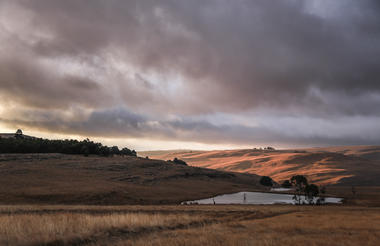
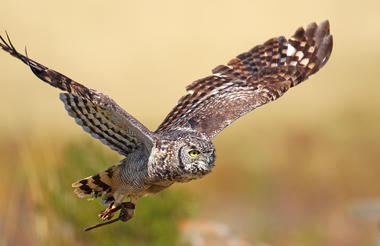


Situated amidst the towering Waterberg Mountains in the Limpopo Province, the Waterberg Biosphere, as the name suggests, serves as a water reservoir for the region. Renowned for its rugged beauty, the landscape is characterised by low-lying mountain ranges and escarpments, as well as a network of streams, rivers and lakes. It is the home of South Africa’s first-ever savannah biosphere reserve and is also home to many other nature reserves which provide a protected habitat for an array of wildlife.


Because the Magaliesberg Mountains are almost 100 times older than Mount Everest and half the age of the earth, it is a unique treasure. For its age, and its amazing richness in important fossils, rock art and unique beauty, the Magaliesberg Biosphere was proclaimed an International Biosphere Reserve by UNESCO.
Stretching for approximately 120kms, from Bronkhorstspruit Dam east of Pretoria to Rustenburg, the Magaliesberg Mountains in northern South Africa may not be the longest or the highest mountain range on planet Earth, but they are some of the oldest. And South Africa has some OLD mountains. The Barbertown Greenstone Belt is 3.6 billion years old and are the oldest mountains in the world. The Waterberg Mountains which are 2.7 billion years old are the 3rd oldest mountain range in the world. The Magaliesberg comes in at number 4 at 2.3 billion years. Over millennia, the mountains have been worn down by weather and nature itself. Its highest point, Nooitgedacht, is about 1,852 metres.
With a span of that many years, it’s not surprising that the mountains have seen nearly all of man’s evolution. Fossil evidence of the earliest hominin species, such as Mrs Ples and Little Foot, shows that humans have lived here as far back as 2 million years. Both of these were found in the Sterkfontein Caves, close to the town of Magaliesberg and in the Cradle of Humankind World Heritage Site. The Magaliesberg mountains were also fought over by the Zulus, and later the Boers and the British. The remnants of British blockhouses can still be seen.
The mountains’ natural history began as sediments deposited in an inland basin. Molten magma welled up pushing the sediments down at an angle. The sediments cracked and were themselves filled by a different magma. This was, over time, eroded, forming the deep ravines in which the rock-climbers of today delight. The Magaliesberg is characterized by large quartzite cliffs, deep tree-filled gullies, and stunning waterfalls. Even if you’re not a rock-climber you can enjoy this natural beauty thanks to the cable-car that starts from the Hartbeespoort Dam and takes you to the top. This dam and the mountain range have now become a popular weekend and holiday spot thanks to its proximity to Johannesburg, Rustenburg, and Pretoria. You can tackle some rock-climbing, gaze in awe at the rock art, take a slow wander along the Crocodile Meander, visit any of the small game reserves scattered along the length of the range, including the nearby Kgaswane Mountain Reserve.


