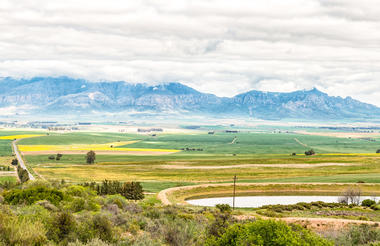
Surrounded by rugged mountain peaks, citrus orchards and indigenous Fynbos flora, this Western Cape hamlet is a traditional farming settlement that offers a glimpse into typical rural South African life. Citrusdal is the perfect supply stop en route to the Cederberg or Koue Bokkeveld. It is home to inviting natural hot water springs. Located along the magical Cape Flower Route, Citrusdal's picturesque landscapes offer inviting natural hot water springs, scenic hiking trails, remote camping spots, and holiday chalets.


Rising from the beautiful Drakensberg Mountains in Lesotho, forming part of the international border between South Africa and Namibia, the Orange River is the longest river in South Africa. The Orange River Basin extends into Namibia and northern Botswana. The river snakes its way through one of Southern Africa’s harshest environments bringing life to an area of sheer rugged beauty. Aside from vineyards in the desert the river also creates a mobile playground from which to explore the area. This spectacular river created the diamond dune fields along Namibia's coast, by washing diamonds downstream from the Kimberly region over millions of years. Visitors can look forward to excellent whitewater rafting, canoeing, and kayaking, as well as wonderful river cruises which allow excellent views of the surroundings.


Encircled by dramatic, rust-coloured cliffs and arid plains in the southern reaches of Namibia's Fish River Canyon, Ai-Ais, which translates to "burning hot" in the Nama language, is renowned for its sulphurous hot springs. A single road runs through the town, flanked by comfortable lodges and campsites designed for adventurous visitors. At the heart of Ai-Ais lies the iconic Hot Springs Resort, where steaming sulphurous pools invite travellers to relax following a thrilling hike down the Fish River Canyon Trail or to simply enjoy a scenic soak under the expansive Namibian sky.


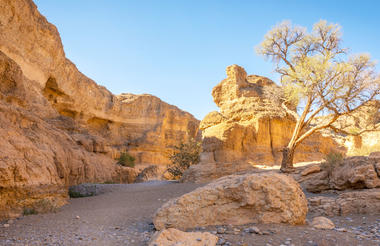
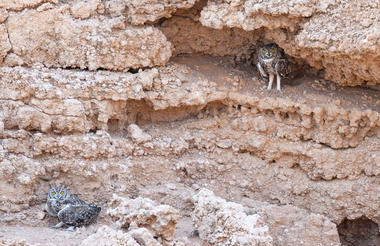
As there is no accommodation at Sossusvlei, visitors to this desert wilderness are likely to end up staying at Sesriem, 65 kilometres away, where camps and lodges serve as a base from which to explore the dunes. Sesriem Canyon, a deep chasm carved through the rocks by water, is a striking natural feature of the area that is best explored on foot. Stony walls rise up sharply on both sides of the canyon, while birds roost in its crags and lizards dart along the ledges. The canyon’s name was coined when early settlers used it as a water source, using six lengths of leather (‘ses riem – six thongs) tied together to lower buckets into the water at the base of canyon.)
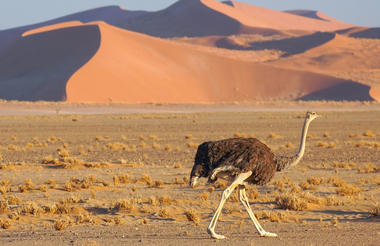
Set between the rolling dunes of the Namib Desert and the icy Atlantic coastline, Swakopmund is a relaxed seaside town in western Namibia known for its German colonial architecture, cool coastal climate, and adventurous spirit. Palm-lined streets, historic buildings, and ocean fog create an atmosphere unlike anywhere else in the country. Travellers visit for desert activities such as quad biking, sandboarding, and scenic flights over vast dunes and shipwreck-strewn shores. Cafés, bakeries, and small museums add to the town's laid-back charm, though the Atlantic waters are brisk rather than tropical. With its striking desert-meets-ocean setting and mix of adventure and history, Swakopmund is one of Namibia's most distinctive destinations.


Located in Namibia's Kunene region, the city of Outjo is known as the gateway to Etosha. Outjo’s central position also makes it an excellent stopover en route to the Skeleton Coast and Damaraland, but that’s not the only reason to visit this small town. Set amidst rolling hills, Outjo is a charming getaway boasting attractive forest and savannah surrounds, friendly locals and several historical sites. Roughly an hour’s drive to the west you will find the Ugab Rock Finger, a 35-metre high stone monolith, while slightly further on is a 250-million-year-old petrified forest. Visitors can look forward to a variety of interesting sights including: visiting the local Franke Haus Museum, for a historical account of the area; and exploring the nearby Hopewell Farm to find magnificent volcanic tiger's eye deposits.
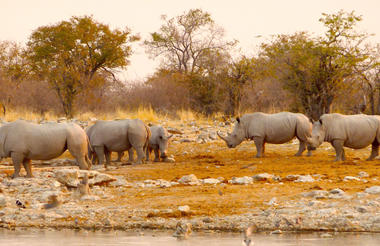
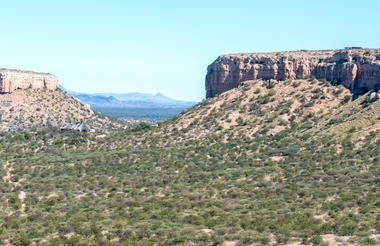
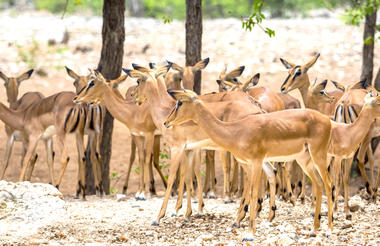
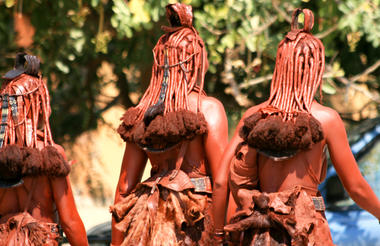
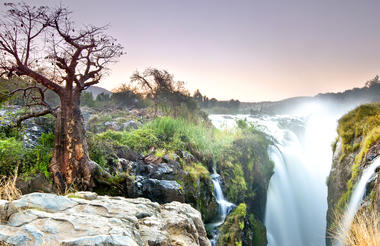
Opuwo, meaning 'the end' in Herero, lies in the north western Kunene region of Namibia. It serves as the capital of the region and is known as the gateway to the magnificent Epupa Falls. The surrounding landscape is characterised by low-lying hills, and vast dry desert plains inhabited by a wealth of desert-adapted wildlife. It serves as the central hub for the Himba culture. The town provides a perfect base for visitors wishing to explore the Kaokoland area and visit the local villages of the itinerant Himba people. The town and the Opuwo surrounding area is known as one of the cultural highlights of a trip to Namibia as it features an incredibly rich cultural heritage. Don’t miss an opportunity to learn about the fascinating Himba community within this starkly beautiful landscape.
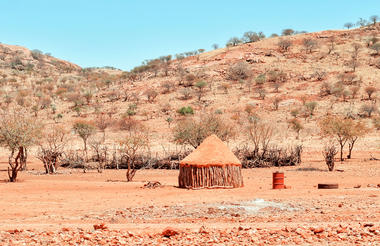
Situated along the southern boundary of Etosha National Park in northwestern Namibia, Etosha South encompasses the park's southern safari region and a collection of private game reserves and lodges. The park is accessed via Andersson Gate, placing visitors within easy reach of renowned waterholes and excellent wildlife viewing. Lions, elephants, giraffes, white and black rhinos, and a wide variety of antelope are among the species commonly seen. Guided 4×4 game drives are the main attraction, with half- and full-day safaris available, some including picnic lunches in the bush.