


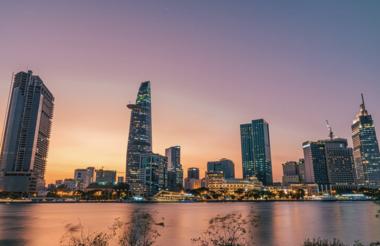
Saigon is Vietnam’s largest and most energetic city, a place of movement, commerce, history and reinvention. Officially known as Ho Chi Minh City, it’s still widely called Saigon, especially when referring to the central districts and the city’s old southern character.
This is the natural counterpoint to Hanoi. Where Hanoi feels older, more traditional and more reflective, Saigon is warmer, faster and more outward-looking. French colonial buildings, modern towers, busy markets, rooftop bars, old apartment blocks, hidden temples and endless streams of scooters all sit side by side.
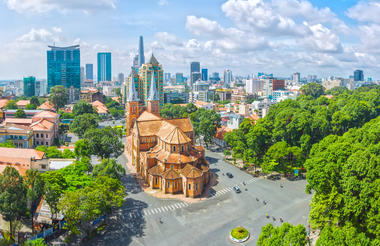
Most first-time visits focus on District 1, where many of the main sights are close together. Dong Khoi Street, the Saigon Opera House, Saigon Central Post Office, Notre-Dame Cathedral, Independence Palace and the War Remnants Museum all help tell the story of the city, from French Indochina to the Vietnam War and the rapid growth of modern Vietnam.
Saigon is also a superb food city. Travellers can enjoy classic southern dishes, strong Vietnamese coffee, market snacks, street-side grills and some of the country’s most creative contemporary dining. An evening street food tour, ideally by scooter with experienced local drivers, is one of the best ways to feel the rhythm of the city.
There are rewarding quieter moments too. The Jade Emperor Pagoda is atmospheric and incense-filled, while neighbourhoods such as Thao Dien offer riverside cafes, boutiques and a more relaxed expatriate-local mix. The city is also the main base for visiting the Cu Chi Tunnels and the Mekong Delta, both of which work well as day trips or deeper add-ons.
Saigon is busy, humid and sometimes overwhelming, but it’s also full of life and confidence. With the right pacing, a central hotel and a good local guide, it becomes one of Vietnam’s most fascinating and enjoyable city stays.
Mekong River Delta is one of the most distinctive regions in Vietnam, a vast, fertile landscape of rivers, canals, islands, rice fields, fruit orchards and river towns in the far south of the country. Formed by the many branches of the Mekong River as it spreads towards the sea, the Delta has long been one of Vietnam’s most important agricultural regions and is often described as the country’s “rice bowl”.
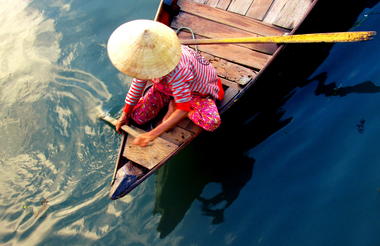
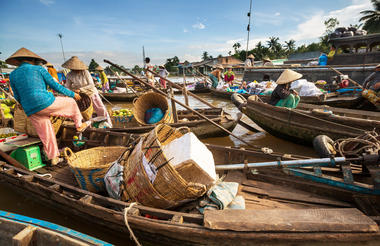
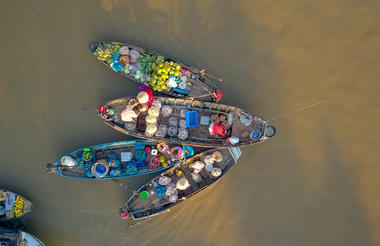
Life here is shaped by water. Boats carry fruit, vegetables, building materials and daily supplies, while houses, markets, workshops and farms are often linked as much by river as by road. Even where modern transport has changed daily routines, the river remains central to the identity and rhythm of the region.
For travellers, the Mekong River Delta offers a very different experience from Vietnam’s cities. Instead of high-rise skylines and busy boulevards, the appeal lies in small waterways shaded by palms, floating markets, cottage industries, village lanes, local temples and quiet moments on the river.
Highlights may include Ben Tre, known for coconut groves and traditional workshops, Can Tho and Cai Rang Floating Market, the fruit orchards around My Tho, and the quieter upper Delta areas near the Cambodian border.
The Delta is best explored slowly, either on a day trip from Saigon, an overnight stay, or as part of a river cruise between Vietnam and Cambodia. It’s a rewarding region for travellers who enjoy local life, gentle scenery and a closer understanding of how deeply the Mekong has shaped southern Vietnam.
Quy Nhơn is a large prosperous coastal city and the capital of Bình Định Province in central Vietnam. The town sits on a gorgeous sweeping bay with a sparkling new promenade running along the length of the city's five-kilometre beach which makes a lovely place for a breezy evening stroll.
Just off the promenade, numerous open-air restaurants with panoramic ocean views grill, steam and stew seafood caught only hours before by local fishermen.
Beyond the beach there are a few places worth checking out in the nearby area, including some remarkably well restored ancient Cham towers. North of Quy Nhon, and within easy day-trip distance, are the Banh It towers, and the Cha Ban Citadel – both important remnants of Cham rule.


