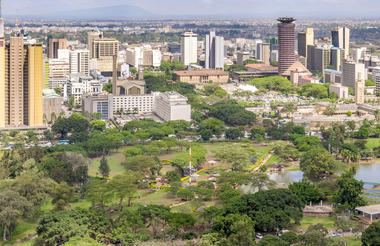
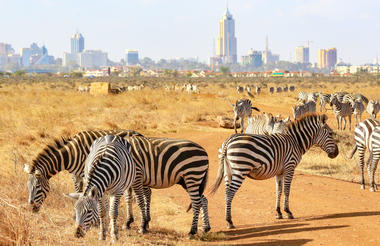
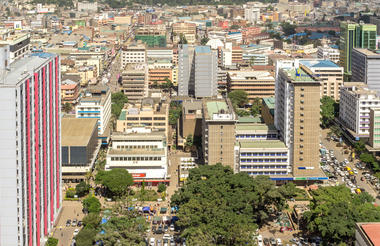
Widely regarded as one of East Africa’s most dynamic and cosmopolitan cities, Nairobi sits along the Nairobi River and serves as Kenya’s capital and largest urban centre, acting as a major gateway for safari travel across the country. The city features a growing café culture, active nightlife, and cultural landmarks such as the National Museum of Kenya and the Karen Blixen Museum. Just outside the city centre lies Nairobi National Park, where wildlife, including lions, giraffes, and buffalo, roam against a backdrop of skyscrapers — one of the rare cases in the world where a major national park borders a capital city. Visitors also often stop at the David Sheldrick Wildlife Trust elephant orphanage for close encounters with rescued calves.
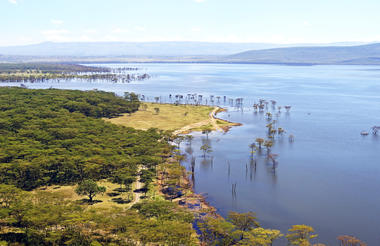
Situated in Kenya’s Great Rift Valley, around 90 kilometres north-west of Nairobi, Naivasha is a lively town that serves as the gateway to Lake Naivasha, one of the country's most important freshwater lakes. The surrounding Lake Naivasha basin is a popular base for exploring volcanic landscapes, nature reserves and national parks. Visitors can take boat trips across the water to spot hippos and a wide variety of birdlife, walk among free-roaming giraffes, zebras and antelope on Crescent Island, or explore the dramatic gorges and cliffs of Hell’s Gate National Park on foot or by bicycle. Surrounded by acacia woodland and Rift Valley escarpments, the region offers a distinctive blend of outdoor adventure, wildlife encounters and natural beauty.


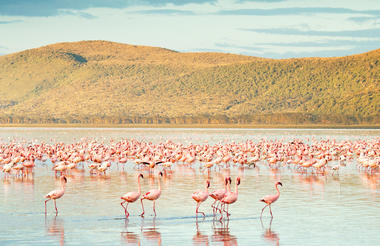
Elmenteita, meaning ‘place of dust’, is a photogenic, little soda lake situated in Kenya’s Great Rift Valley. Famously attracting many visiting flamingos as well as many other birds, it has been named as a World Heritage Site for its prolific birdlife. This is where Kenya’s most famous settler Lord Delamere lived and he was responsible for much of Kenya’s early agricultural experimentation in this fertile area; it is still inhabited by some of his descendants. The shores are often filled with wildlife and the surrounding forests are perfect for long walks and bird watching. Visitors can look forward to visiting the idyllic Kekopey hot springs, game viewing along the lake’s edge, and numerous other activities. Look out for eland, kudu, zebra, gazelle, and warthog families.


Nakuru is a fascinating city on the shores of western Kenya’s Lake Nakuru. The capital of Nakuru County located in the Great Rift Valley, about ten kilometres from the massive Menengai Crater. A hiking trail leads up to the rim of this ancient caldera, offering bird’s eye views over the lake and surrounds, and then plunges 400 metres down to the floor below, where visitors can walk among ancient forests. Lake Nakuru National Park, surrounding Nakuru, is home to exceptional birdlife, as well as over 50 varieties of mammals including lion, leopard, buffalo, zebra, giraffe, rhino, antelope and various primates. History and culture enthusiasts should make sure to visit the incredible Hyrax Hill prehistoric site.
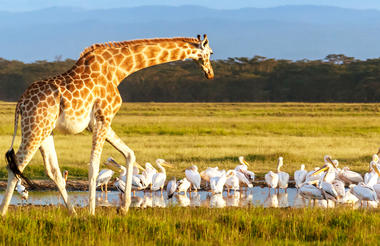
Resting in the Kenyan Rift Valley, Lake Baringo National Park features a large freshwater lake. Considered Kenya’s most popular bird watching site, it is home to at least 470 of the country’s 1200 known avian species. Pelican, cormorants, fish eagles, and flamingos are among the most common birds sighted on and around the lake, which also provides a habitat for crocodiles and hippos. Boat trips are the best way to explore this aquatic park and its three islands. Don’t miss a visit to Baringo Community Museum and Reptile Park, which displays several species of snakes, lizards, crocodiles, and tortoises.
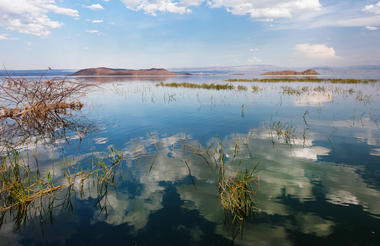
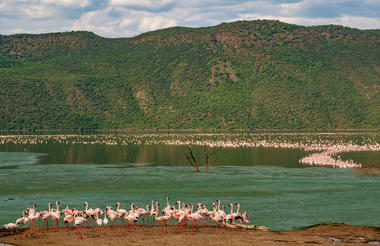
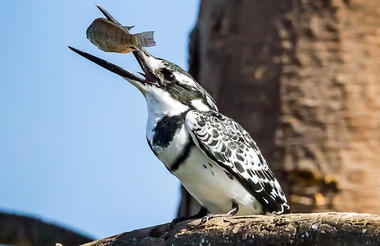
Sandwiched between the Cherangani and the Tugen Hills, the Kerio Valley National Reserve mirrors the Lake Kamnarok National Reserve over the crocodile-abundant Kerio River. The impressive Kerio Valley is 1300 metres deep, which results in a diversity of environments and vegetation, ranging from the forests on the upper slopes to the typically dry northern Kenyan thorn bush in the valley. The reserve is home to elephants, buffalo and a wide variety of bird species. Visitors can look forward to a wide selection of wonderful activities including: excellent game viewing, camping under the vast Kenyan sky, and hiking along numerous nature trails through the impressive dramatic scenery.
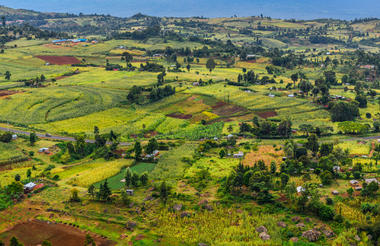
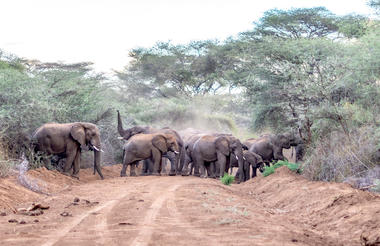
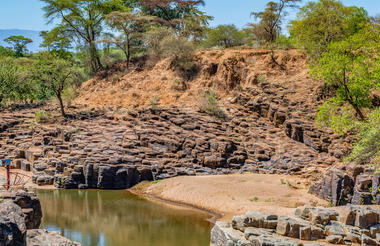
Resting in the magnificent Great Rift Valley and presided over by the majestic Mount Kilimanjaro, Kenya is characterised by hauntingly beautiful natural landscapes of forested hills, patchwork farms, wooded savanna and vast forests brimming with an extraordinary abundance of wildlife. The nation’s diverse range of traditional African cultures is influenced by over 70 unique ethnic groups from the Maasai, Samburu, Kikuyu, and Turkana tribes to the Arabs and Indians that settled on the coast. Add to this: an exquisite tropical coastline fringed with breathtaking golden sand beaches; gorgeous coral gardens providing excellent snorkeling and diving opportunities; and a slew of lively beach resorts, and it is easy to see why so many visitors flock here from around the world to experience a truly unique African adventure in one of the world’s most pristine safari destinations.


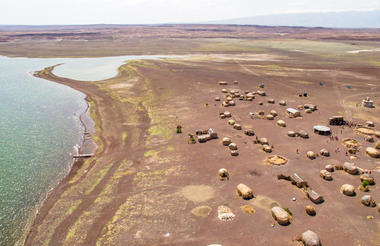
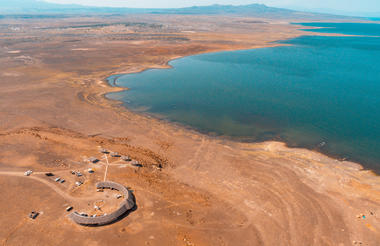
Situated in the spectacular Kenyan Rift Valley, Lake Turkana is the most saline of Africa’s large lakes. Lake Turkana is a massive inland sea surrounded by the spectacular landscapes of Kenya’s rugged and harsh northern frontier. It is the world’s largest desert lake and is home to the world’s largest crocodile population, as well as migratory birds, hippos, and snakes. This vast body of bright turquoise water is known as the Jade Sea and its inhospitable surrounds have kept it as one of Kenya’s most remote areas. Visitors can explore the neighbouring three national parks, which have been listed as UNESCO World Heritage Sites.