.png?fmt=png)


Windhoek, Namibia’s capital, lies in the heart of the country amid the rolling Khomas Highlands, where wide skies and dry savannah frame a compact, orderly city. It blends German colonial heritage with contemporary African identity, creating a calm, understated atmosphere rather than a bustling metropolis. Landmarks such as Christuskirche and the Tintenpalast sit alongside modern civic buildings, while lively markets and cafés reveal everyday Namibian life. Visitors can explore museums, stroll shaded streets, or use the city as a gateway to the surrounding wilderness and safari regions. The air is often dry and clear, carrying the scent of dust and jacaranda blossoms, while distant hills glow at sunset. Windhoek offers a gentle introduction to Namibia’s landscapes and culture, with space, light and quiet defining its appeal.


Important information:
- The gate to the camp is open from sunrise to sunset.
- Park entrance fees (not included in the paid-up reservations) must be paid at the reception.
N$ 280.00 per adult
N$ 180.00 per child 8-17 years
Children younger than 8, free of charge.
- Day visitors have to leave the Park before sunset.
- Breakfast is served at Waterberg Camp between 06:30 and 08:30. Tea and coffee is available in the restaurant throughout the day. The pool bar opens from 09:00 to 18:00. It has a short menu from which you can order soft drinks, and snacks like burgers, salads and chips. The pool bar is also the only place for lunch. Dinner is served between 19:00 and 21:00 and you can choose from the à la carte menu. Please check times at reception.
- There is mobile reception at the Restcamp. There are no phones in the rooms, but the camp has a public pay phone should you need it. You can also purchase phone cards from the small shop. The Restcamp has email and fax facilities but only at reception; it is not for the use of guests. There is no TV or radio in the rooms.
The Waterberg Plateau and 41,000 hectares of surrounding land was declared a Nature Reserve in 1972. The striking sight of Waterberg Plateau's brick-red sandstone crowned with lush vegetation has supported a wide diversity of flora and fauna for thousands of years. Rising to 420m in places and enveloped by Namibian savannah, the untouched fortifications of this unmistakable feature have provided nature with the perfect wildlife sanctuary. It lies between 1,650 and 1,700 m above sea level and is an erosion relic of a sandstone casing which covered large parts of Namibia millions of years ago. The sandy soils of the plateau have a low water retention capacity, and consequently rainwater flows down seams which have formed in the Etjo sandstone. When water reaches the impermeable mudstone band of Omingonde Formation, it is forced to the surface at the base of the cliffs to emerge as springs.
The table land is largely inaccessible, enabling several of Namibia's endangered species to be relocated here to protect them from predators and illegal hunting. The reintroduction programme was so successful that surplus species are released from Waterberg to supply other Namibian parks with rare animals. The Park has over 200 different species of bird and some rare species of small antelope on the lower hills of the mountain.
The first human inhabitants were the San people, who left rock engravings believed to be several thousand years old. A small tribe of the San were still living their traditional lifestyle on the plateau until the late 1960s. The site is also home to one of the major turning points in Namibia's History.
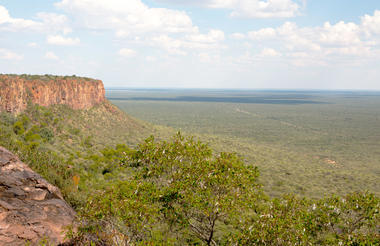
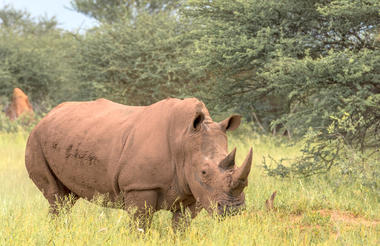
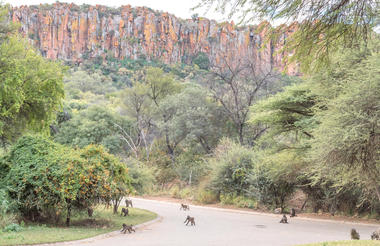
Situated along the southern boundary of Etosha National Park in northwestern Namibia, Etosha South encompasses the park's southern safari region and a collection of private game reserves and lodges. The park is accessed via Andersson Gate, placing visitors within easy reach of renowned waterholes and excellent wildlife viewing. Lions, elephants, giraffes, white and black rhinos, and a wide variety of antelope are among the species commonly seen. Guided 4×4 game drives are the main attraction, with half- and full-day safaris available, some including picnic lunches in the bush.


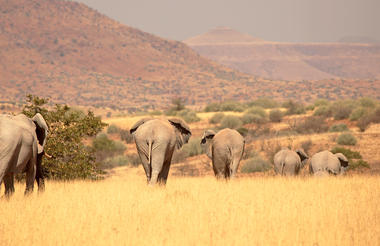
Situated in the rugged landscapes of northwestern Namibia's Kunene Region, Palmwag is a remote safari destination renowned for its dramatic desert scenery and remarkable wildlife. Set amid rocky hills, ephemeral riverbeds and iconic makalani palms, it lies within one of Namibia's largest wilderness conservation landscapes. Visitors can enjoy guided nature drives and walking safaris in search of desert-adapted elephants, black rhinos, giraffes, springbok and other wildlife adapted to this arid environment. Sweeping vistas, striking red-earth landscapes and peaceful starlit skies create a profound sense of solitude, making Palmwag an exceptional destination for travellers seeking wilderness, conservation experiences and the untamed beauty of Namibia.
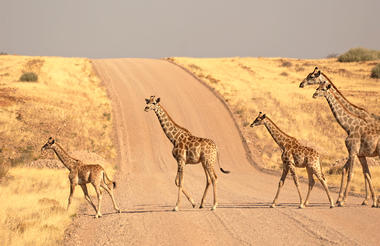

This small town in the Southern Kunene Region of Namibia was once the capital of Damaraland and is home to around 6000 inhabitants, most of whom are from the Damara ethnic group. While the tiny town itself provides travel necessities at the local supermarket, bank, and petrol station, the surrounding area is a nature lover’s paradise with a variety of tourist attractions including the bizarre Welwitschia mirabilis at Burnt Mountain, rare stone formations, the petrified forest, ancient rock engravings and as well as many fascinating geological phenomena (make sure to see the 'Organ Pipes'). Khorixas is the epitome of a Namibian rural town. It marches to a slow African rhythm and its wonderfully friendly locals offer a warm welcome to all guests.


North of Karibib and Usakos, is one of Namibia's most popular tourist drawcards, the volcanic Erongo mountain range, of which the western peaks rise 2,320 m above sea level. This roughly circular massif, dominates the flat plains west of Omaruru and gives the Erongo region its name. The mountain is an eroded relic of a volcano that was active some 140-150 million years ago. It collapsed in on its magma chamber, allowing the basin to fill with slow-cooling igneous material. The resulting hard granite-like core, that withstood the erosion, washed away the surrounding rock. This rare confluence of ecosystems are home to a vast array of plant, reptile, mammal and bird species, some endemic to Namibia. Apart from the fantastic scenery and flora and fauna, rock paintings are also a lure for visitors to the area. Geologists would tell you that the Erongo Mountains are rich with minerals and gemstones like aquamarine, schorl, jeremejevite, quartz, fluorite and garnets (amongst others), but we have news for you. These mesmerizing mountains are full of magnetic rocks. They must be magnetic because they are so awesome they draw you back to them time and again, to the sheer beauty and majesty of the dramatic granite boulders, valleys and incredible landscapes it cannot be beaten.
The Erongo Mountain Nature Sanctuary is a private nature reserve in the Erongo region of Namibia. The Erongo Mountain Nature Sanctuary (EMNS) aims to protect the region's native fauna and flora and reintroduce species that were historically part of the natural biodiversity, such as the black rhino, giraffe and black-faced impala.
The EMNS consists of numerous private landholdings whose owners have decided to make their land available for this project. This has led to the unprecedented situation that almost all internal fences and individual boundary fences have been removed to allow wildlife to roam freely. In addition, the principles of the EMNS stipulate that no livestock may be kept for commercial purposes – a further step towards restoring the Erongo Mountains to their original state.
This large area – almost 180,000 hectares – covered by the EMNS is now almost completely ‘fence-free’ and is therefore fully available for the protection and conservation of the animal and plant species found there. Within these 180,000 hectares, wildlife can roam freely. Only at the boundaries of the EMNS, where there are no mountains, is there a fence to prevent the reintroduced black rhinos from leaving the area and entering neighbouring farmland.


Set between the rolling dunes of the Namib Desert and the icy Atlantic coastline, Swakopmund is a relaxed seaside town in western Namibia known for its German colonial architecture, cool coastal climate, and adventurous spirit. Palm-lined streets, historic buildings, and ocean fog create an atmosphere unlike anywhere else in the country. Travellers visit for desert activities such as quad biking, sandboarding, and scenic flights over vast dunes and shipwreck-strewn shores. Cafés, bakeries, and small museums add to the town's laid-back charm, though the Atlantic waters are brisk rather than tropical. With its striking desert-meets-ocean setting and mix of adventure and history, Swakopmund is one of Namibia's most distinctive destinations.


.png?fmt=png)

