


At the foot of Mount Meru, whose volcanic cone dominates the northern skyline, Arusha is the administrative capital of the Arusha Region and the principal gateway to northern Tanzania's renowned safari circuit. Alongside its thriving tourism industry, the bustling city is a leading centre for business, diplomacy and international conferences in East Africa, hosting regional institutions and major political, commercial and conservation events throughout the year. German colonial buildings, modern offices and lively markets reflect Arusha's evolution from a colonial outpost into northern Tanzania's commercial hub, while cafés, hotels, craft centres and galleries contribute to its cosmopolitan atmosphere. Less than an hour from the city, Arusha National Park offers game drives and canoeing on the Momella Lakes beneath Mount Meru, while nearby coffee estates and cultural experiences introduce visitors to the region beyond the safari circuit.


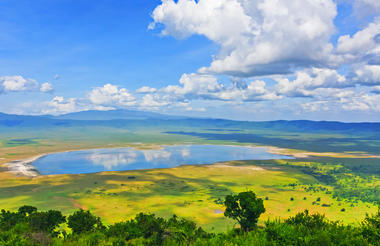
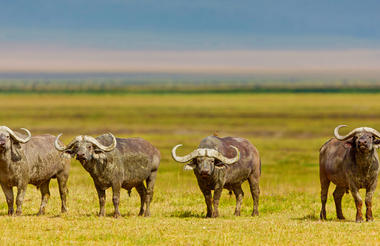
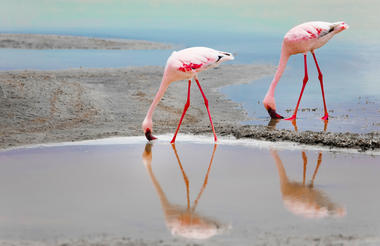
Located within northern Tanzania's Ngorongoro Conservation Area, Ngorongoro Crater is the world's largest intact volcanic caldera and one of Africa's most remarkable wildlife destinations. Encircled by steep crater walls, its fertile grasslands, forests and soda lakes support an extraordinary concentration of animals, including lions, elephants, buffalo and hippos. Game drives across the crater floor offer exceptional wildlife viewing within a relatively compact area, while Maasai communities in the surrounding highlands provide insight into local traditions and culture. From mist drifting over the crater rim at dawn to vast plains dotted with grazing herds below, the landscape is both dramatic and serene. Although popular and often busy, Ngorongoro delivers an unforgettable safari experience shaped by stunning scenery and abundant wildlife.
The Serengeti National Park, together with Kenya’s Masai Mara National Reserve, forms one of Africa’s most celebrated wildlife ecosystems, stretching across the spectacular landscapes of northern Tanzania and southern Kenya. Renowned for its vast open plains and extraordinary biodiversity, the Serengeti is best known for the Great Migration, one of the most remarkable wildlife spectacles on Earth. Each year, more than 1.5 million wildebeest, accompanied by hundreds of thousands of zebras and gazelles, traverse the plains in search of fresh grazing. Predators such as lions, cheetahs and hyenas follow closely behind, creating dramatic wildlife encounters. Elephants, giraffes, buffalo and numerous antelope species also thrive within the park. In addition to traditional game drives, visitors can enjoy hot-air balloon safaris, guided nature experiences and breathtaking views across this iconic African wilderness.


Widely regarded as one of East Africa’s most dynamic and cosmopolitan cities, Nairobi sits along the Nairobi River and serves as Kenya’s capital and largest urban centre, acting as a major gateway for safari travel across the country. The city features a growing café culture, active nightlife, and cultural landmarks such as the National Museum of Kenya and the Karen Blixen Museum. Just outside the city centre lies Nairobi National Park, where wildlife, including lions, giraffes, and buffalo, roam against a backdrop of skyscrapers — one of the rare cases in the world where a major national park borders a capital city. Visitors also often stop at the David Sheldrick Wildlife Trust elephant orphanage for close encounters with rescued calves.


