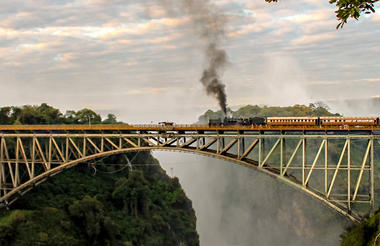
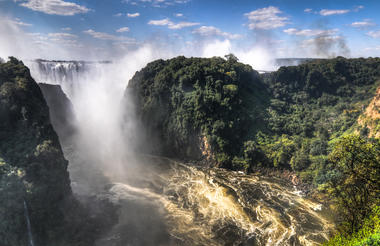
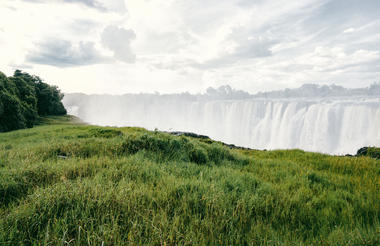
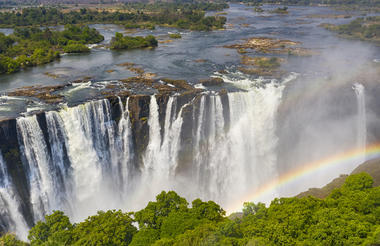
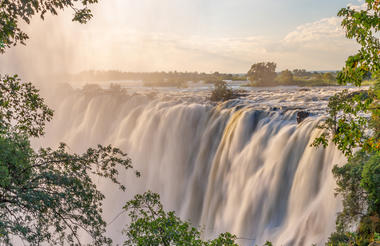
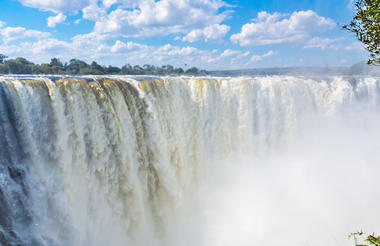
Known locally as Mosi-oa-Tunya—“The Smoke That Thunders”—Victoria Falls is one of the world’s great natural landmarks. Straddling the Zambezi River between Zambia and Zimbabwe, it forms a vast curtain of water that fills the air with mist and sound. The Zimbabwean side grants the most dramatic views, where mist rises like ghostly curtains and rainbows arc through the spray. Measuring about 1,708 metres across, it is regarded as the largest single continuous sheet of falling water on Earth. The adjacent town of Victoria Falls provides a convenient base for exploring the region, with a wide range of activities from scenic flights and microlight trips to white-water rafting, bungee jumping, kayaking, and safaris into Chobe National Park.
Nkasa Rupara National Park, also known as Nkasa Lupala National Park and formerly Mamili National Park, lies in the southernmost corner of the eastern ‘leg’ of Namibia, just above the border with Botswana. The largest wetland with conservation status in the country, the park boasts a biodiverse landscape of dense savannah, reed-lined rivers and lush marshes. It is also home to the highest concentration of buffaloes in the country, boasting over a thousand of these magnificent creatures. This wetland wildness is a sanctuary for a variety of wildlife such as elephant, reedbuck and red lechwe. Other commonly spotted wildlife include hippo, crocodiles, leopard, hyena, African wild dog, lion, roan antelope and an array of birdlife. Visitors can enjoy activities such as 4x4 off-roading, bird watching, and game drives.
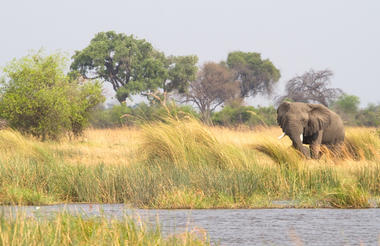
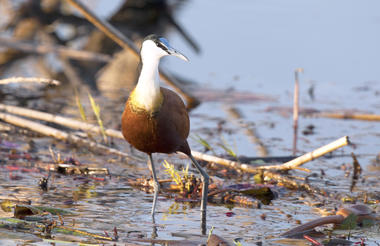
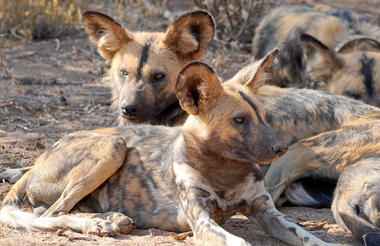
Forming the boundary between Botswana and Namibia is the Chobe River - one of the most well-known perennial rivers in Africa. The Chobe River Front encompasses vast floodplains fringed by lush riverine woodlands. The abundant wildlife inhabiting the river and its shores can be viewed from a river safari where visitors can spot elephants, hippo, water-loving antelope including the rare red lechwe and a variety of other game such as giraffe, zebra, and buffalo. Nature lovers will delight in the incredibly scenic natural landscapes and bird watchers can look forward to the wide section of bird species which can be spotted along the river banks.
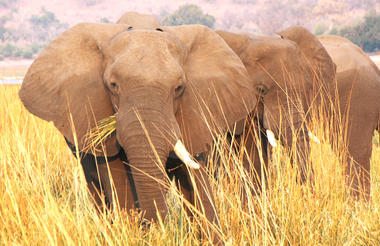
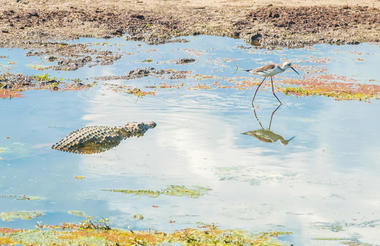
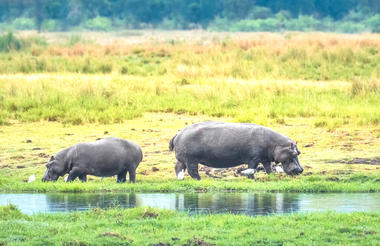
Situated in the northwestern corner of Botswana, the Okavango Delta is a World Heritage Site as it is the largest inland delta in the world. The magnificent Okavango River sprawls out over the dry sands of the Kalahari Desert forming this flourishing waterlogged oasis featuring countless meandering waterways and crystal clear lagoons studded with water lilies, as well as fertile floodplains and reeded islands inhabited with abundant wildlife. The Okavango Delta stretches over an impressive15000 square kilometres. Visitors can enjoy a number of wonderful activities such as game viewing, fishing, bird watching or taking an authentic guided Mokoro excursion through this wetland paradise in a traditional dugout canoe. Commonly spotted animals include: lion, rhino, leopard, giraffe, hippos, elephants, crocodiles and countless species of bird.
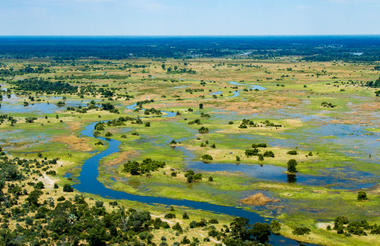
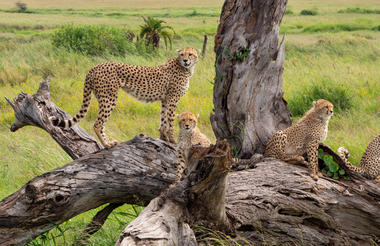
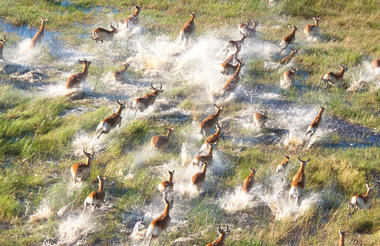
Bordering both the Moremi Game Reserve and Chobe National Park in northern Botswana, Khwai Private Reserve spans approximately 180,000 hectares along the north-eastern edge of the Okavango Delta. Established through a community-based partnership between local villages and the tourism sector, the reserve supports conservation alongside sustainable economic opportunities for nearby communities. Riverine forests, seasonal floodplains, open grasslands, mopane woodland, winding channels and lagoons create a varied landscape that supports an exceptional diversity of wildlife. Elephant, lion, leopard, cheetah, African wild dog and sable antelope are among the species found here, together with abundant birdlife. Visitors explore the reserve on guided game drives, walking safaris and mokoro excursions through the Delta's waterways, with night drives on private concession land adding opportunities to encounter nocturnal animals.


As previously described