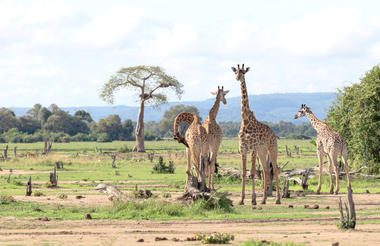
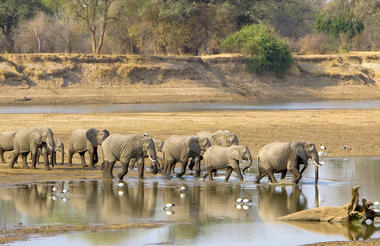
South Luangwa National Park has been dubbed one of the greatest wildlife sanctuaries in the world, and the concentration of game around the Luangwa River and its ox bow lagoons is among the best in Africa. The Luangwa River is the most intact major river system in Africa and is the life blood of the park's 9,050 square kilometres.
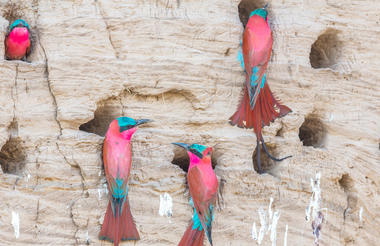
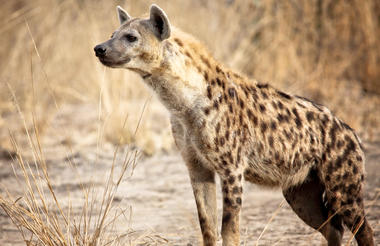
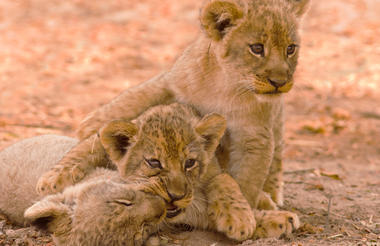
The Park is home to a wide variety of wildlife birds and vegetation, with 60 different animal species and over 400 different bird species. The only notable exception is the rhino, sadly poached to extinction. Some magnificent trees grow in the valley – some of the more common species include mopane, leadwood, winterthorn, some beautiful specimens of baobab, large ebony forests, marula and the spectacular tamarind tree.
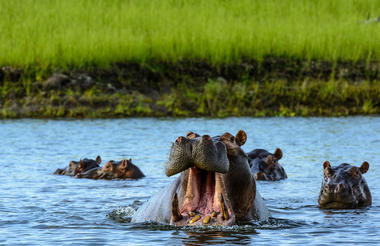
The South Luangwa National Park is renowned for its walking safari, which allows visitors to view elephant, hippo and even lion close-up under the supervision of professional and knowledgeable armed guides.
As previously described
As previously described
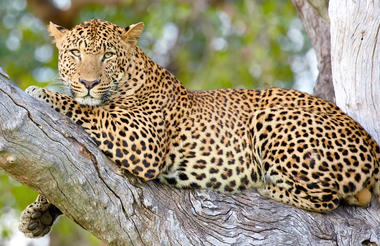
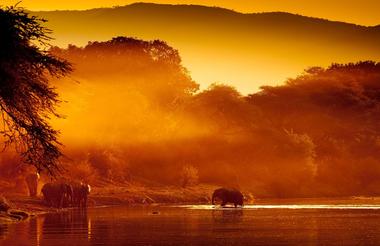
Lower Zambezi National Park is one of Zambia’s newest National Park, situated opposite the famous Mana Pools Reserve in Zimbabwe, and covering an area of 4,092 km². Most of the game is concentrated along the valley floor, with the escarpment along the northern end acting as a physical barrier. The beauty of Lower Zambezi lies in its absolute wilderness state, and the opportunities to get close to game wandering in and out of the Zambezi channels are spectacular. Enormous herds of elephant, some up to 100 strong, are often seen at the river’s edge, and ‘island hopping’ buffalo and waterbuck are common. The park also hosts good populations of lion and leopard. The river’s edge is overhung with a thick riverine fringe, while further inland is a floodplain fringed with mopane forest and interspersed with winterthorn trees and acacia albida. The hills, which form the backdrop to the park, are covered in broadleaf woodland.
Most activities are concentrated along the Zambezi as this is what draws the animals and aside from game drives and walking safaris the area offers canoe trips and tiger fishing.

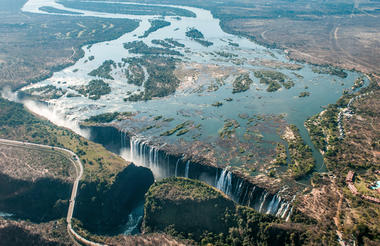
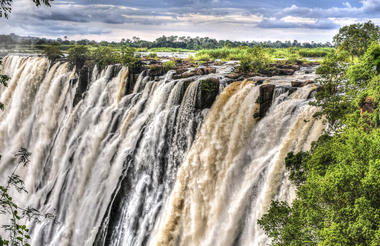
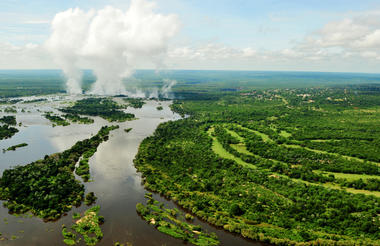
Situated on the Zambia–Zimbabwe border along the Zambezi River, Victoria Falls is experienced from the Zambian side within Mosi-oa-Tunya National Park, where walkways trace the cliff edge above a vast basalt gorge. Knife Edge Bridge pushes visitors into the spray line for a close view of the Main Falls, a continuous curtain of water, and the Eastern Cataract, where the flow breaks into narrower channels across the far side. Rainbow Falls, the highest section of the cascade, often reveals shifting arcs of colour in fine mist when light breaks through the spray. The Boiling Pot viewpoint looks directly into a deep whirlpool where the river is forced into the Batoka Gorge. Upstream, boat access reaches Livingstone Island, a rocky outcrop on the lip of the falls, and the seasonal Devil’s Pool, a natural rock pool at the edge of Victoria Falls that becomes safely accessible during low water when river levels drop and currents weaken. Activities extend beyond the rim, including white-water rafting through gorge rapids, kayaking, ziplining across the chasm, bungee jumping from the bridge, bridge swings, sunset cruises, game viewing along the riverbanks, and visits to the local market.