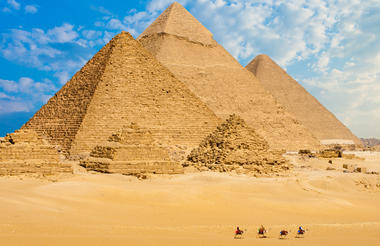
Egypt is one of Africa’s major tourist destinations, with the main drawcards being the Red Sea, Egyptology and the Nile. The Pyramids of Giza, the Sphinx and the Valley of the Kings need no introduction in the world of antiquity, the sun-soaked beaches of the Red Sea with their scuba diving are a massive attraction to those from colder climes, and a cruise on the Nile floods back memories of Cleopatra. Aside from these famous attractions, this desert country houses ancient ruins and mystical Oases, and in Cairo, ancient cultures remain, blending with the very modern. Egypt offers so much more than its world-famous pyramids. Visitors can enjoy desert trekking, scuba diving, golfing, fishing, bird watching or floating along the Red Sea.
Resting on the banks of the River Nile, Cairo is the mythical Egyptian capital that has been inhabited for over 6000 years. The dynamic metropolis is an exciting commingling of historical and contemporary offerings, vibrant streets and diverse neighbourhoods. The numerous heritage sites offer a glimpse into its Islamic and Coptic histories, including the renowned Al-Muiz street, Amr Ibn Al-As Mosque, the Hanging Church, and the Saint Samaan Monastery. The bustling tourist hub of Tahrir Square features the world-renowned Egyptian Museum displaying an array of antiquities, including mummies and King Tutankhamun artefacts. After that immersive foray into the past, pull yourself to the present and experience modern Cairo. Visit the baladi bars of downtown Cairo, shop at the Khan al-Khalili Bazaar, watch the sunset from the impressive Cairo Tower, or be entertained at the stately Cairo Opera House. The city's diverse nightlife options range from the traditional bars and coffee houses of downtown Cairo to the upscale Western clubs and bars of the affluent neighbourhood of Zamalek.
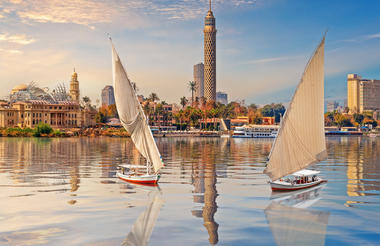

Luxor is a historic city on the Nile in Upper Egypt and one of the world's foremost destinations for ancient Egyptian heritage. Centred on the remains of ancient Thebes, it is home to monumental temples, royal tombs and archaeological sites spanning thousands of years of history. Visitors can explore the vast Karnak Temple Complex and atmospheric Luxor Temple on the East Bank, then cross the Nile to the Valley of the Kings, the Mortuary Temple of Hatshepsut and the tombs and temples of the Theban Necropolis. Felucca cruises and hot-air balloon flights offer striking perspectives of the river and surrounding desert landscape, while traditional markets and riverside streets provide a glimpse of modern Egyptian life.


Aswan is a tranquil city on the Nile in southern Egypt, known for its warm climate, river islands and strong Nubian heritage. Further south than Luxor, it offers a more tranquil base for exploring the ancient sites of Upper Egypt and is a popular starting point for Nile cruises. Travellers can take a felucca along the Nile, visit the island temples of Philae, explore the Unfinished Obelisk and wander through the colourful markets and Nubian villages. Elephantine Island and the botanical gardens on Kitchener's Island offer opportunities to explore Aswan's history and landscapes at a slower pace. The city also provides a base for excursions to Abu Simbel, while its combination of ancient monuments, desert scenery and Nile views gives it a distinctive atmosphere.


Abu Simbel is a small village in southern Egypt, near the Sudanese border on the western shore of Lake Nasser, around 280 kilometres south of Aswan. It is best known for the extraordinary Abu Simbel temples, among Egypt's most spectacular ancient monuments and part of the UNESCO-listed Nubian Monuments from Abu Simbel to Philae. Carved into the rock during the reign of Ramesses II, the Great Temple is fronted by four colossal statues of the pharaoh, while the smaller temple is dedicated to Queen Nefertari and the goddess Hathor. Visitors can explore the richly decorated interiors and discover how the temples were moved to higher ground in the 1960s to save them from flooding. Twice a year, the site's famous solar alignment provides another compelling reason to visit.


As previously described