


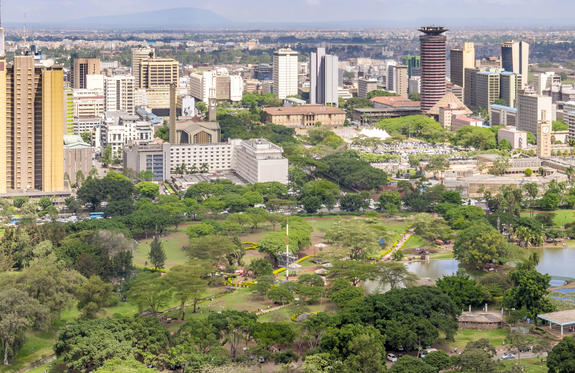
Widely regarded as one of East Africa’s most dynamic and cosmopolitan cities, Nairobi sits along the Nairobi River and serves as Kenya’s capital and largest urban centre, acting as a major gateway for safari travel across the country. The city features a growing café culture, active nightlife, and cultural landmarks such as the National Museum of Kenya and the Karen Blixen Museum. Just outside the city centre lies Nairobi National Park, where wildlife, including lions, giraffes, and buffalo, roam against a backdrop of skyscrapers — one of the rare cases in the world where a major national park borders a capital city. Visitors also often stop at the David Sheldrick Wildlife Trust elephant orphanage for close encounters with rescued calves.

Bordering the Masai Mara National Reserve to the southwest, the Olare Orok Conservancy to the west and the Ol Kinyei Conservancy to the east, the Mara Naboisho Conservancy is comprised of over 50 000 hectares of unspoilt wilderness in Kenya’s Greater Mara Region. The area is renowned for its bountiful biodiversity and breathtaking natural beauty with a wide range of wildlife on offer including lion, cheetah, elephant, giraffe, wild dog, and a host of plains game. Visitors can look forward to guided walking safaris, spending the night in a transient fly camp, heading out on a night game drive in search of elusive nocturnal creatures, joining the Mara Naboisho Lion Project as they track lions across the conservancy, or visiting Maasai villages to learn about the fascinating indigenous culture.

The acacia-dotted plains of the Eastern Serengeti are home to abundant wildlife and offer some of the finest safari experiences in Tanzania. Renowned for its role in the Great Wildebeest Migration, this region attracts visitors from around the world eager to witness one of nature’s most spectacular events. Excellent game viewing can be enjoyed around Lobo on the eastern edge of Serengeti National Park, while activities include guided walks through the scenic wilderness, hot air balloon safaris, bush picnics, and opportunities to learn about Maasai culture and traditions. A visit to the famous Gol Kopjes is a highlight, as these granite outcrops are widely regarded as one of the best places in Africa to observe cheetahs in their natural habitat.

Located in central Tanzania, Ruaha National Park is one of Africa’s largest protected wilderness areas, covering more than 20,000 square kilometres following its expansion in 2008 to incorporate the Usangu Game Reserve and surrounding wetlands. Renowned for its rugged landscapes, ancient baobab trees, and exceptional wildlife diversity, the park is home to one of East Africa’s largest elephant populations, as well as buffalo, lion, leopard, cheetah, wild dog, and numerous antelope species. The Great Ruaha River, which forms part of the park’s eastern boundary, provides a vital water source for wildlife and supports thriving populations of crocodiles and hippos. During the dry season, from July to November, animals gather around the remaining water sources, creating spectacular game-viewing opportunities. Ruaha is also a premier birdwatching destination, with hundreds of recorded bird species


