


Ideally located close to Lake Manyara, Kilimanjaro, Tarangire, and Ngorongoro National Parks, Arusha is the undoubted safari capital of Tanzania.
Located at the foot of Mt. Meru and in the shadows of Mount Kilimanjaro, Arusha was built by the Germans as a centre for colonial administration due to its temperate climate. Serviced by two airports and with a huge variety of accommodation and dining options, Arusha is the logical starting and finishing point for most safaris.
About Tarangire National Park
Often described as Tanzania's most underrated national park, Tarangire is one of Africa's little-known gems and a must for any northern circuit itinerary.
Boasting a variety of wildlife as diverse as its landscape, Tarangire is also the park that can boast being home to Tanzania's largest population of African elephants. With four of the Big Five also residing within the park, it is a great spot for a day trip from Arusha or as an addition to a Serengeti/Ngorongoro centred itinerary.
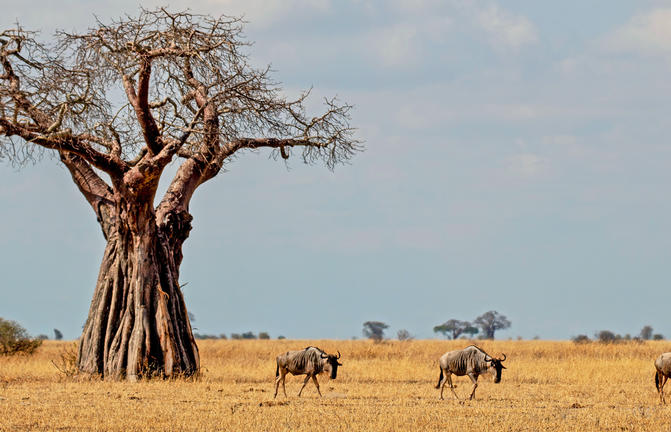
Named for the Tarangire River which flows through it, the park is an excellent choice during the dry season when animals are forced to move closer and closer to the river in search of water. Set against a backdrop of majestic baobab trees and twisted acacia, it makes for a beautiful experience.

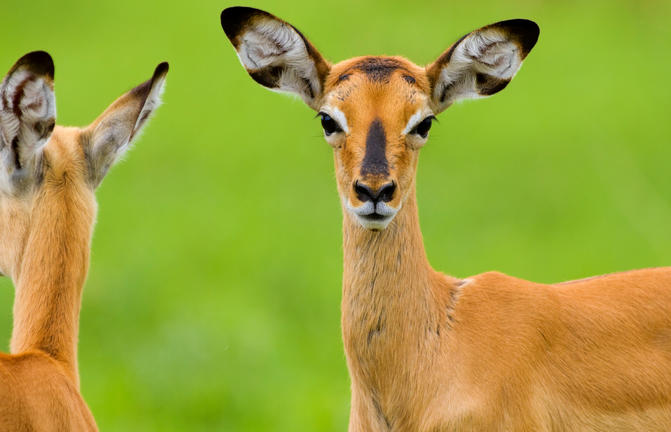
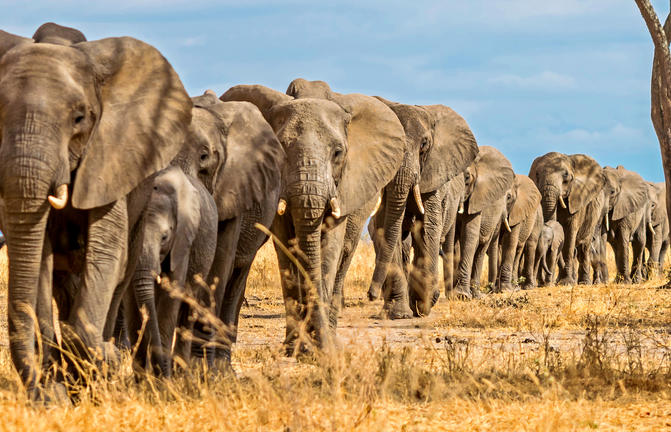
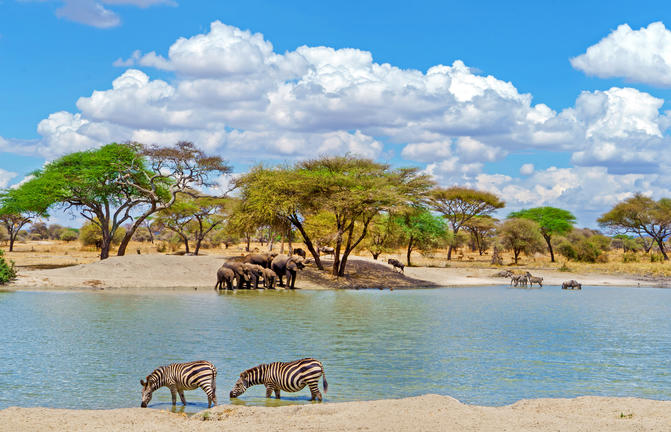
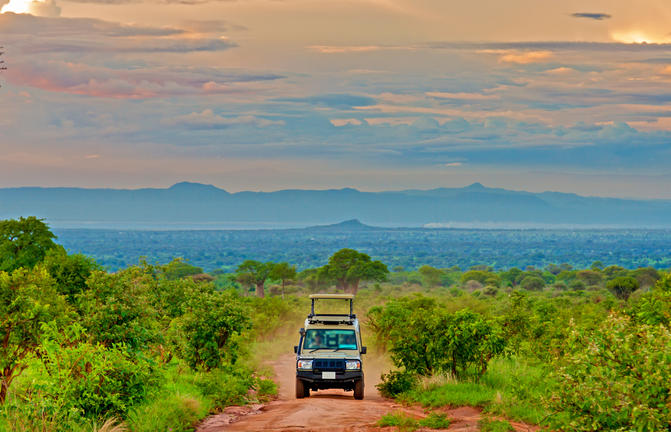




The setting for the earliest Tarzan films, verdant Lake Manyara National Park was once described as Ernest Hemingway as "The loveliest (place) I have seen in Africa".
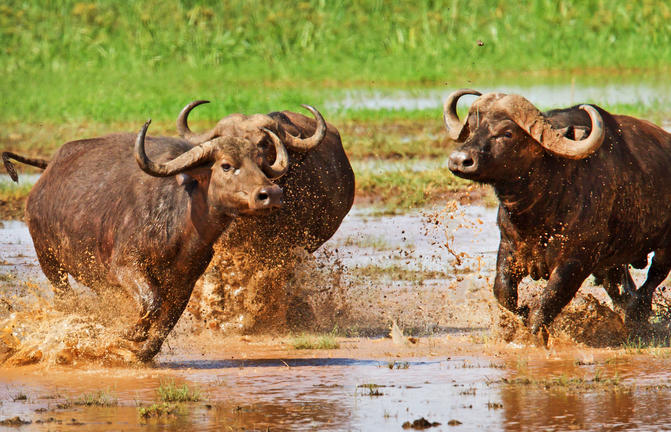
Lake Manyara National Park is an unspoiled paradise of ground water forest fed by underground springs and teeming with wildlife such as elephants, hippos, giraffes, buffaloes, antelopes, and some of the largest baboon troupes in Africa.
But it's most iconic attraction is undoubtedly its tree-climbing lions, and people flock from all over the world to see these iconic predators lounging in the trees.
Lake Natron is situated in northern Tanzania on the border with Kenya, close to Serengeti National Park and the Ngorongoro Conservation Area.
The lake is in the vicinity of Ol Doinyo Lengai, which is visible on the southern part. Lake Natron covers an area 56 km (35 miles) long and 24 km (15 miles) wide but the water level changes due to evaporation. The shallow and alkaline lake has different springs, the Ewaso Ng'iro River and different hot springs. Due to the minerals in the water, the lake has a vaguely pink crust.
The area around the lake offers different attractions such as a large number of volcanic implosion craters, numerous waterfalls, and ravines with nesting places for Rüppell's Griffon Vultures. Among the most prominent attractions of Lake Natron is the Gelai Volcano, a 2,942 m (9,652 feet) high volcano in the southeastern part, and the archeological site of Peninj, where archeologists discovered the Peninj Mandible – the fossilized teeth of Australopithecus boisei.
Some of the activities at Lake Natron are swimming, a visit to Maasai boma or a simple trek to the Ngorongoro Crater Highlands with numerous craters.
The lake is a breeding place for thousands of Rift Valley Flamingos. They build their nests using the soda flats between August and October. The flamingos of lake Natron feed with the lakes Spirulina algae. Because the flamingos use this area for breeding the lake and its surrounding is under the International concern for preservation. Other animals which inhabit this area are zebra, ostrich, fringed eared oryx, gazelle, gerenuk, lesser kudu and golden jackal.


Located between the Central Serengeti and Kenya’s Masai Mara National Reserve to the north, the Northern Serengeti is a remote African wildlife wonderland. The vast, rolling savannah of the Northern Serengeti, is known as the hub of the great migration. The landscape is characterised by vast stretches of savannah interspersed with acacia trees and riverine woodlands. Wildlife can be seen along the banks of the Mara River and visitors can view the annual spectacle of the half a million migrating wildebeest. Commonly spotted wildlife include: a multitude of plains game such as buffalo, zebra, gazelles, impala, giraffe as well as lion and leopard. Visitors can look forward to bird watching, hot air ballooning, game safaris and guided bush walks.
Not to be confused with the Kenyan lake of the same name set only a hundred kilomtres away, the Tanzanian Lake Magadi is an exquisite soda lake in the Ngororongo crater, named the Swahili word for salt. This is a wonderful destination for nature photographers, a scene that changes exquisitely through the seasons, moving through lush greens into striking oranges and bright pinks. Along with the changes come captivating, changing groups of animals including rhino, eland and lion, as well as golden jackals who come to hunt the flamingos. Spread over 11.2 square kilometres, the lake cultivates a unique ecosystem with its blue-green algae, which nourishes the plants and small creatures here. The surrounding crater is filled with incredible other natural attractions and a much wider variety of wildlife.


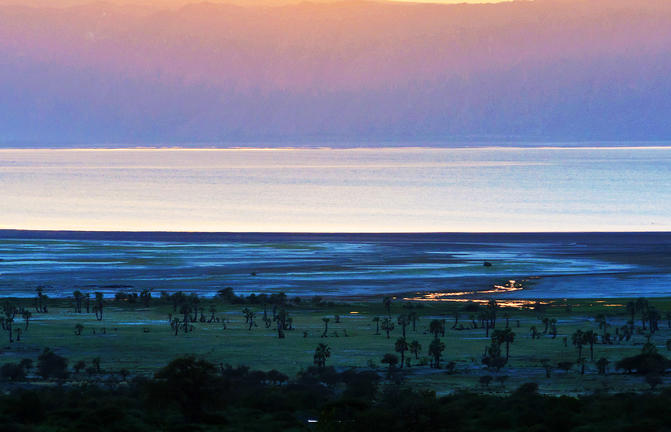

Lake Eyasi is situated at the southwestern end of the Ngorongoro Conservation Area between the Great Rift Valley Eyasi escarpment and the Kidero mountains, just 133 km (95 miles) west of Lake Manyara. Lake Eyasi cover an area of about 1,050 square km (400 square miles).
The lake is - as all the other lakes in the Rift Valley - a soda lake. The main attraction of Lake Eyasi are the Hadzabe bushmen, the indigenous inhabitants and the last community of hunter-gatherers in Africa. Lake Eyasi has been their homeland for over 10,000 years, and they have managed to preserve their traditional way of life in the face of Tanzania's rapid modernisation.
Dwelling in caves and wearing animal skins to cover themselves, the Hadzabe continue to practice their hunter-gatherer lifestyle even today. Visitors can witness their ingenious hunting methods, see how the women forage for vegetables and grains, and take a glimpse into their own ancestry.
The Lake Eyasi region itself is quite picturesque. While large game and predators are not present, visitors can still participate in a 'mini safari' as they explore the purple-stoned shores of the large soda lake.


