


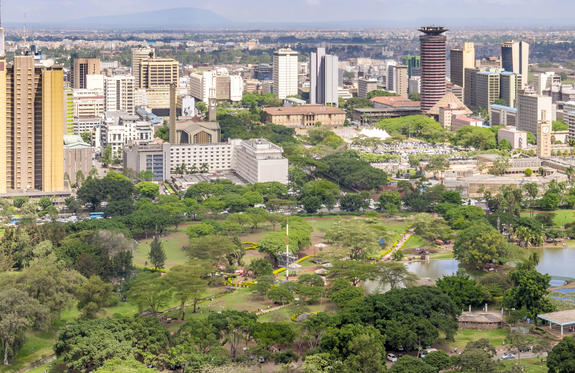
Widely regarded as one of East Africa’s most dynamic and cosmopolitan cities, Nairobi sits along the Nairobi River and serves as Kenya’s capital and largest urban centre, acting as a major gateway for safari travel across the country. The city features a growing café culture, active nightlife, and cultural landmarks such as the National Museum of Kenya and the Karen Blixen Museum. Just outside the city centre lies Nairobi National Park, where wildlife, including lions, giraffes, and buffalo, roam against a backdrop of skyscrapers — one of the rare cases in the world where a major national park borders a capital city. Visitors also often stop at the David Sheldrick Wildlife Trust elephant orphanage for close encounters with rescued calves.
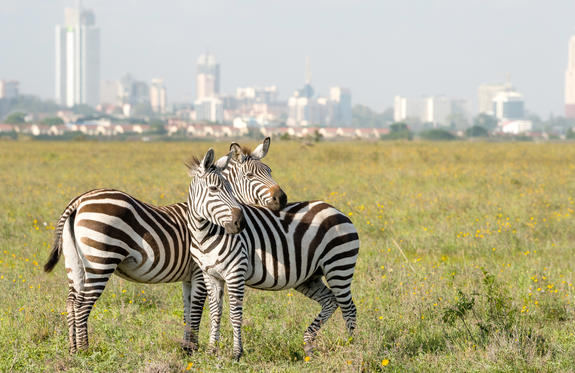
Bordering the capital city of Nairobi, in beautiful Kenya, the Nairobi National Park is one of Africa's smallest parks and one of the only parks on earth to be in such close proximity to a city centre. It boasts a large and varied wildlife population, amid wide open grass plains against a backdrop of city scrapers. The park is home to one of Kenya's most successful rhinoceros sanctuaries with the world's highest concentration of black rhinoceros. Its wetland areas are abundant with birdlife boasting over 400 bird species. Visitors can enjoy the many facilities the park has to offer such as scenic picnic sites, well-positioned campsites, and hiking trails. Commonly spotted species include lion, hyena, warthog, zebra, giraffe, ostrich, gazelle, buffalo, and sometimes if you're lucky, leopard and cheetah.
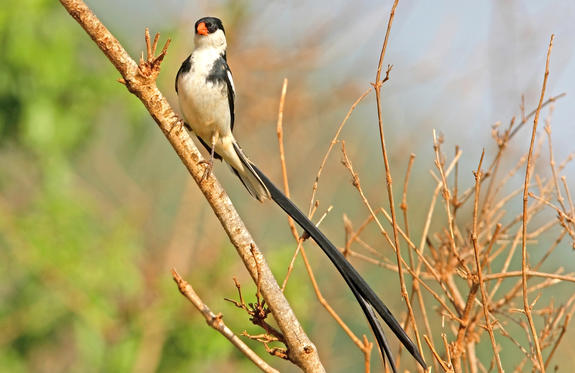
Situated between Tsavo West National Park and Amboseli National Park in southern Kenya, Chyulu Hills National Park protects an important water catchment area and a remarkably diverse landscape. This unique habitat features expansive grasslands, rolling forested hills, and rugged volcanic cones and craters, all set against the magnificent backdrop of Mount Kilimanjaro. The park is renowned for its scenic beauty, unspoilt wilderness, and excellent opportunities for outdoor adventure. Visitors can enjoy camping, mountain climbing, horse riding, nature walks, and exceptional birdwatching. Wildlife commonly seen in the area includes elephants, bushbuck, eland, leopards, bush pigs, reedbuck, buffalo, and giraffes. The park also supports a variety of smaller mammals and bird species. A highlight of any visit is the opportunity to explore the Chyulu lava tube system, which includes one of the longest lava tubes in the world.

Spanning over thousands of hectares of vast open savannah grasslands in northern Kenya, Lewa Wildlife Conservancy is home to the world’s largest population of Grevy’s zebra. Renowned as a pioneer and leader in responsible tourism, Lewa Wildlife Conservancy actively advances and develops community engagement and wildlife conservation. It has been declared a UNESCO World Heritage Site and serves as an important sanctuary for a large selection of wildlife including the endangered black rhino as well as the white rhino. Lewa offers visitors the opportunity to have close encounters with these prehistoric creatures against an unspoilt backdrop, making it one of Kenya’s top game-viewing destinations. Boasting one of the highest wildlife densities in Kenya, the park is also inhabited by elephants, lions, buffalo, wild dogs, giraffes, cheetahs, and over 400 bird species.
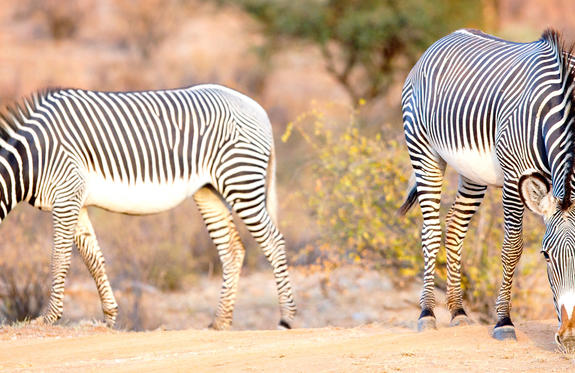
Kalama Community Wildlife Conservancy, an exclusive and collectively-owned 95,000 hectare-large wildlife Conservancy, borders the Samburu National Reserve in Northern Kenya. It also borders Ngutuk Ongiron Group Ranch to the west, Namunyak Community Conservation Trust to the north, and Sera Community Wildlife Conservation to the northeast. Kalama is part of the Northern Rangelands Trust. The Samburu ecosystem is a well-known area in central Kenya comprising of Buffalo Springs National Reserve, Samburu National Reserve, and Kalama Conservancy. The natural environment is arid and semi-arid; open scrub and grasslands with significant environmental variation based on altitude. The area is home to the ‘Samburu Special Five’ – indigenous species only found in this area namely the Beisa oryx, the gerenuk, the Somali ostrich, the Grevy’s zebra, and reticulated giraffe.

Situated in southwestern Kenya, the Masai Mara encompasses the celebrated national reserve and its surrounding community conservancies, forming part of the Greater Serengeti–Mara ecosystem. Rolling savannahs, dotted with acacia trees and crossed by the Mara River, create a rich and varied landscape. Vast herds of wildebeest, zebra, and antelope graze across the plains, while elephants, giraffes, and buffalo roam freely. The river’s lush banks support hippos and crocodiles and sustain wildlife throughout the dry season. Predators are abundant, with lions, leopards, cheetahs, and hyenas regularly seen in action. Each year, the spectacular Great Migration transforms the region, as millions of wildebeest and zebra traverse the plains. Visitors can soak up the breathtaking scenery, diverse wildlife, and Maasai cultural heritage in one of Africa’s most iconic safari destinations.


