


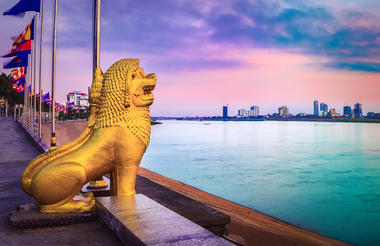
Phnom Penh is Cambodia’s capital and its most important city, set at the meeting point of the Mekong, Tonlé Sap and Bassac rivers. It’s a city of contrasts, where royal palaces, saffron-robed monks, busy markets, French colonial buildings, modern cafés and riverside life all sit alongside the country’s more difficult recent history.
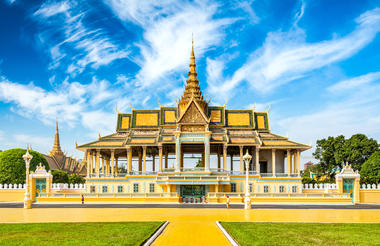
The city is best explored with time and context. The Royal Palace and Silver Pagoda give a glimpse of Cambodia’s royal traditions, with elegant Khmer architecture, gilded roofs and peaceful courtyards in the heart of the city. Nearby, the National Museum of Cambodia is one of the best places to understand the artistic and spiritual heritage of the Khmer world, especially before or after visiting Angkor.
Phnom Penh also asks visitors to engage with Cambodia’s 20th-century history. The Tuol Sleng Genocide Museum and Choeung Ek Killing Fields are deeply sobering, but important for understanding the resilience of the country and its people. These visits are best done with a thoughtful guide and enough time afterwards to pause and reflect.
For a lighter side of the city, wander the riverside promenade, explore Central Market or Russian Market, or stop at one of the city’s growing number of independent cafés, galleries and social enterprise shops. Phnom Penh is also one of the best places in Cambodia for food, from classic Khmer dishes to contemporary restaurants and lively street stalls.
Phnom Penh works well at the start or end of a Cambodia itinerary. It’s busy and sometimes confronting, but it’s also warm, engaging and essential to understanding Cambodia properly.
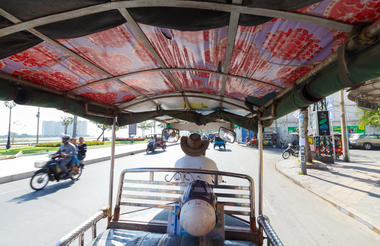
Koh Trong, a serene island in the Mekong River, lies across from Kratie in Kratie Province. Embraced by sandy beaches for most of the year and invigorated by river breezes, the car-free island is navigated by carts.
With smiling locals, weathered fishermen, and fertile land turned orchard, Koh Trong, or "the island where the king lost his ring," is affectionately known as the royal island.
Revel in the unhurried lifestyle, wander on foot or bike, swim in the Mekong (December to May), and engage with nearby villages, offering a glimpse into fieldwork. Koh Trong is a serene paradise waiting to be explored.


Kampong Thom is a relaxed provincial town in central Cambodia, best known as the gateway to Sambor Prei Kuk, one of the country’s most important pre-Angkorian temple sites. Set between Phnom Penh and Siem Reap, it makes a worthwhile overnight stop for travellers who want to break the journey and see a quieter, more ancient side of Cambodian history.
The town itself is low-key, with a modest riverside setting, local markets and an easy-going provincial atmosphere. It isn’t a place of grand hotels or polished tourist infrastructure, but it offers a useful and interesting pause, especially for those who enjoy places that feel more local than developed.
The main reason to visit is Sambor Prei Kuk, a forested temple complex that predates Angkor and was once the capital of the Chenla Kingdom. The brick sanctuaries are smaller and more intimate than the great temples around Siem Reap, but their quiet woodland setting gives them a special atmosphere. Many of the towers are wrapped in tree roots, surrounded by birdsong and reached by sandy paths through the forest.
The surrounding province is also rich in rural scenery, with rice fields, sugar palms, ox carts, small villages and traditional wooden houses. Depending on the route, a visit can be combined with local craft stops or a look at everyday Cambodian farming life.
Kampong Thom is best suited to travellers who enjoy archaeology, history and quieter rural landscapes. It’s not a destination to rush through, but with the right guide and a well-paced itinerary, it adds valuable depth between Cambodia’s better-known highlights.


Siem Reap is the gateway to the temples of Angkor, but it’s much more than a base for sightseeing. This lively, welcoming town combines ancient history, good food, boutique hotels, craft shops, galleries and a growing creative scene, making it one of Cambodia’s most rewarding places to spend several days.
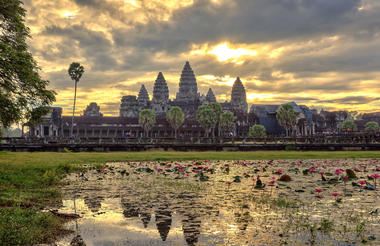
The great highlight is, of course, Angkor Archaeological Park, home to some of the most extraordinary temple sites in Asia. Angkor Wat is the icon, especially beautiful at sunrise, while Bayon is unforgettable for its serene carved faces and Ta Prohm for the way trees and ancient stone seem to have grown together. Beyond these famous sites, quieter temples such as Preah Khan, Banteay Srei and Beng Mealea add depth and variety, especially with a knowledgeable guide.
Back in town, Siem Reap has a relaxed, easy-going feel. The riverside is pleasant for a wander, while the Old Market, Made in Cambodia Market and small independent boutiques are good for local crafts, textiles and gifts. In the evening, the town comes alive with restaurants, cocktail bars and street food stalls, but it’s still easy to find quieter corners away from the bustle.
Siem Reap is also a good place for authentic local experiences, from Khmer cooking classes and countryside cycling to visits with artisans, village workshops and floating communities on Tonlé Sap.
Most travellers should allow at least three nights, with four giving a better pace. The temples are magnificent, but Siem Reap’s real appeal is the way it combines Cambodia’s ancient past with warm, creative and very human present-day life.
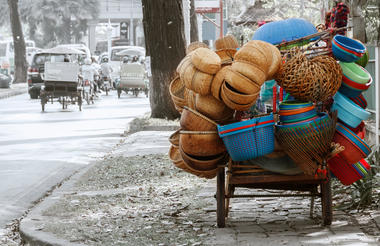
Battambang is one of Cambodia’s most appealing towns, with a slower pace and a strong sense of local character. Set beside the Sangker River, it has a graceful, lived-in feel, with faded French colonial buildings, old shophouses, riverside cafés and a relaxed atmosphere that makes it a lovely contrast to the busier centres of Siem Reap and Phnom Penh.
The town is known for its arts scene, rural surroundings and easy access to some of Cambodia’s most interesting countryside. A day here might include a wander through the central market, a look at the old colonial quarter, or a visit to local galleries and social enterprise projects that support young Cambodian artists and performers. Battambang has long been associated with creativity, and this gives the town a quietly engaging personality.
The countryside around Battambang is often the real highlight. Just outside town, small villages, rice fields, fruit farms and local workshops give a wonderful glimpse of everyday Cambodian life. You might see families making rice paper, dried bananas or fish paste, or travel by the famous Bamboo Train, a simple but memorable ride through rural scenery on a small rail platform.
Nearby sights include Wat Banan, an Angkor-era hilltop temple reached by a long stone staircase, and Phnom Sampeau, a limestone hill with caves, shrines and sobering wartime history. At dusk, the famous bat cave is an unforgettable sight, as thousands of bats stream out across the evening sky.
Battambang is best suited to travellers who enjoy gentle exploration, local encounters and a more traditional side of Cambodia. It’s not flashy, but that’s very much part of its charm.


As previously described


