


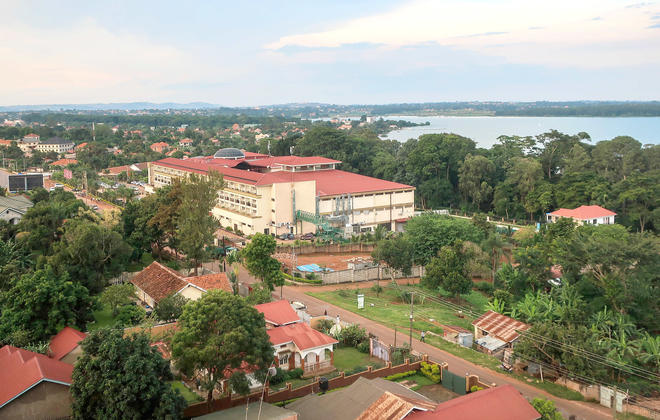
Located on the shores of Lake Victoria, Entebbe lies 40 km south of Kampala, Uganda's bustling capital. As the country’s primary gateway, it serves as both a peaceful retreat and a starting point for exploring Uganda's natural wonders. The city sits in a lush landscape, with sprawling green spaces and a shoreline dotted with fishing villages. The Entebbe Botanical Gardens, established in 1898, showcase a wide variety of plant species, from indigenous tropical forest to cultivated horticultural displays. The gardens are home to a diverse bird population, including the palm nut vulture and giant kingfisher, and provide a haven for primates like the black-and-white colobus. A short trip west leads to the Mabamba Swamp, a Ramsar Wetland, where visitors can explore by dugout canoe in search of the rare shoebill stork. Lake Victoria itself invites fishing, leisurely cruises, and excursions to Ngamba Island, a sanctuary for orphaned chimpanzees, where visitors can observe the chimps roaming freely across 40 hectares of forested land.


Stretching from the shores of Lake Albert, Murchison Falls National Park is Uganda's largest National Park. The Nile River flows through the middle of the park creating the impressive Murchison Falls which is the park’s major attraction. The landscape features dense rainforest, undulating savannah and a diversity of abundant wildlife. Visitors can enjoy prime game-viewing along the Buligi Circuit. The forests are home to numerous primates, including Chimpanzees, and near the river, buffalo, elephants and Rothschild-Giraffes can be seen. Other commonly spotted wildlife include: lions, antelope, waterbucks, hippos and crocodiles.


Imposing cone-shaped hills cradle tranquil calderas in the enchanting Ndali-Kasenda Crater Lakes in Western Uganda near Kibale Forest and Queen Elizabeth National Parks. Formed about 8-10,000 years ago by volcanic activity, these craters now hold a variety of lakes. Some boast clear, blue water, while others remain emerald green with a sulfuric odour due to residual volcanic gases. Lush vegetation cloaks the crater rims, offering views of nearby hills, tea plantations, and even the Rwenzori Mountains on clear days. While some lakes are safe for swimming, others contain toxic water and should be avoided. Activities around the lakes include nature walks, boat rides, bird-watching and visiting the "Top of the World" viewpoint for panoramic vistas.


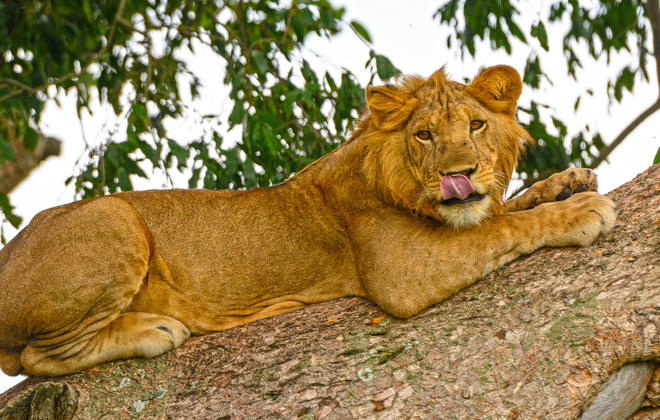
Stretching across Uganda’s western region, Queen Elizabeth National Park lies between Lake Edward and Lake George, interconnected by the Kazinga Channel. Established in 1952 as Kazinga National Park and renamed after Queen Elizabeth II’s visit in 1954, the park encompasses diverse landscapes. Rolling savannah, humid tropical forests, crater lakes, and fertile wetlands create habitats for a remarkable range of wildlife. Over 95 mammal species roam here, including elephants, lions, and Uganda kob, while 600 bird species make it a haven for ornithologists. The Ishasha sector is renowned for tree-climbing lions, and Kyambura Gorge is home to chimpanzees. Boat cruises along the Kazinga Channel reveal hippos basking, crocodiles sunning themselves, and herds of elephants and buffaloes drinking at the water’s edge. This waterway also attracts an array of birdlife, from fish eagles to pelicans. Visitors enjoy game drives on the Mweya Peninsula, cultural encounters with nearby communities, and the striking salt pans of Katwe. The park’s scenic beauty, framed by the Rwenzori Mountains, complements its biodiversity and cultural richness.


Located in southwestern Uganda, the Bwindi Impenetrable National Park is said to be Africa’s oldest rainforest. It is world-renowned for its excellent gorilla-sighting opportunities - the forest is home to half of the remaining mountain gorillas on earth. This gorilla experience takes place among a rugged landscape of dense jungle, cascading waterfalls, sparkling mountain streams, deep valleys, and steep ridges. The untouched forest has been declared a UNESCO World Heritage Site for its breathtaking natural beauty and unique ecological significance. Aside from the amazing gorilla interactions, there are other drawcards such as a network of forest walks, over 340 species of bird to spot, and a variety of brightly-coloured butterflies to identify.


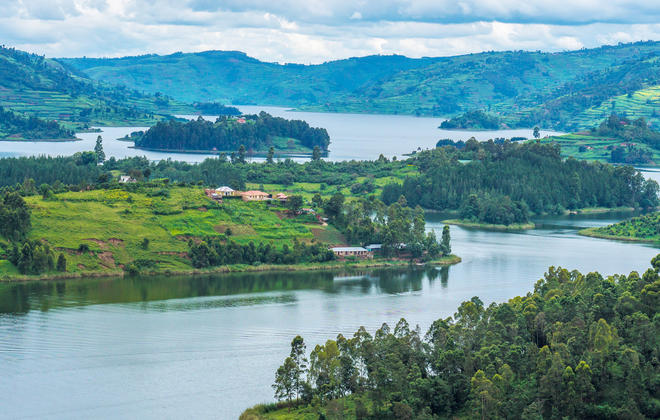
Located in southern Uganda, Lake Bunyonyi is said to be the second deepest lake in Africa and is home to a variety of water birds, giving it the name ‘place of little birds’. This spectacularly scenic lake is dotted with gorgeous misty islands and surrounded by verdant, undulating, terraced hillsides. It is also a popular stop-off on the way to the famed gorillas that live nearby and unlike many lakes in East Africa, it is crocodile, hippo and bilharzia free. Highlights include camping on one of the islands, swimming in the lake’s crystal clear waters, bird watching, canoeing, and hiking.


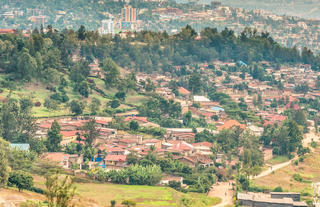
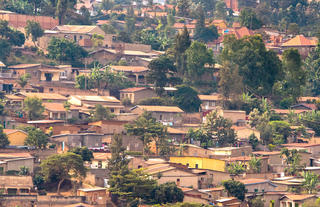
Kigali sits among rolling hills at the heart of East Africa, offering a remarkably clean, green and orderly urban landscape. The city blends contemporary development with a strong cultural identity, where polished avenues give way to lively neighbourhood markets and hillside communities. Visitors can explore the Kigali Genocide Memorial for a powerful insight into the country’s history, browse vibrant crafts at Kimironko Market, or enjoy a growing café culture shaped by locally grown coffee. Panoramic viewpoints reveal soft, undulating hills under wide skies, while the hum of motorbikes and the scent of roasted coffee define the city’s everyday atmosphere. Kigali also serves as a gateway to Rwanda’s national parks and unforgettable mountain gorilla encounters, making it both a meaningful stop and a base for wider exploration.


Bordering Tanzania in eastern Rwanda, Akagera National Park is central Africa's largest protected wetland and the last refuge for savannah-adapted species in the country. Stretching across a vast expanse of low-lying mountains and savannah plains, the park takes in the rolling highlands woodlands, swamp-fringed lakes, and wetlands of the Kagera River along the way. Crocodiles and hippos wallow in the park's watery basins, predators prowl through its acacia groves, and elephant, zebra, giraffe, buffalo and other animals roam across its grassy plains. Bursting with a rich biodiversity, the park features a variety of rare species, as well as a plentitude of mammals and hundreds of bird species.


