


Central Namibia is one of the most popular in the country. The area includes the capital, Windhoek, Swakopmund and Walvis Bay. Between the Kalahari desert and the Namib sand dunes lie the Central Highlands. Cattle ranching is prevalent in this area, and most tourism facilities have origins in cattle and game ranching. A large part of central Namibia is characterised by varying wilderness areas, from small red dunes and grasslands to the spectacular Waterberg Plateau and its surrounding reserves. Visiting this central region will give a feel of the country as a whole - always leaving you wanting more.

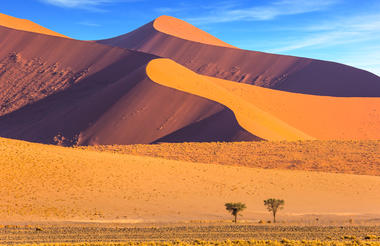
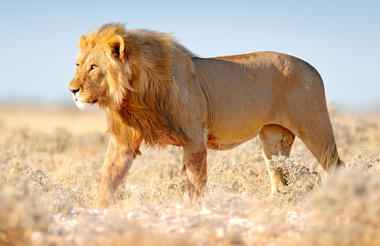
Known as "The Living Desert", the Namib Desert stretches inland from the Atlantic Ocean, covering large parts of Namibia. As one of the oldest and largest deserts, this arid hotspot supports many plants and animal species, some of which are found nowhere else in the world. Desert Elephants and Black Rhino roam great distances along the dry river beds, searching for edible plants and water sources. Predators like Lion also survive in this dry, harsh terrain. The gigantic desert is one of Africa's most unique destinations - containing many of Namibia's most magnificent attractions within its borders. It is hard to miss!
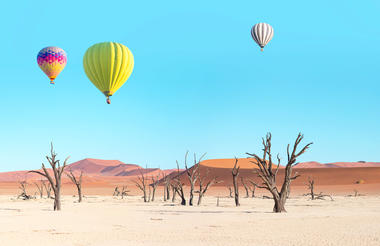
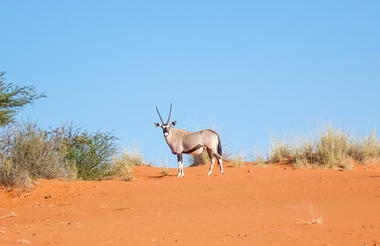
Swakopmund, known simply as ‘Swakop’ to Namibians, is the capital of the Erongo Region. It was founded in 1892 and was regarded at the time as Germany’s main port in South-West Africa. The townscape of this small town is characterised by numerous historic buildings from the German colonial era: wide streets, German street names, German pubs, cafés and bakeries. During the colonial era, ‘Swakop’ was described as ‘Germany’s southernmost coastal town’. Even today, German is still spoken everywhere. Swakop offers many tourist attractions, such as charming pubs, a beautiful seafront promenade, an aquarium and much more. You can go on lovely day trips to the surrounding area, such as south to Walvis Bay or north to Cape Cross to visit the largest seal colony on the African mainland. In and around Swakop, there are plenty of activities on offer, such as boat trips to see seals, exciting desert tours, quad bike safaris, kayaking trips and helicopter flights. You’ll be spoilt for choice.


Twyfelfontein is a site of ancient rock engravings in the semi-arid region of north-western Namibia. This world heritage site is situated 100 kilometres from the ocean, where the scenery shifts from dry red sands to lush grassland. Drawn by the San People, the engravings show depictions of both human and animal tracks. Many of the impressions also depict animals that are no longer found in the area - including lion, zebra, kudu and even seals! Visiting these paintings, with their rich historical and cultural backgrounds, allows you to learn about the Namibian heritage and the San people's customs and beliefs.
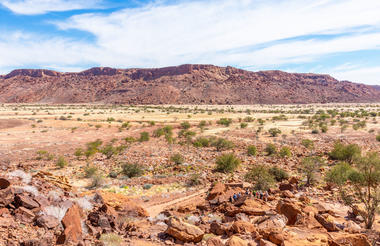
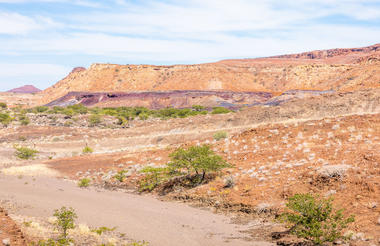
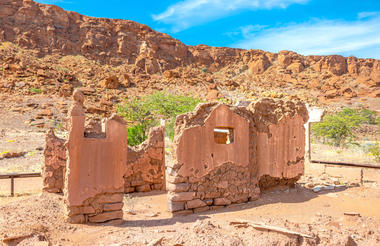
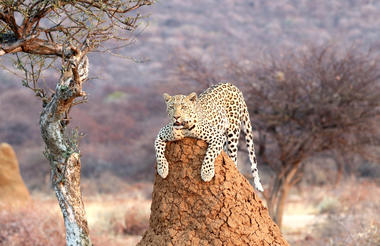
In northern Damaraland, where the flat-topped mountains of rich red rock greet the Uniab River, lies the small region of Palmwag. The area is set amid an endless basalt landscape created by magma eruptions millions of years ago. It is a refuge area for rare animal species such as the black hooked-lipped rhinos and the fascinating desert-dwelling elephants. Large predators, such as leopards, cheetahs, and spotted hyenas, are attracted to healthy antelope populations, and a group of "desert lions" occupy the arid climate. Palmwag is a place that will leave you feeling content in the generous arms of a wild Namibia.
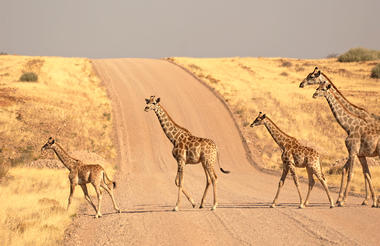

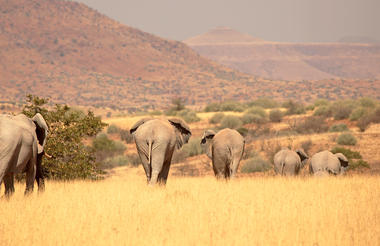
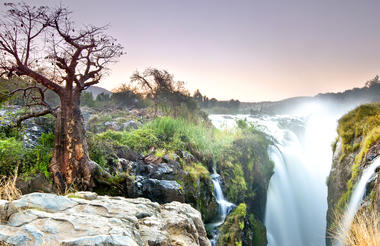
North-western Namibia is home to the small town of Opuwo - the capital of the Kunene Region. Here, ancient traditions meet modern times, as the native Himba culture live independently off the land. Opuwo is an ideal stopover when travelling to Namibia's northern attractions, as you're sure to come across donkey carts, desert elephants, local craftspeople, and the traditional villages of the Himba, Herero and Dhimba people. Opuwo gives you the opportunity to explore one of the most remarkable towns in Africa with its various cultures, dry landscapes and famous Epupa Waterfalls.
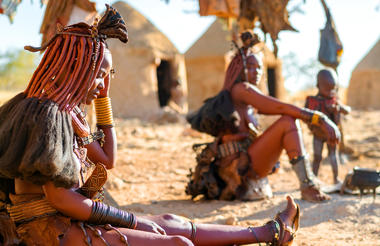
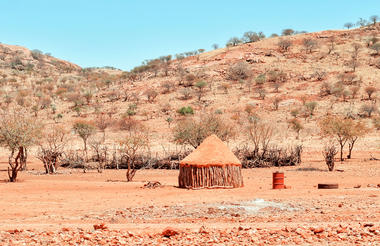
In the far reaches of northern Namibia lies a beautiful stretch of earth called Ovamboland. Dotted with tiny villages, the region is covered with large pans that are flooded with water during the rainy season - bringing wildlife from the surrounding areas with it. Wavering Makalani palms tower above the greenery in which native people herd their cattle. Namibian artists practise their craft at numerous roadside stalls, selling intricately woven baskets, jewellery and wood carvings. Although wildlife is not as abundant due to the presence of people, the area still retains the air of an authentic African wilderness.
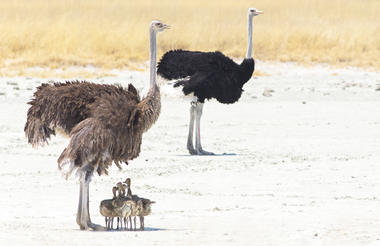

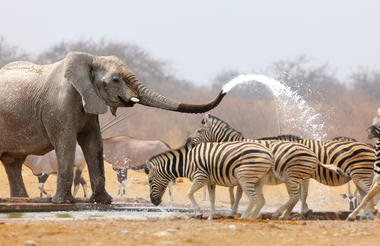
Surrounded by grassland and mopane shrublands, eastern Etosha is best-known for its remarkable variety of wildlife. Springbok are found abundantly within this region, while the many waterholes attract black rhinoceros and various antelope. During the rainy season, animals tend to migrate near the eastern Von Lindequist Gate. Makalani palms sway around waterholes on this side of the park, and the nearby pans are hotspots for blushing pink flamingos. Pure bliss is finding a quiet spot to wait for action, be it zebra jostling for a drink or sudden drama as elephant arrive in rumbling groups to quench their thirst.
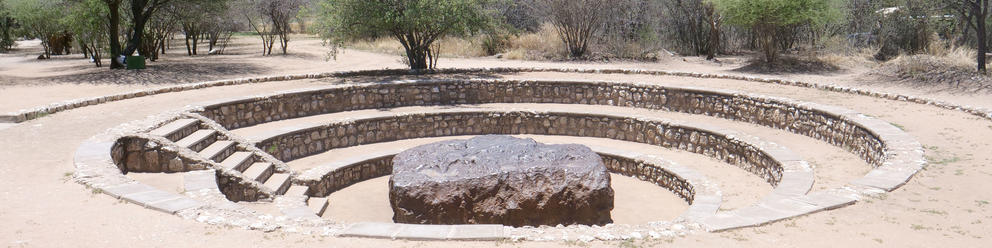
As it is now known, the big fountain, or Grootfontein, is a modest town located in the northern parts of Namibia. It is a smaller but significant upcoming tourist stop that is well worth a visit. This region is well-known for its Bushmen culture. Visitors come from all over to learn about these people. Grootfontein is noted for being home to the world's largest meteorite - The Hoba Meteorite - along with its many Jacaranda and massive Baobab Trees. This underrated town holds so much of the country's culture, and when visiting Namibia, should not be left off of the itinerary.
Set in the heart of Namibia’s Otjozondjupa region, Otjiwa Game Reserve spans 12,000 hectares of open bushveld, rolling plains and acacia-studded savanna. The reserve exudes a serene and private atmosphere, where wildlife roams freely, and the horizon stretches unbroken beneath vast African skies. Visitors can embark on guided game drives to spot giraffe, zebra, antelope and rhino, or enjoy walking safaris that reveal the subtle rhythms of the bush. At sunrise, the air carries the scent of dry grass and earth, while the calls of birds and distant wildlife punctuate the quiet, a place where Namibia’s wild beauty is both immersive and unforgettable.


