


Situated in central Namibia, in a scenic basin between the Auas and Eros mountains, Windhoek is the country's vibrant capital and largest city, where wide skies and dry savannah frame the urban landscape. Blending Namibian culture with German colonial influences and modern architecture, it offers a fascinating introduction to Namibia's history and way of life. Visitors can admire the iconic Christuskirche, explore the Independence Memorial Museum and browse local crafts, jewellery and artworks at the Namibia Craft Centre. The city's lively markets, diverse restaurants and cultural attractions offer a taste of Namibian cuisine and traditions. Just outside the city, Daan Viljoen Game Park provides opportunities for hiking, wildlife viewing and enjoying the surrounding scenery.
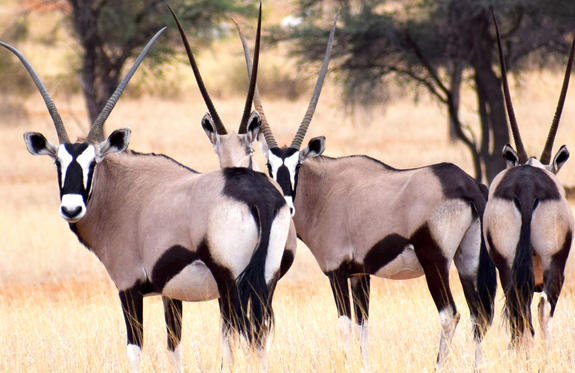
Spreading across Botswana, South Africa and Namibia, the Kalahari, meaning 'the great thirst', is an exceptionally beautiful living desert. The landscape is characterised by a large semi-arid sandy savannah, draped over a gently rolling inland sea of sand that covers most of Botswana and large parts of Namibia and South Africa. It is inhabited by the indigenous San people, with the modern world having enveloped all the other areas they once roamed. The Namibian portion is made up of red sands covered in thin, wispy, mostly golden grass and dotted with acacia trees and wide-ranging wildlife, including gemsbok, impala, jackals and cheetah.

Carving out an epic rocky wonderland in southern Namibia, the Fish River has created Africa’s largest, and the world’s second-largest, canyon. Hot, dry and dramatic, the Fish River Canyon stretches for an astonishing 160 kilometres, reaching up to 27 kilometres wide and 550 metres deep. Its vast, rugged beauty draws visitors from across the globe. Adventurers can tackle the challenging 85 kilometre Fish River Hiking Trail, which winds through 1.5 billion years of geological history, while those seeking rest can soak in the mineral-rich hot springs of Ai-Ais or admire breathtaking views from Hobas Restcamp and other viewpoints along the rim. Scenic chartered flights, horse riding, nature drives, and seasonal kayaking complete this unforgettable Namibian experience.

Set on the rugged Atlantic coast of southern Namibia, where the Namib Desert meets the ocean, Lüderitz is a charming harbour town known for its striking German colonial architecture, rich history and dramatic coastal scenery. Its brightly coloured Art Nouveau buildings, historic churches and picturesque waterfront give it a distinctive character. Visitors can explore the town's heritage landmarks, enjoy fresh seafood and take boat excursions into Lüderitz Bay, with opportunities to spot Cape fur seals, Heaviside's dolphins and African penguins. A highlight is nearby Kolmanskop, an abandoned diamond-mining town where desert sands have gradually engulfed its buildings, offering a fascinating glimpse into Namibia's diamond-rush era. Further afield, Diaz Point, with its historic cross and sweeping ocean views, adds another dimension to this intriguing blend of culture, history and coastal adventure.

Deep within Namibia’s Namib Desert, Sossusvlei is a striking landscape of towering red sand dunes, among the highest in the world, pale salt pans and immense open skies. Part of the Namib-Naukluft National Park, it has a remote, almost otherworldly atmosphere shaped by silence, shifting light and extreme desert conditions. Visitors can climb famous dunes such as Big Daddy or Dune 45 at sunrise, when the sand glows orange and shadows stretch dramatically across the valley floor. Nearby Deadvlei, with its blackened camel thorn trees standing against white clay and rust-coloured dunes, offers one of southern Africa’s most distinctive desert scenes. The dry heat, the soft crunch of sand underfoot and the vast sense of space create a powerful atmosphere, though early starts and challenging temperatures are part of exploring this remarkable region.

Set between the rolling dunes of the Namib Desert and the icy Atlantic coastline, Swakopmund is a relaxed seaside town in western Namibia known for its German colonial architecture, cool coastal climate, and adventurous spirit. Palm-lined streets, historic buildings, and ocean fog create an atmosphere unlike anywhere else in the country. Travellers visit for desert activities such as quad biking, sandboarding, and scenic flights over vast dunes and along the shipwreck-dotted coastline. Cafés, bakeries, and small museums add to the town's laid-back charm, though the Atlantic waters are brisk rather than tropical. With its striking desert-meets-ocean setting and mix of adventure and history, Swakopmund is one of Namibia's most distinctive destinations.

Situated in the Kunene Region of northwestern Namibia, on the edge of the Huab Valley, Twyfelfontein is a remarkable archaeological and geological site renowned for its exceptional collection of ancient rock engravings. Designated a UNESCO World Heritage Site, it is home to more than 2000 petroglyphs created over thousands of years by hunter-gatherer communities, making it one of Africa's most significant concentrations of prehistoric rock art. Guided walks lead visitors through dramatic sandstone outcrops to view engravings depicting wildlife, human figures and symbolic motifs, while the surrounding desert landscape is known for its striking scenery and adapted wildlife, including desert elephants that occasionally roam the region. Nearby attractions include the Organ Pipes, Burnt Mountain and the Damara Living Museum.

Opuwo, meaning 'the end' in Herero, lies in the north western Kunene region of Namibia. It serves as the capital of the region and is known as the gateway to the magnificent Epupa Falls. The surrounding landscape is characterised by low-lying hills, and vast dry desert plains inhabited by a wealth of desert-adapted wildlife. It serves as the central hub for the Himba culture. The town provides a perfect base for visitors wishing to explore the Kaokoland area and visit the local villages of the itinerant Himba people. The town and the Opuwo surrounding area is known as one of the cultural highlights of a trip to Namibia as it features an incredibly rich cultural heritage. Don’t miss an opportunity to learn about the fascinating Himba community within this starkly beautiful landscape.

Epupa Falls lies in Namibia’s remote far north, on the Kunene River close to the Angolan border, where desert landscapes give way to a surprising ribbon of water and life. Here, a series of wide, tumbling cascades cut through rugged rock, creating pockets of mist, cool shade and clusters of ancient baobabs. The atmosphere is tranquil yet powerful, with the low thunder of the falls echoing across an otherwise arid valley. Travellers can enjoy gentle walks along the river, meet Himba communities who have long called this region home, or watch the shifting colours of the cliffs at sunset. It’s a place of raw beauty and quiet contrasts, ideal for those seeking nature in its most elemental form.

Situated in the western part of Etosha National park, a world-famous wildlife sanctuary in the northwestern part of Namibia, Etosha West is the wilder western region accessed through Galton Gate. Visitors to Etosha West can look forward to exploring the magnificent scenery of this remote north Namibian landscape characterised by lush undulating terrain and a reddish-brown soil, which is a stark contrast to the white dusty clay soil of Etosha East’s flat expansive plains. This area is home to several species not found in the rest of the park: baboons, Mountain Zebra, and Brown Hyena, as well as several unique plants. The area also boasts numerous waterholes attracting elephant, rhino, leopard, lion, a variety of buck, and around 300 bird species.

Situated along the southern boundary of Etosha National Park in northwestern Namibia, Etosha South encompasses the park's southern safari region and a collection of private game reserves and lodges. The park is accessed via Andersson Gate, placing visitors within easy reach of renowned waterholes and excellent wildlife viewing. Lions, elephants, giraffes, white and black rhinos, and a wide variety of antelope are among the species commonly seen. Guided 4×4 game drives are the main attraction, with half- and full-day safaris available, some including picnic lunches in the bush.

Situated east of Etosha, bordering Fisher's Pan, Onguma Game Reserve is one of Namibia's best-kept secrets. The reserve offers visitors the opportunity to experience Africa in all her beauty and diversity. Onguma Game Reserve features over 35 480 hectares of protected land scattered with a variety of wildlife including plains game, black rhino, kudu, giraffe, zebra, lion, cheetah, leopard and more than 300 bird species. The seasonal rains attract thousands of migrating birds to the Fisher’s Pan wetland area. The neighbouring Etosha National Park is home to a rich array of wildlife, including 4 of the Big 5. Visitors can enjoy game drives, guided walks and rhino research drives within the private reserve as well as wildlife safaris into Etosha National Park to view abundant game in the largest national park in Namibia.

Set against the rugged slopes of the Omboroko Mountains in central Namibia, Okonjima Nature Reserve is a 22,000-hectare private wilderness renowned for its leopard-tracking experiences and wildlife conservation. Its landscape of rocky hills, open savannah and acacia woodland provides habitat for leopards, brown hyenas and a variety of other wildlife. The reserve is home to the AfriCat Foundation, which conducts research and conservation programmes focused on protecting Namibia’s carnivores. Visitors can join guided leopard-tracking excursions, game drives, nature walks and night safaris, offering opportunities to observe wildlife and learn about the reserve’s conservation work.


