


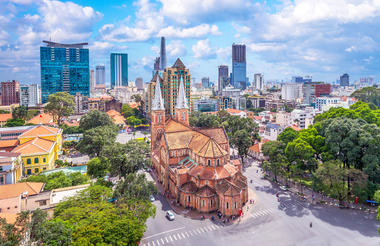
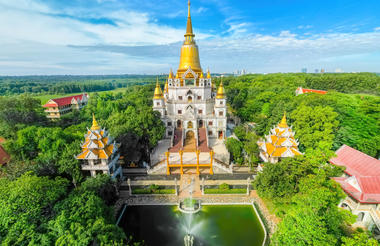
Located in southern Vietnam, Ho Chi Minh City (formerly Saigon) is the country’s largest city and a vibrant destination known for its energy, history, culture and cuisine. Tourists are drawn to its lively streets, bustling markets and fascinating mix of historic landmarks and modern city life. At Ben Thanh Market, visitors can browse stalls selling everything from food, sweets and spices to souvenirs, clothing and custom-made suits. Nha Hang Ngon offers the chance to sample traditional Vietnamese street food in a relaxed, leafy garden setting. Other highlights include the striking Notre-Dame Basilica, the Jade Emperor Pagoda with its intricate statues and woodcarvings, and the thought-provoking War Remnants Museum. Visitors can also explore Khanh Van Nam Vien Pagoda, regarded as Vietnam’s only pure Taoist temple, adding another fascinating dimension to the city’s rich cultural heritage.
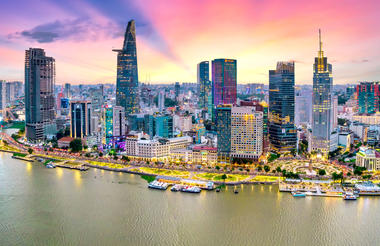
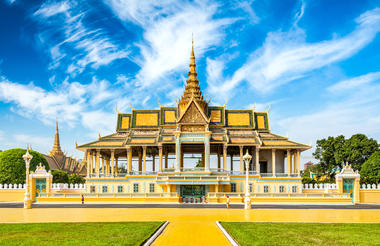
Located at the meeting of the Mekong and Tonle Sap rivers, Cambodia’s energetic capital, Phnom Penh, is known for its rich history, friendly locals and world-class food scene. The primary drawcard of the city its visible heritage - the National Museum of Cambodia features a millennium’s worth and more of an incredible Khmer design. The monumental Royal Palace, the official residence of King Sihamoni, houses the famous Throne Hall, used for coronations and ceremonies. Within the Royal Palace is the spectacular Silver Pagoda, named for its floor covered with five tons of gleaming silver. The Tonle Sap riverfront area provides a charming place to enjoy a meal and some fine French wine (an enduring colonial legacy), while the local nightclubs provide a fun time out on the town, complete with karaoke singers and stage dancers.


Best known as the gateway to the magnificent ancient temple complex of Angkor Wat, Siem Reap is a pleasant town with lovely French colonial and Chinese architecture and a laid-back ambience. The main attraction here is of course the Angkor complex. Covering an area larger than Paris, it encompasses scores of exquisite temple structures featuring intricately carved detail – dancing ladies and lotus flowers embellish the walls, five-headed naga (serpent deities) fan out from chunks of rock. Abandoned for unknown reasons thousands of years ago, it was rediscovered in 1860 by a French explorer, Henri Mahout, and has been Cambodia’s crowning glory ever since. Other attractions in and around Siem Reap include an array of arts and crafts shops, a cultural village that allows a glimpse into traditional local life, and a bird sanctuary on the outskirts of town.


Luang Prabang is a historic town in northern Laos, set at the confluence of the Mekong and Nam Khan rivers and surrounded by forested mountains. A UNESCO World Heritage-listed destination, it is renowned for its well-preserved Buddhist temples, French colonial architecture and relaxed riverside atmosphere. Travellers can explore ornate monasteries, climb Mount Phousi for panoramic views, and visit the Kuang Si waterfalls, where turquoise pools cascade through lush jungle. Early risers can witness the traditional alms-giving ceremony, while the lively night market offers local handicrafts and Lao cuisine. With its blend of spiritual heritage, natural beauty and unhurried pace, Luang Prabang provides a distinctive introduction to Laos and is particularly appealing to travellers seeking culture, scenery and authentic local experiences.


With its wide boulevards, ancient pagodas and tree-lined lakes, Vietnam’s capital is also the country’s most atmospheric and beguiling city. There is an energy and charm here arising from the genteel mix of French colonialism and Asian grace and tradition. Enjoy a showcase of synchronised t’ai chi at Hoan Kiem Lake; stroll around the lively Old Quarter with its narrow streets with traders and hoards of scooters weaving in and out, and don’t miss the chance to see a water puppetry show at the Thang Long Puppet Theatre. Other places to visit include the Imperial Citadel of Thang Long, the Perfume Pagoda temple complex and the Hanoi Opera House in the heart of the French Quarter.


As previously described


